


The Gauteng province cannot aspire to achieve and sustain economic growth if its road network is not fit for purpose. Businesses and communities cannot thrive when mobility, connectivity and road safety are compromised by deteriorating infrastructure.
In Gauteng, where millions of people travel daily for work, business, education and access to essential services, road infrastructure is far more than concrete and asphalt. It is the foundation upon which economic participation, social development and quality of life depend.
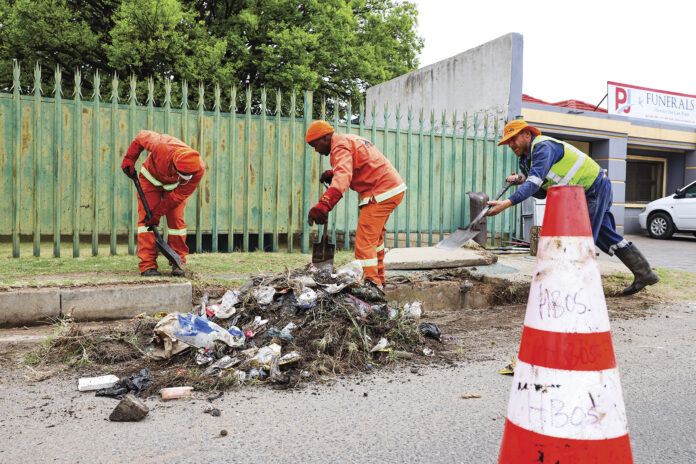
Over recent years, the Gauteng Department of Roads and Transport (GDRT) has undertaken significant maintenance, rehabilitation and infrastructure development projects across the province. These interventions have strengthened the provincial road network, prolonged the lifespan of key infrastructure and improved mobility and safety for all road users.
This is why Gauteng’s decision to accelerate investment in strategic road infrastructure should not be viewed merely as a construction programme, but as a long-term investment in the province’s economic future.
Balancing new infrastructure with maintenance
The department is pursuing a balanced, dual approach: building and upgrading strategic roads while intensifying routine maintenance and rehabilitation of existing infrastructure. This is the correct approach. While new roads often attract public attention, preserving existing infrastructure is equally important. Preventative maintenance protects valuable public assets, extends their lifespan and ultimately delivers better value for taxpayers.
The benefits for Gauteng residents, businesses and communities are tangible. These investments improve mobility, increase roadway capacity, reduce travel times, enhance the driving experience, improve access to residential, commercial and agricultural developments, and strengthen overall road safety.
This is particularly important because Gauteng’s provincial road network is a critical economic asset, connecting communities to employment opportunities, businesses to markets and residents to essential public services.
Creating opportunities through infrastructure delivery
Construction and maintenance projects are implemented under the Road Infrastructure Strategic Framework for South Africa (RISFSA) routine road maintenance programme. These contracts are competitively tendered and structured to promote the participation of small, medium and emerging contractors.
In line with the department’s transformation objectives, infrastructure projects also incorporate enterprise and skills development initiatives aimed at maximising local economic participation. These programmes create opportunities for local businesses and community members while contributing to sustainable economic empowerment, job creation and meaningful skills transfer.
During the 2025/26 financial year, the department repaired more than 52 000 potholes, maintained approximately 650 000 square metres of road surface and completed more than 40 400 square metres of edge repairs.
A long-term commitment to road preservation
Over the Medium-Term Expenditure Framework, GDRT has allocated substantial resources towards maintaining and rehabilitating the provincial road network. This investment includes pothole repairs, road resealing, traffic signal restoration, bridge rehabilitation, stormwater drainage, road signage, street lighting and the installation and repair of safety guardrails.
Importantly, the department is moving towards more sustainable, long-term maintenance solutions. Its adoption of a “remove and replace” approach, including milling and resealing, represents a necessary shift away from temporary repairs that provide immediate relief but fail to address the underlying causes of road deterioration. The focus is no longer simply on how quickly potholes are repaired, but on ensuring those repairs are durable and cost-effective.
Strategic projects driving economic growth
At the same time, Gauteng requires a modern, expanded road network capable of accommodating population growth, rising traffic volumes and evolving economic activity.
Strategic projects such as the construction of the K60, the upgrading of Modderfontein Road, the rehabilitation of the Golden Highway (R553), improvements to the R57 in Centurion, the upgrading of the R82, rehabilitation works along the R54 and R59, and the upgrading of Garstfontein Road extend well beyond their immediate locations.
Collectively, these projects will improve mobility, reduce congestion, increase road capacity and unlock new opportunities for economic growth and investment.
The K60 Road project in Waterfall City, north of Johannesburg, is one such example. Beyond improving connectivity, it serves as a catalyst for further development by linking communities, supporting economic activity and enhancing everyday safety and access to essential services.
Similarly, GDRT has completed the rehabilitation and reconstruction of Category B Road K175 in the Bronkhorstspruit area. As a major rural arterial route, the project has significantly improved the road’s carrying capacity, facilitating mobility, enhancing safety and supporting socio-economic development.
Prioritising safety for all road users
Infrastructure investment is not only about vehicles. The recently completed pedestrian bridge over the R59 freeway, delivered through the Ntirhisano Project, demonstrates the department’s commitment to placing vulnerable road users at the centre of infrastructure planning and development.
Equally important is the rehabilitation of culverts and bridges, particularly within the City of Tshwane. Through its Bridge Management System, the department is implementing interventions that include guardrail realignment, shoulder repairs, wingwall construction, stream clearing and structural repairs to bridge decks, piers and soffits.
While these projects may not attract the same level of public attention as major road construction, they are essential to maintaining a safe, reliable and resilient transport network. The same principle applies to traffic signals.
Restoring traffic signals, improving efficiency
A dysfunctional traffic signal is far more than an inconvenience. At busy intersections, malfunctioning signals contribute to congestion, increase the risk of collisions and disrupt the efficient movement of people and goods.
The department’s 36-month Traffic Signal Restoration Programme is, therefore, a critical investment in both road safety and transport efficiency. The programme includes repairing damaged traffic signals, replacing vandalised infrastructure, upgrading outdated systems, introducing modern technology and strengthening monitoring and security measures to minimise future disruptions.
To accelerate implementation, GDRT has appointed contractors across the province, and restoration work is gaining momentum. Repairs have already commenced at priority intersections, with additional sites scheduled as the programme progresses.
Turning investment into results
There is, however, another equally important aspect of infrastructure investment: implementation.
Residents do not experience infrastructure through budgets, plans or project announcements. They experience it through the condition of the roads they drive on, the safety of the bridges they cross, the reliability of traffic signals and the time it takes them to reach their destinations.
This means that effective project management, robust contract oversight and strong implementation capacity must remain central to the department’s work. Infrastructure investment only delivers lasting economic and social value when projects are completed to the required standards, within reasonable timeframes and within budget.
For this reason, GDRT expects every contractor working on its projects to deliver quality infrastructure on time and within budget. Gauteng’s infrastructure needs remain significant. The real measure of success will not be the value of the budgets allocated, but whether these investments result in roads that last longer, safer journeys, improved connectivity and greater economic opportunity for all.
Building a more connected Gauteng
As the province continues to rehabilitate, maintain and expand its road network, these investments must be recognised as catalysts for inclusive socio-economic development. They also require continuous protection, responsible stewardship and ongoing maintenance to preserve their long-term value.
Every kilometre of road rehabilitated, every bridge strengthened, every intersection restored and every strategic corridor upgraded contributes to building a more connected, competitive and productive Gauteng.
Our objective is not simply to turn the province into a construction site. It is to build infrastructure that is fit for purpose, modern, resilient and responsive to the needs of the people who rely on it every day.
Ultimately, this is what responsible infrastructure investment must deliver: safer roads, reliable mobility, stronger connectivity, expanded economic participation and a Gauteng that is better connected, more competitive and better prepared for the future.

- Diale-Tlabela is the Gauteng MEC for Roads and Transport.
- The Gauteng Department of Roads and Transport (GDRT) is focusing on both building new roads and maintaining existing infrastructure to improve mobility and safety.
- In the 2025/26 financial year, the department repaired over 52,000 potholes, maintained around 650,000 square meters of road surface, and completed more than 40,400 square meters of edge repairs.
- Strategic road projects such as the K60 Road in Waterfall City, upgrading of Modderfontein Road, and rehabilitation of the Golden Highway (R553) aim to enhance connectivity and support economic growth.
- GDRT is implementing a 36-month Traffic Signal Restoration Programme to repair damaged signals, replace vandalised infrastructure, and upgrade systems to improve safety and traffic flow.
- The department prioritises long-term road preservation through sustainable maintenance practices like milling and resealing and incorporates enterprise and skills development initiatives to promote local economic participation.


