


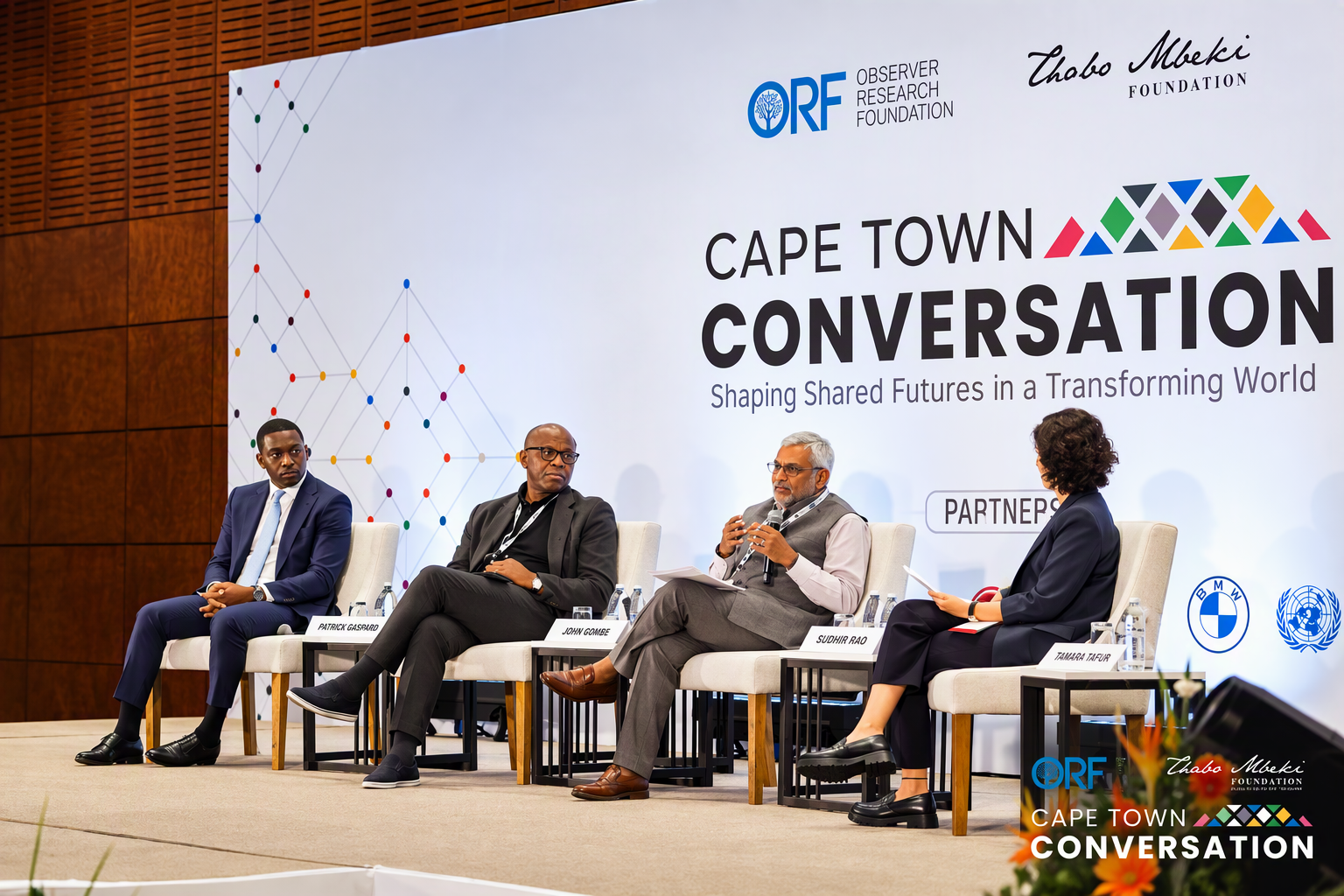
The recent political shift in the US, which led to the Democrats securing the Senate and the House in the midterm elections, will not necessarily translate into a fairer deal for developing nations; that is the warning from speakers at the fourth Cape Town Conversation.
The only way for the global south to see gains from President Donald Trump and the Republicans’ defeat is if they seize the agenda themselves.
Read more: Steenhuisen points SA exporters to zero-tariff Chinese markets as Trump shuts AGOA door
Global South must proceed with caution
With Trump effectively rendered lame duck president for the rest of his term, there is a school of thought that believes the midterm results would soften Washington’s current policy approach. However, a panel of global thinkers in Cape Town warned the global south not to count on a change in the status quo.
During the plenary exploring the world after the midterms, the speakers acknowledged the significance of the midterm results but differed fundamentally on whether they would rein in Trump.
Former ambassador of Hungary to the US, Réka Szemerkényi, said the outcome signalled a major shift in American politics.
Focus on substance
Read more: Goodbye my lover: Ode to Agoa
“It’s not just a huge wave; many people call it a tsunami,” Szemerkényi said.
She suggested that the global south should rather consider the implications for the Republican Party and the next presidential candidate, urging that the focus should move beyond the headlines.
Samir Saran, president of the Observer Research Foundation, warned against underestimating Trump and rendering him weak because of the “Blue Tsunami”.
“A freer Trump is not a weaker Trump. He is a more dangerous Trump,” he said, arguing that with no further election immediately ahead, the president could stay forceful in pursuing his agenda.
Read more: Maarten van Doesburgh | Agoa exit demands a focus on fixing SA economy
There was also a warning for developing countries whose American development funding taps were closed by Trump’s return to the White House.
“It’s not going to bring back USAID,” warned Lisa Singh, director and chief executive officer of the Australia India Institute, adding that the results should not be mistaken for a return to earlier levels of US cooperation.
In that case, if the largely blue Washington will not be the knight in shining armour for the global south, who will? Max Boqwana, CEO of the Thabo Mbeki Foundation, said the African continent needed to look inward.
African leaders need to unite in tackling poverty
“We must define our own agenda, design our own strategy and implement the programmes already on the table,” he said. Boqwana called for stronger leadership and cautioned against a future in which the continent is treated as a client of competing powers, saying its leaders needed to advance African agency and tackle poverty.
Boqwana urged the Global South to turn existing partnerships into action on energy, innovation and food insecurity. “Our responsibility is to act,” he said.
Saran rejected the notion that developing countries cannot shape outcomes, pointing to Global South presidencies of the Group of Twenty (G20) and their ability to build consensus on contested issues.
“The Global South has demonstrated leadership in the G20,” he said. The challenge, he added, is to turn that record into greater influence over global rules and institutions.
Szemerkényi said middle powers could help fill the gap.
“Middle powers based on common interests and values can work together,” she said, suggesting they could build shared agendas and frameworks as the international order changes.
Singh agreed, describing Australia as “a middle power with a strong focus on wanting to be part of shaping the new world” and naming artificial intelligence (AI) standards as an area where countries must cooperate.
Read more: Agoa exclusion not the end of the world for SA, says Cyril Ramaphosa
- The Democrats' recent midterm election wins in the US Senate and House may not lead to a fairer deal for developing nations, according to speakers at the fourth Cape Town Conversation.
- Panelists warned that global south countries should not expect a change in US policy despite Trump's lame-duck status following the midterms.
- Samir Saran highlighted that Trump, with no immediate elections ahead, might pursue his agenda more forcefully, making him a "more dangerous Trump."
- Max Boqwana urged Africa to unite, define its own agenda, and focus on internal leadership and implementation rather than relying on external powers.
- Middle powers with shared interests and values, including countries like Australia, could collaborate to shape international frameworks and address issues like AI standards.


