


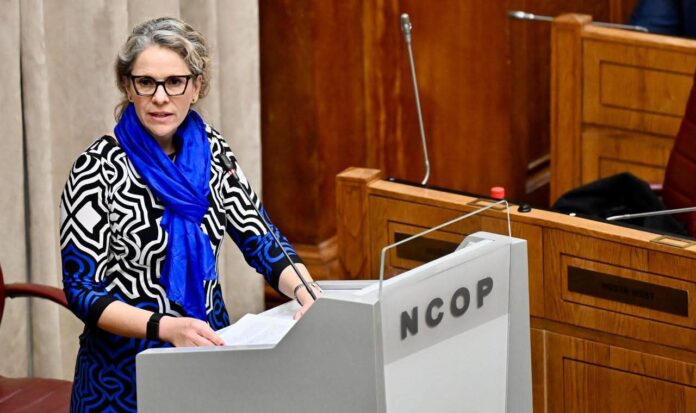
The Western Cape Department of Health and Wellness and its MEC, Mireille Wenger, have won a Labour Court bid to overturn a R592,150 default judgment obtained by a University of Cape Town (UCT) associate professor. This comes after a judge found the order had been granted without affording the department a proper opportunity to participate.
The judgment, delivered by Judge Tapiwa Gandidze in Cape Town, rescinds the default order obtained by associate professor Andre Brooks over an overtime pay dispute and sets aside the writ of execution that had authorised enforcement of the judgment.
Dispute cleared to proceed
The ruling does not decide whether Brooks is entitled to the overtime payment. Instead, it clears the way for the dispute to proceed through the normal litigation process.
Brooks, a medical doctor and associate professor at UCT, sued the Western Cape Department of Health and Wellness, the provincial Health MEC and UCT for R592,150, claiming he had worked overtime for which he was never paid.
UCT elected to abide by the court’s decision, while the provincial health department filed a notice indicating that it intended opposing the claim. However, it failed to submit its statement of response after being served with a notice of bar.
That allowed Brooks to obtain default judgement in chambers before Judge Robert Makhura in May last year.
The department later approached the Labour Court to rescind the order, blaming administrative failures at the State Attorney’s office, including delays in procuring counsel after six state attorneys resigned, leaving one attorney with dozens of additional files.
Although Judge Gandidze criticised the department’s handling of the litigation, he found that the decisive issue was procedural.
“Where a notice of opposition has been filed, but no opposing papers have been filed, a notice of set down must be sent to the parties,” the judge ruled.
He added that “granting default judgment in chambers in such a case closes the door for a defendant who may well be intent on opposing a claim against it but cannot comply with the prescribed time frames for filing papers for reasons that it can explain at a later stage.”
Brooks opposes rescission application
Brooks opposed the rescission application, arguing that the department had ignored the litigation for months and relied heavily on the Constitutional Court judgment involving former president Jacob Zuma, which held that litigants who deliberately refuse to participate in proceedings cannot later claim they were absent when judgement was granted.
Judge Gandidze agreed that the Zuma judgement remained authoritative but found it distinguishable on the facts.
“The Zuma judgment relied upon by Brooks was decided on its own facts, that Mr Zuma chose not to participate in the proceedings,” he said.
Unlike Zuma, the judge found, the Western Cape department had already demonstrated its intention to defend the claim by filing a notice of opposition.
“The defendants filed a notice of opposition, signalling their intention to defend the claim. By determining the matter in chambers, despite the filing of a notice of intention to oppose, the court effectively closed the door on the defendants’ ability to oppose the claim,” the judgment reads.
Judge Gandidze further found that the original default order may never have been granted had the court been aware of that notice.
“Had Makhura J been aware that the defendants had filed a notice of intention to oppose, he would not have granted a default order in chambers,” he said.
While rescinding the default judgement and setting aside the writ of execution, the judge nevertheless ordered the department and the MEC to pay Brooks’ legal costs, saying their conduct throughout the litigation “left much to be desired”.
- The Western Cape Department of Health and its MEC, Mireille Wenger, successfully overturned a R592,150 default judgment won by UCT associate professor Andre Brooks over an unpaid overtime dispute.
- The Labour Court ruled the default judgment was granted without giving the department a proper chance to participate, setting aside the writ of execution enforcing the judgment.
- The ruling did not address whether Brooks is owed the overtime pay but allowed the case to proceed through normal litigation.
- The department blamed administrative failures, including State Attorney resignations and delays, for not filing opposition papers on time.
- Judge Tapiwa Gandidze noted the department had shown intent to oppose by filing a notice of opposition and criticized the department’s handling but ordered them to pay Brooks' legal costs due to poor conduct during litigation.


