


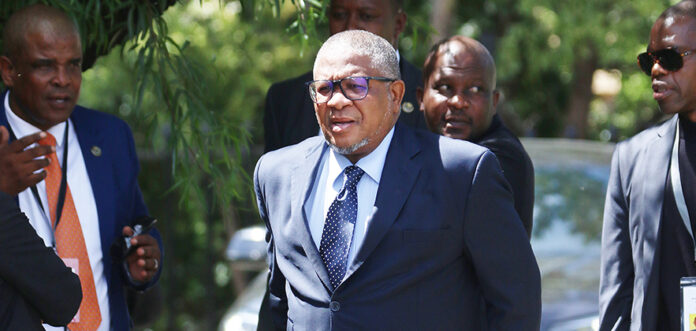
African National Congress (ANC) secretary-general Fikile Mbalula on Wednesday distanced himself from any involvement in apartheid-era criminal investigations, telling the Truth and Reconciliation Commission (TRC) Cases Inquiry that political office-bearers had no authority to interfere in police investigations or prosecutorial decisions.
Appearing before the commission in Johannesburg on Wednesday, Mbalula was called in his capacity as former deputy minister of police between 2009 and 2010, and later as police minister from March 2017 to February 2018.
‘I was just there’
“I was never privy to TRC criminal cases,” Mbalula told the commission.
He acknowledged being aware of the TRC process and that several apartheid-era matters remained unresolved because some suspects were denied amnesty or never applied for it.
“There were matters where people were supposed to be prosecuted, where people never got amnesty and even for those who never came to the fore to present their side of the story,” he said.
“It means those particular individuals are supposed to face the consequences of the law. If anyone was supposed to be prosecuted or matters were supposed to be followed up and investigated, the relevant authorities within the state were supposed to follow up. I was just there.”
‘Not privy to confidential and classified investigations’
Mbalula maintained that he never had operational oversight of investigations into TRC-related cases.
“I was not privy to the investigations because they are confidential and classified,” he said, referring commissioners to his written witness statement.
In that statement, Mbalula said he possessed no material relevant to the inquiry and had never received memoranda, minutes, reports or other official records concerning TRC-related investigations. He added that the decision to prosecute rested exclusively with the National Prosecuting Authority (NPA) and fell outside the powers of a police minister.
Executive oversight vs operational policing
His evidence comes as the constitutional boundary between political oversight and operational policing has again come under national scrutiny.
President Cyril Ramaphosa recently placed Police Minister Senzo Mchunu on special leave pending a judicial commission of inquiry into allegations that he interfered in police operational matters and investigations.
Mchunu has denied the allegations, but the inquiry is expected to examine whether the constitutional separation between executive oversight and operational policing was breached.
That same distinction formed the basis of Mbalula’s testimony, with the former minister insisting that investigations into apartheid-era crimes were never part of his operational responsibilities.
The TRC Cases Inquiry is investigating allegations that political interference over several administrations delayed or frustrated the investigation and prosecution of apartheid-era crimes that the original Truth and Reconciliation Commission recommended for criminal action. Former presidents Thabo Mbeki and Jacob Zuma have denied allegations that their administrations interfered in those prosecutions.
The inquiry continues.
ALSO READ: Retired prosecutor says Bulelani Ngcuka blocked probes into apartheid crimes
- ANC secretary-general Fikile Mbalula testified before the TRC Cases Inquiry, denying involvement in apartheid-era criminal investigations and stating political officials had no authority over police or prosecution decisions.
- Mbalula, who served as deputy minister of police (2009-2010) and police minister (2017-2018), claimed he was never privy to confidential investigations and possessed no relevant documents on TRC cases.
- He emphasized that prosecution decisions rested solely with the National Prosecuting Authority, and operational investigations fell outside a police minister's powers.
- The inquiry is probing political interference in apartheid-era crime investigations, amid constitutional debates on the separation between political oversight and operational policing, highlighted recently by Police Minister Senzo Mchunu’s suspension.
- The TRC Cases Inquiry continues its investigation into allegations that multiple administrations delayed or obstructed prosecutions of apartheid-era crimes, with former presidents Mbeki and Zuma denying involvement in interference.


