


South Africa’s National Drug Master Plan recognises drug dependence as a chronic disease, and recommends harm reduction strategies, but police still follow the 1992 Drugs and Drug Trafficking Act, which criminalises drug use. Harm reduction treats substance abuse disorder as a public health issue, rather than a law enforcement issue. Instead of expecting people to stop using drugs immediately, it offers practical support to lower the risks of drug use by reducing the risk of overdose, HIV infection, hepatitis and other harms – whether or not someone is ready to stop using drugs.
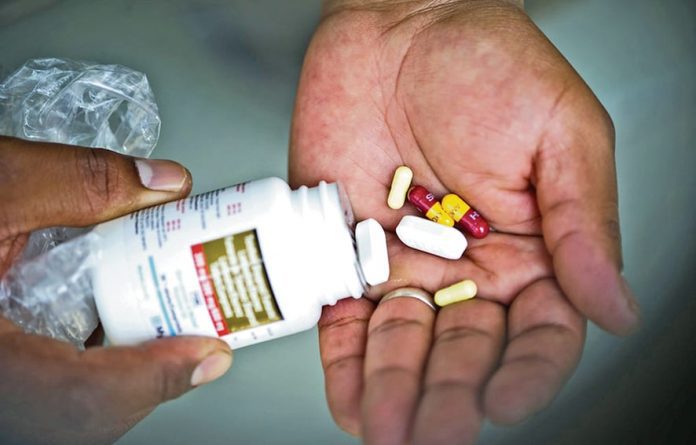
Examples of services include free clean needles, medicines that prevent overdoses, and treatment programmes that help people manage addiction. Opioid substitution therapy (OST), where drug users are given methadone or Suboxone, is also used. These medicines look like heroin to the brain but don’t cause as much of a high, so the body doesn’t experience such severe withdrawal symptoms. But in South Africa, it’s only offered at a few government clinics; anyone wanting it long-term must pay for it themselves.
In this essay, Roger Young — who has spent roughly 12 years on and off living on the streets of South Africa – writes from inside that gap, a reminder that harm reduction only saves lives when it’s run consistently, like any other medical treatment.
Pretending to understand rugby we flitted through the crowds filtering through the Ellis Park parking lot, cadging information we used to spark conversations that we used to try cadge coins, notes, tigers hopefully, off of the burly burdened sports fans. They barrel with enthusiasm out of their suburban utility vehicles, smeared with face paint and oozing money. Stupid banners that cost more than a week’s worth of heroin.
It is easy to spin a bag of heroin and a crack rock just in Hillbrow or Braam, it is harder moving in groups, it is harder when the spin becomes exhausting, a day job. Addiction needs stock. Enough heroin and crack to hunker into the security booth, the fallen over plastic shell that was once the boom gate office for the parking lot to Ponte, Jo’burg’s skyline cylinder with its large crumbling underground basement filled with cars that can sometimes be slept in.
It’s the end of summer, perhaps 2006. Having had the luxury of some clean time, there is, waiting for me in a suburban pharmacy, a prescription for Suboxone, an opioid substitution therapy that you cannot combine with heroin (it makes you very ill, to say the least). Like the other more well-known OST, methadone, Suboxone doesn’t make you high at all, kills the withdrawals, makes it possible to function. Just having a prescription is hope. But Suboxone is expensive.
As high as humanly possible
Bianca, Alan, me, we live in this fallen over security booth, our ratty blankets crawled in, we shove and stuff up against each other in the night. Smoking is done outside in the cold Jo’burg air, in the weeds and bushes grown up against the slopes of red clay leaning against the tall dark cylinder of Ponte. Through an alley of trash, down a little hill, behind the booth, is the stadium, on game days we skarrel (scurry) there, on weekdays it’s the not so dirty streets of Braam, or the Catholic church, or the soup kitchen lines, or outside the petrol stations, or inside the petrol stations, shoving Red Bulls into our double pants and swapping them with the dealers for heroin.
Alan and Bianca have two children, they live in some township with Bianca’s grandmother. Where Bianca’s parents are, this is a mystery to Alan. Where Alan’s parents are is a mystery to no one. They are German citizens and occasionally send money. When this happens, the three of us book into a cheap hotel and get as high as long as humanly possible. This provides some sort of insulation, the knowledge that this might happen again, a buffer against the daily grind of the work week, missioning, skarrelling (hustling), stealing Red Bulls, asking priests for bread.
Alan’s parents have offered him rehabs. But he will not go without Bianca. Bianca is afraid of withdrawals, she will not go to a rehab. The stories on the street of rehabs, there is lore that says they must be avoided, they are seen as places of punishment.
Bianca did not trust methadone for the way it was given. It was not to be found in regular supply, the organisations and do-gooders that came through Hillbrow did not even come daily, the USAID-funded centres gave out once a day and not on weekends and so, on the street, methadone is treated like a stopgap for when there is no heroin. A duller substitute that makes you sleep deeper and miss your skarrel, and the withdrawals worse, to be avoided. It seldom came with an introduction to recovery programmes or admissions to rehabs. The people bringing their mercy to the streets may imagine they are doing these things, but this is not how it is received on the street. Sometimes it was handed out in bottles, meant to last for a week.
The fine print
When you start using heroin, opiates, nyaope — and Bianca did this at an early age — you sign a contract, with consequences that no amount of literature and fine print and warnings can ever adequately prepare you for, and the warnings are so overblown that they seem infeasible. And what is given over in return for a short sweet escape from the existential horror of life is a gnawing physical and psychological torment, and each time you take that sweet escape to deal with the overwhelming indifference of society to your desire to just be, there is an incremental cost. The pain you have escaped, physical or emotional, is not erased but stored.
Withdrawal, not so terrible in the first few months — what indeed were they talking about? — eventually builds over the years to a thousand fevers, your bones try to escape through your skin, your muscles cramp and stab, and the shit runs down your legs.
Psychologically you’re in a bag of kittens going over a waterfall, with a waterproof speaker belting out a heavy metal version of all your mother’s scoldings. It is a very elusive feeling to pin down, and no one ever wants to remember it. Once you know it, the moment you know it’s in the post, you will do anything to prevent it.
Put any human in a room, holding a bottle of instant relief, or in walking distance, or running distance or stealing distance to the purchase of a hit of the something that will take that feeling away, and tell them to manage their own slow titration off of it over a few weeks, it is a near statistical impossibility. I have never done it without help. I am only off heroin now and writing this due to a concentrated effort by a group of people over a good period of time who, with a sizable investment, consistently made pathways to healing available to me, up until the time I was able to walk those pathways myself.
The grind, the spin, the always
Bianca had never had help. She and Alan had tried and failed a few times, and by now had largely accepted that this was their lives. Alan did not trust his family’s way, and had found no other purpose. There was Bianca and survival.
The desperation would creep into their eyes and while I would be trying to get money for my Suboxone, they would laugh, knowing I would fail and come later, shit running down my legs, to beg and share their heroin with them, and they would go off to shoplift Red Bulls.
Alan is around 30, Bianca is a wisp, somewhere before 20. A thin stick with wild hair and a mean streak, borne of survival. Bianca fights back.
Alan is an equal stick, long ratty hair, teeth caked with … sometimes he doesn’t seem to have teeth, just the streets in his mouth. He is a notorious street fighter. Once, when held down by a sersant (sergeant), while they were trying to handcuff him, his hands flailing behind his back, he got his hand into his pants, dug into his arse and flung his own shit into the sersant’s face. All the cops want him. He has to stay away from certain areas.
The incessant trauma of boredom. The always knowing how hard it will be to get an actual life. The lack of any hook or feeling or imagined usefulness. The grind, the spin, the always dirt, ntwala (parasite), another vetkoek, another mapusa (policeman) taking your only R20. The entrenched, relentless, inhabited uselessness constantly remarked upon. A boredom of purpose.
Suboxone is expensive. And so I strive for Suboxone, trying to spin enough to get a week’s worth, while trying to do that trying to spin enough to smoke until I can get the week’s worth. Just wanting to find a way out of the grind. If only I had Suboxone, just one small start.
There is no methadone in prison
Pretending to understand rugby, weaving through the crowds. While I cannot say for sure that if I got money that day I would have had the energy to get to the pharmacy to get Suboxone, or made it to the pharmacy in time, or if it was even still a part of the plan at that point.
Somewhere after halftime, all affluent stragglers having bosomed themselves a world away, back in the muffled roar of middle class rivalry, a loud pop and crash startles through the quiet parking lot, and suddenly everyone is running. Security guards are fanning out, the event police are beetling out of their vans. The first person to be caught will be arrested for breaking into that car. And so everyone runs.
Across the wide streets, up over the intersection. Shouting behind me. I run up the hill, the red dust in my heels, around the corner, through the alley, where Bianca lies supine. Held down by two men while another is on top of her. It is unclear whether it is a transaction or a rape. From the other side, over the rubble a younger policeman, cap under arm, some kind of dark growth on his neck, briefly surveys the scene. The men start to run, one is grabbed, the others scatter, Bianca is trying to get away, I am up through the weeds, looking behind. An older cop, shirt buttons popping, panting, grabs her. I am up the hill looking behind. Bianca is searched, they find her heroin and throw her in the van.
Alan is sitting on the pavement near the dealers. He already knows. It will be at least Monday before she gets to court. He cannot go to the police station to attempt a bribe. There is only waiting.
On Tuesday the news reaches us. Bianca could not handle the withdrawals, she has hung herself. There is no methadone in prison.
- This story was produced by the Bhekisisa Centre for Health Journalism. Sign up for the newsletter.
- Roger Young has written for Vice, Mail & Guardian, City Press and Rolling Stone and has spent roughly 12 years on and off living on the streets of South Africa. He currently writes about this at Bios.
- If you or someone you know is struggling with self-harm, drug dependence or mental health issues, visit the South African Depression and Anxiety Group website for resources, or call them on 0800 567 567.
- South Africa’s drug policy officially recognizes drug dependence as a chronic disease and supports harm reduction, but police still enforce outdated laws that criminalize drug use.
- Harm reduction services like free clean needles and opioid substitution therapy (OST) with methadone or Suboxone exist but are limited and often unaffordable outside a few government clinics.
- Roger Young’s personal essay highlights the daily struggles and systemic failures faced by addicts, including inadequate support, unreliable OST access, and mistrust of rehab facilities.
- The story of Bianca and Alan illustrates the harsh realities of addiction, stigma, police brutality, and the fatal consequences of lack of medical support—Bianca died by suicide in prison without access to methadone.
- Consistent, accessible harm reduction and addiction treatment are vital to save lives and offer pathways to recovery, yet current patchy, underfunded efforts in South Africa fall short of this need.


