


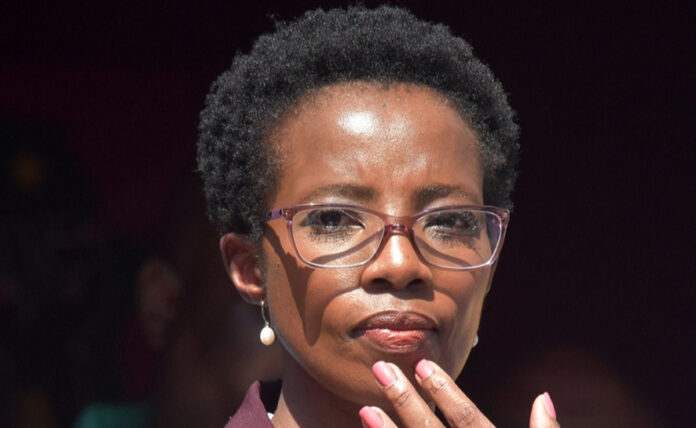
Public protector Advocate Kholeka Gcaleka has drawn a legal line in the sand amid the raging Phala Phala fallout, warning furious detractors that insults aimed at her office could trigger criminal prosecution, hefty fines, or even imprisonment.
The strongly worded warning emerged days after the Constitutional Court ruled that Parliament acted inconsistently with the Constitution when it blocked an impeachment inquiry linked to President Cyril Ramaphosa over the Phala Phala scandal.
In a statement issued this week, the Office of the Public Protector of South Africa (PPSA) said growing public commentary around the matter had created confusion over the status of its findings against Ramaphosa and members of the South African Police Service.
“The PPSA takes this opportunity to remind members of the public that insulting the public protector or the deputy public protector constitutes a criminal offence in terms of Section 9(a) of the Public Protector Act,” the statement reads.
The office warned that anyone convicted under the legislation could face “a fine not exceeding R40 000 or imprisonment for a period not exceeding 12 months, or both such fine and imprisonment”.
Gcaleka’s office also stressed that the Constitutional Court judgment did not overturn or weaken the public protector’s Phala Phala report.
“The Constitutional Court judgment has no bearing on the public protector’s report No. 12 of 2023/2024,” Gcaleka’s office said.
Freedom of expression has limits
That report investigated allegations of violations of the Executive Ethics Code against Ramaphosa, as well as claims of improper conduct by SA Police Service members linked to the 2020 burglary at the president’s Limpopo farm.
According to Gcaleka’s office, the Constitutional Court matter dealt strictly with the legality of Parliament’s Section 89 impeachment process and not the merits of the public protector’s investigation.
“The Constitutional Court case dealt solely with the constitutionality of Parliament’s section 89 process,” the office stated.
The Office of the Public Protector of South Africa further clarified that its report remains subject to a separate judicial review process currently awaiting a hearing date in the Pretoria High Court.
“These are separate legal processes, operating in different areas, and they do not conflict with one another,” the statement added.
While defending robust public engagement, Gcaleka’s office warned that freedom of expression has constitutional limits.
“The right to freedom of expression, guaranteed under Section 16 of the Constitution, is not unlimited,” the PPSA said.
“It is subject to lawful limitations and does not extend to conduct that constitutes a statutory criminal offence.”
- Public Protector Advocate Kholeka Gcaleka warned that insults against her office could lead to criminal charges, fines up to R40,000, or imprisonment up to 12 months under the Public Protector Act.
- The Constitutional Court ruled that Parliament acted unconstitutionally by blocking an impeachment inquiry related to President Cyril Ramaphosa and the Phala Phala scandal, but this ruling did not affect the Public Protector’s report.
- The Public Protector’s report investigates ethics violations by Ramaphosa and police misconduct linked to a 2020 burglary at Ramaphosa’s Limpopo farm, separate from the Parliamentary impeachment process.
- Gcaleka emphasized that freedom of expression has constitutional limits and does not protect conduct that constitutes criminal offenses such as insulting the Public Protector.
- The Public Protector’s report remains under judicial review in the Pretoria High Court, with the Parliamentary and judicial processes operating independently and without conflict.


