


Big things happened in 1990. Nelson Mandela walked free after 27 years behind bars. Margaret Thatcher resigned as Britain’s Iron Lady. Iraq invaded Kuwait, igniting the Gulf War. The Berlin Wall had crumbled a year earlier, and the Soviet Union would collapse a year later.
It wasn’t just the dawn of a new decade, it was a geopolitical fireworks display. And just as the world was catching its breath, Italia ’90 – one of the wildest World Cups ever staged by Fifa’s bureaucracy – burst onto our screens. For South Africans, newly embraced by global politics, it was the first time the spectacle was broadcast live into our homes. Remember, apartheid’s gatekeepers had only permitted television in 1979.
Ah, Italia ’90. Where does one begin? Diego Maradona – four years removed from his infamous “Hand of God” goal in Mexico (a wound the English still nurse) – was the name we all knew but had never seen in motion. The best player in the world, they said, a demigod alongside Pele.
In Saulsville, my kasi, every gifted player was christened “Maradona”. I wasn’t much of one myself, my skewed left foot betraying me. My peers relegated me to the bench or “technical support” – a fancy phrase for carrying water bottles. Yet, Black Rock, my late grandmother’s corner of the hood, kept unearthing new Maradonas. The talent was electric. Thomas “Chinja Gululva” Madigage (may he rest in peace) lived just a few streets away. In 1990, he was on the verge of joining Zurich FC from Jomo Cosmos.
Maradona arrived in Italy fading, a shadow of the genius who had conquered Mexico in ’86. Yes, he captained Argentina to the final, but the aura was dimming. His tears after Andreas Brehme’s late penalty crowned West Germany champions told the story: the king was slipping. A year later, a failed drug test would confirm the decline.
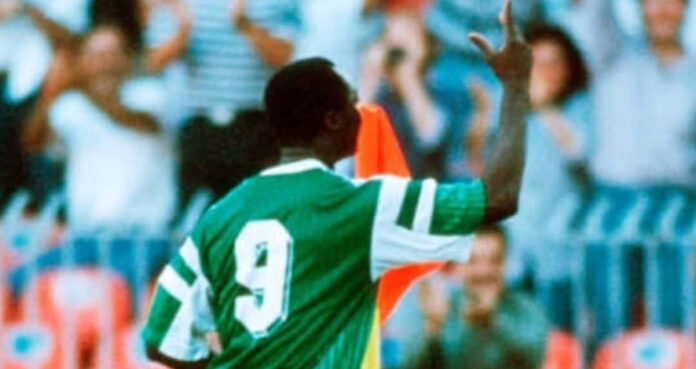
But it was Cameroon that shook the tournament to its core. I cannot describe the eruption of joy in Granny’s dining room – and across Black Rock – when François Omam-Biyik rose to head home the solitary goal that stunned Argentina in the opening match. The Indomitable
Lions were roaring.
Then came Roger Milla. At 38, he became a cult hero, scoring four goals and dancing by the corner flag, wiggling his hips in celebration. That dance has been mimicked by professionals and amateurs across the globe ever since. Cameroon became the first African side to reach the quarterfinals, rewriting history in the process.
Italia ’90 was more than football. It was Mandela’s freedom, Maradona’s decline, and Africa’s rise – all unfolding against the backdrop of a world in flux.
For me, World Cups are personal. This year marks my eighth binge, including a two-week pilgrimage to Qatar in 2022 to watch matches live. Yet none is etched deeper in memory than those dramatic black-and-white visuals of Italia ’90, beamed from Granny’s Blaupunkt TV set in Black Rock.
Big things happened in 1990. A great man was freed. A football legend waned. And a West African nation roared.
- Nelson Mandela was released after 27 years in prison in 1990.
- Margaret Thatcher resigned as the UK’s Prime Minister, ending her tenure as Britain’s Iron Lady.
- Iraq invaded Kuwait, leading to the start of the Gulf War.
- The Berlin Wall had fallen the previous year, marking a major geopolitical shift.
- The Soviet Union was on the brink of collapse, which would occur the following year.


