


The City of Joburg’s capital expenditure budget has come under scrutiny, with concerns that low infrastructure investment and rising financial pressure could undermine service delivery and long-term economic growth.
Out of the R97.1 billion budget, only R8.9 billion, or just under 9%, has been allocated to capital expenditure for the 2026/27 financial year. Experts flagged the allocation as concerning given the size of the city.
Moreover, only R350 million of the R8.9 billion is derived from cash generated by the city. The rest of the money will either need to be borrowed on capital markets or allocated by national government via several ring-fenced grants.
Joburg, which is under financial strain, is cutting down on key infrastructure spending over the next three years.
The budget for stormwater infrastructure drops from R178 million in the previous year to R80 million in the current financial year. Money spent on sports and recreation drops from R8 million to R1 million and funds allocated to housing from R1 billion to R654 million in the 2025/26 financial year.
At the same time, the city is hitting residents with sharp, above-inflation tariff increases. These range from a tariff increase of 6.2% for its waste removal entity Pikitup; a 9.1% electricity tariff increase and an 11% water tariff hike it says is driven by bulk purchase increases levied by Rand Water.
Eugene Buthelezi, an economics and finance lecturer at the University of the Free State, said: “On the surface, a capital-to-total budget ratio of roughly 9% looks alarmingly low. For context, best practice benchmarks for municipalities generally suggest capital expenditure should constitute between 10% and 15% of total expenditure to sustain and grow infrastructure over time.”
Buthelezi said operational demands were unavoidable, but the real concern lay in whether the city was investing enough to meet growing infrastructure needs for a major metro with nearly six million residents and a history of apartheid-era inequality.
He said a large portion of the city’s budget was spent on day-to-day operational costs such as salaries, electricity, water treatment, debt repayments, waste collection and social services.
“What does raise concerns is not just the proportion but the absolute size relative to the city’s infrastructure backlog and growth demands – R8.9 billion per year, while not trivial, is widely considered insufficient to maintain ageing infrastructure, expand services to under-served communities and support economic competitiveness.
Buthelezi said the budget highlighted mounting risks linked to underinvestment such as ageing infrastructure, including water systems, roads and electricity networks that were under strain.
He warned that spending more on fixing breakdowns than investing in capacity risked worsening service delivery issues, including more water outages, electricity disruptions and deteriorating roads, particularly in poorer areas.
“This reflects several underlying problems. Johannesburg has historically struggled with high levels of non-payment for services, particularly electricity and water, and with billing system inaccuracies.
“When significant portions of billed revenue are not collected, internal cash generation is squeezed. High operational costs, staff costs, bulk electricity purchases from Eskom and debt servicing consume the lion’s share of revenue before any savings can be generated for capital purposes.
“The city is not generating enough surplus to fund its own growth. This is a structural problem, not just a cyclical one, and it limits the city’s ability to act independently of national government priorities.”
Buthelezi said that did not mean the municipality was insolvent but showed that its finances were under pressure, with limited room to spend and a heavy reliance on outside funding it did not fully control.
However, he said financially stable municipalities should fund between 20% and 30% of their capital expenditure from their own resources, meaning Johannesburg remained far below accepted benchmarks.
DA Joburg mayoral candidate Helen Zille has described the capital budget as hopelessly inadequate for a city whose infrastructure is in a widespread state of collapse.
“But Joburg has no money due to decades of corruption and mismanagement. So Joburg has to borrow money to pay for essential items.
“Because Joburg has such a disastrous track record, the lending agencies charge very high interest rates, making the pain even worse. With this budget, Joburg’s downward spiral will accelerate. The auditor-general’s report released last week shows just how deep Joburg’s crisis really is.”
ActionSA COJ PR councillor Mpumi Edward said her party was “deeply concerned about the City of Johannesburg’s capital expenditure allocation of approximately R8.9 billion within a R97.1 billion budget”.
“While infrastructure investment is essential for economic growth, job creation and service delivery, the challenge facing Johannesburg is not only the size of the capital budget but the city’s persistent inability to implement projects efficiently, spend capital allocations effectively and complete projects within budget and on time.”
The Joburg Crisis Alliance said it had found serious gaps in publicly available financial information, worrying signs of liquidity stress, weak debt collection, continued high water losses, questionable repairs and maintenance allocations and unexplained increases in charges affecting households.
“The city’s published draft budget omits significant financial information that would ordinarily assist public oversight, including historical audited spending in many budget tables and several supporting schedules. Financial indicators suggest growing short-term financial stress. Cash coverage has fallen sharply over recent years, and the current ratio indicates worsening liquidity pressure.
“The city’s debt burden remains high, with impaired debt expected to continue increasing rather than reducing,” said JCA.
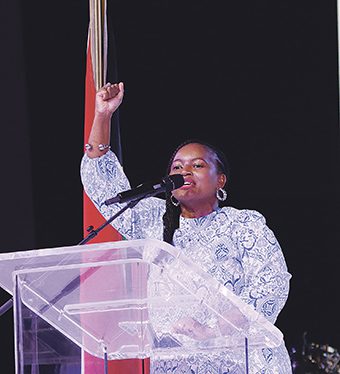
Tabling the budget on Wednesday, deputy mayor and finance MMC Loyiso Masuku said the revenue base was under pressure, adding that tighter controls were needed to ensure efficient revenue collection. Without that, she said, the city would remain in a precarious financial position.
Visit SW YouTube Channel for our video content
- Johannesburg's capital expenditure is under 9% of a R97.1 billion budget, flagged as too low for a major metro with nearly six million residents.
- Only R350 million of the R8.9 billion capital budget comes from internally generated cash; the rest depends on borrowing and national government grants.
- Key infrastructure spending is being cut significantly over the next three years, including stormwater, sports and recreation, and housing.
- Residents face sharp tariff hikes (6.2% for waste removal, 9.1% electricity, 11% water) while the city struggles with high operational costs, billing issues, and non-payment.
- Experts and opposition parties warn that sustained underinvestment and financial mismanagement risk worsening service delivery, infrastructure collapse, and long-term economic decline.


