


In any normal democracy, July 6 should be a holiday.
Just like Americans light fireworks every July 4 to celebrate the birth of their republic, South Africans should do the same two days later every year from now, not for independence, but for the restoration of democratic order.
Let me take you back.
Nation’s trajectory changed
A year ago, on this very day, my brother and I stood over a braai in our township, the kind of neighbourhood where criminals know better than to set foot. The charcoal glowed, flames kissed a thick slab of beef brisket, and the air was thick with smoke and laughter.
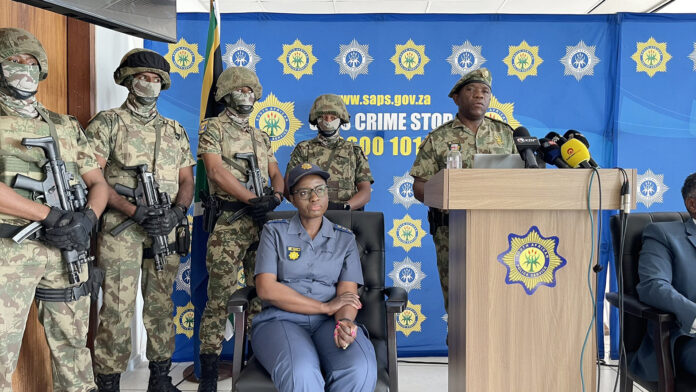
Then, as we wandered the toxic streets of social media, we stumbled upon a press briefing that would change the trajectory of our nation. Within minutes, our brisket flirted with becoming charcoal as we abandoned the fire and stared at a press conference that permanently altered South Africa’s political landscape. We had entered unfamiliar territory. Whistleblowers were not new to us. But never before had the whistle been blown by a policeman himself.
Lieutenant General Nhlanhla Mkhwanazi did the unthinkable. He broke protocol. He reported suspected criminality, not to colleagues he believed were shielding criminals, but to the highest authority in a constitutional democracy: the people of South Africa.
This morning, exactly a year later, my brother and I sit together again after 1 am, replaying every minute of that extraordinary afternoon, with a brisket of celebration no longer charring on the braai stand. Being the crack‑barrel philosophers we proudly are, we have reached the same conclusion: July 6 deserves to be remembered and immortalised in our calendar.
Canonising Mkhwanazi
Predictably, some are going to accuse me of trying to canonise Mkhwanazi. Untrue. He is no demi‑god. He is simply an excellent Homo sapiens. This is not about elevating him above every police officer. It is about recognising a moment when one public servant reminded an entire nation that the Constitution still outranks politicians, ministers, commissioners, and criminal syndicates.
Others will argue that Mkhwanazi himself may not be clean. Excellent. Then investigate him. If there is evidence against him, prosecute him. If another officer believes corruption has infected his organised crime unit, let them pull a July 6. If anyone genuinely believes he leads a rival cartel, expose him before the people. Heroes who fear scrutiny eventually become villains.
But let us not miss the point. Since July 6 last year, it has not been business as usual. Senior police officers have been suspended, dismissed, or investigated. A minister remains on leave. Cartels that strutted with swagger now glance over their shoulders. Syndicates that once believed themselves untouchable have discovered that daylight is a dangerous place to conduct dark business.
Hope for cartel victims
Underground figures like Cat Matlala are suddenly singing like Michael Bolton. Victims of cartels have gained a spoonful of hope. South Africans have watched the dominoes fall.
Imagine if July 6 had never happened. Imagine whistleblowers still risking their lives only to disclose information to captured police bosses willing to sell an entire country for a lousy bottle of whiskey. Imagine no Madlanga Commission. Imagine the silence than Sir Van Morrison talks about in his 15-minutes long rendition of Summertime In England.
Instead, we witnessed a moment of rupture. A policeman with a badge reminded us that democracies are not preserved by perfect people. They are preserved by courageous ones. No, Mkhwanazi is definitely not Zeus. He is not a holy angel. He is a whistleblower with a badge. And heroes are not required to wear halos.
Americans celebrate the birth of their republic every July 4. South Africans should celebrate July 6: the day we remembered that a republic survives only when the people refuse to surrender the Constitution to extraordinary criminals. Make July 6 a public holiday.
- On July 6 last year, Lieutenant General Nhlanhla Mkhwanazi broke police protocol by publicly exposing criminality within the police, marking a pivotal moment in South Africa's fight against corruption.
- Mkhwanazi's whistleblowing challenged a culture of police collusion with crime syndicates and led to suspensions, dismissals, and investigations of senior officials.
- The exposure sparked hope among victims of criminal cartels and triggered significant government action, including the Madlanga Commission inquiry.
- The author argues that July 6 should be a public holiday in South Africa to celebrate the restoration of democratic order and the rule of the Constitution.
- The article emphasizes the importance of courageous individuals in preserving democracy, highlighting Mkhwanazi as a whistleblower who reminded the nation that no one is above the law.


