


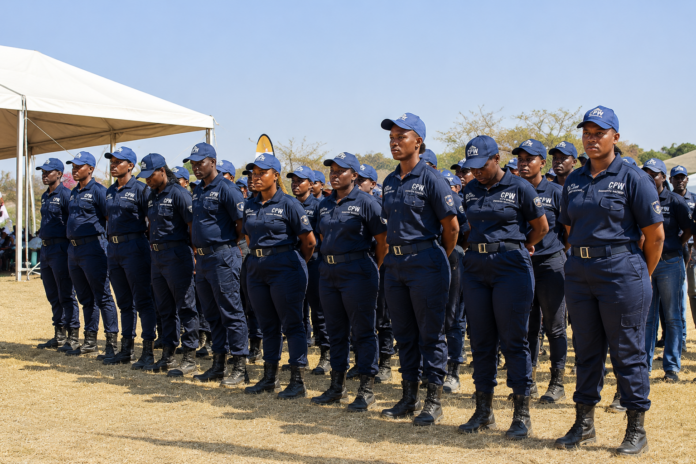
The Mpumalanga provincial government has pushed back against claims that it spent R52.8-million on 1 200 Crime Prevention Wardens (CPWs) who allegedly spent months at home while continuing to receive monthly stipends.
The dispute erupted after Democratic Alliance (DA) MPL Teboho Sekaledi accused the Department of Community Safety, Security and Liaison of incurring fruitless and wasteful expenditure by paying wardens who had allegedly not been utilised since October 2025.
Sekaledi estimated that taxpayers had spent R52.8-million over an 11-month period on stipends of R4 000 per month for the wardens.
But the department has dismissed the claim, arguing that the figure represents the programme’s total budget allocation over two years rather than money paid out to inactive wardens.
“The amount floated around as an expenditure for the programme is misleading. The department views this as a deliberate act to dent the image of the government,” departmental spokesperson Moeti Mmusi said in a statement on Tuesday.
“The allocation of the programme is R52-million and is allocated for over two years.”
Conflicting accounts over programme timeline
The department said the wardens’ contracts began on December 1, 2024, and are due to expire on November 30, 2026.
This differs from the DA’s version of events, which maintains that the 1 200 wardens were deployed in September 2024 on 24-month contracts.
According to the department, the programme is currently under assessment as it approaches the end of its lifespan.
The wardens were initially recruited as part of a crime prevention initiative and underwent training through a Private Security Industry Regulatory Authority (PSiRA)-accredited service provider at a cost of about R3.2-million.
They were then deployed to 90 police stations across Mpumalanga.
Legal hurdles derail original deployment
However, the department acknowledged that the deployment of wardens to police stations ran into significant legal challenges.
Officials said there was no legislation fully supporting the arrangement, limiting the ability to utilise the wardens in their intended role.
The issue mirrors difficulties experienced in Gauteng, where Premier Panyaza Lesufi’s Crime Prevention Wardens programme, popularly known as AmaPanyaza, faced scrutiny over the legal basis of the wardens’ powers and responsibilities.
In October 2025, Public Protector Kholeka Gcaleka found that Gauteng’s wardens had been established and deployed without an adequate legislative framework governing their powers, functions, training and accountability.
As a result, the programme had to be restructured, with wardens brought under existing legislation governing traffic wardens and granted peace officer status.
In January this year, Justice Minister Mmamoloko Kubayi formally declared more than 9 000 Gauteng traffic wardens peace officers under Section 334 of the Criminal Procedure Act.
Wardens converted to traffic and GBVF roles
Mpumalanga appears to have adopted a similar approach.
The department said wardens were informed during 2025 that they would be converted into traffic wardens because of the legislative challenges affecting their deployment at police stations.
They subsequently received training at the Mpumalanga Traffic Training College and are now assisting with traffic management and road safety initiatives.
While the department confirmed that some wardens had also been converted into Gender-Based Violence and Femicide (GBVF) Brigades, it did not disclose how many had been assigned to either role, where they were deployed or when the deployments commenced.
According to the department, members of the GBVF Brigades were trained to support efforts to combat gender-based violence alongside community stakeholders.
“The process of converting the Crime Prevention Wardens into Traffic Wardens and GBVF Brigades has been completed,” the department said.
DA questions deployment claims
Sekaledi has accused Community Safety MEC Jackie Macie of potentially misleading the provincial legislature’s portfolio committee by reporting that former CPWs had been redeployed as GBVF Brigades at police stations.
He said wardens who spoke to the DA anonymously disputed claims that they had been deployed in those roles.
Although the department’s statement confirms that both traffic warden and GBVF conversion programmes have been implemented, it rejects the DA’s characterization that the wardens have largely been sitting idle while receiving government stipends.
“The Department remains committed to ensuring that value for money is derived from this programme, and urges communities to be vigilant against individuals whose quest to mislead the public will be exposed,” it said.
Questions remain
Despite the department’s defence of the programme, questions remain over how many of the 1 200 wardens are actively performing traffic or GBVF duties, where they are based, and what measurable outcomes have been achieved since the conversion process was completed.
With the programme scheduled to expire later this year, scrutiny over its effectiveness and value for money is likely to intensify as political parties and oversight bodies seek greater transparency around its implementation.
- The Mpumalanga provincial government denies claims of having spent R52.8-million on 1 200 CPWs who allegedly remained inactive and continued receiving stipends since October 2025.
- The Department of Community Safety, Security and Liaison states the R52-million figure represents a two-year budget allocation for the programme, not payments to inactive wardens.
- The CPWs were recruited in December 2024, trained at a cost of about R3.2-million, and deployed to 90 police stations but faced legal challenges due to lack of legislative support for their roles.
- Due to legal hurdles, Mpumalanga converted the wardens into traffic wardens and Gender-Based Violence and Femicide (GBVF) Brigades, with training completed and redeployment underway.
- The DA has questioned the deployment claims, with some wardens disputing their active roles, while the department maintains commitment to the programme and value for money.


