


The Mpumalanga legislature has rejected a motion to celebrate the 100th anniversary of South Africa’s world-famous Kruger National Park, exposing deep political divisions over one of Africa’s most iconic conservation landmarks.
The dramatic rejection came on Tuesday when lawmakers refused to adopt a motion without notice that sought to commemorate the centenary of the park’s official establishment in 1926 while also recognising land restitution efforts involving communities dispossessed during its creation.
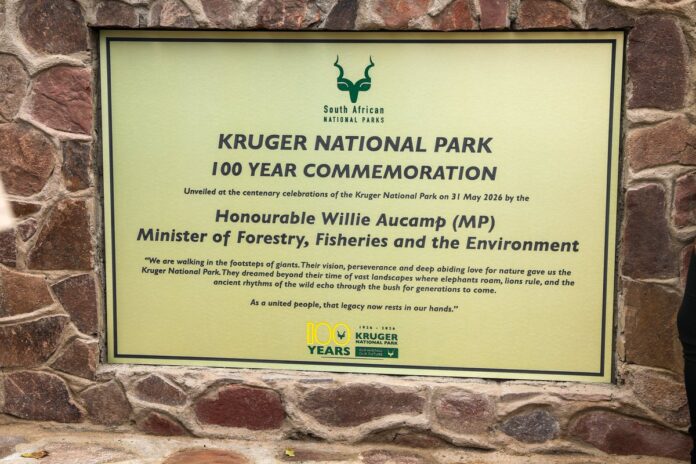
The decision comes just days after forestry, fisheries and environment minister Willie Aucamp joined dignitaries, the premier Mandla Ndlovu and local MECs and conservation leaders at centenary celebrations held at Skukuza over the weekend, the administrative headquarters of the vast wildlife reserve.
‘Global symbol of natural heritage’
Presenting the motion, ANC legislator Steven Sekwakwa described the park as a global symbol of South Africa’s natural heritage and one of the continent’s most significant conservation success stories.
“This year marks 100 years of the official establishment of the Kruger National Park, one of Africa’s most important conservation areas, which is symbolic of South Africa’s natural heritage,” Sekwakwa told the house.
He argued that any celebration of the park’s centenary would be incomplete without acknowledging communities that lost land when conservation areas were established under colonial and apartheid-era policies.
“We note the important role played by the communities living around the park, many of whom were historically dispossessed of their land during the creation and expansion of the conservation areas,” he said.
‘Several land claims settled’
Sekwakwa noted that several land claims had since been settled and that affected communities continued seeking meaningful participation in tourism and conservation activities linked to the park.
He further credited traditional leaders, conservation workers and rangers for helping preserve the biodiversity that has made Kruger an internationally recognised destination attracting millions of visitors and generating billions for South Africa’s tourism economy.
But when Speaker Makhosazane Masilela called for the motion to be adopted, an EFF-led group of lawmakers objected.
“The motion is defeated,” Masilela ruled.
Political symbolism
The rejection carries significant political symbolism.
Last year the same legislature adopted an EFF-sponsored motion calling for the renaming of the Kruger National Park, arguing that the reserve continues to bear the name of former Boer leader Paul Kruger while many indigenous historical figures remain unrecognised.
The proposal sparked national controversy after it emerged that the suggested replacement name, Skukuza, was itself associated with James Stevenson-Hamilton, the park’s first warden who became known among local communities as “Skukuza” or “the bulldozer” because of forced removals linked to conservation policies.
EFF provincial leader Collen Sedibe later conceded that the proposal required further consultation with land claimants and affected communities.
The latest vote suggests that debates surrounding the legacy of Kruger National Park remain far from settled, even as the reserve marks a century of existence.
Visit SW YouTube Channel for our video content
- The Mpumalanga legislature rejected a motion to celebrate the 100th anniversary of Kruger National Park, highlighting political divisions.
- The motion aimed to commemorate the park’s centenary while acknowledging land restitution for communities dispossessed during its establishment.
- ANC legislator Steven Sekwakwa emphasized the park’s global conservation significance and the need to recognize impacted local communities.
- An EFF-led group opposed the motion, reflecting ongoing controversy over the park’s name and its colonial-era legacy.
- Debates about Kruger National Park's history and legacy continue amid calls for renaming and greater recognition of indigenous communities.


