


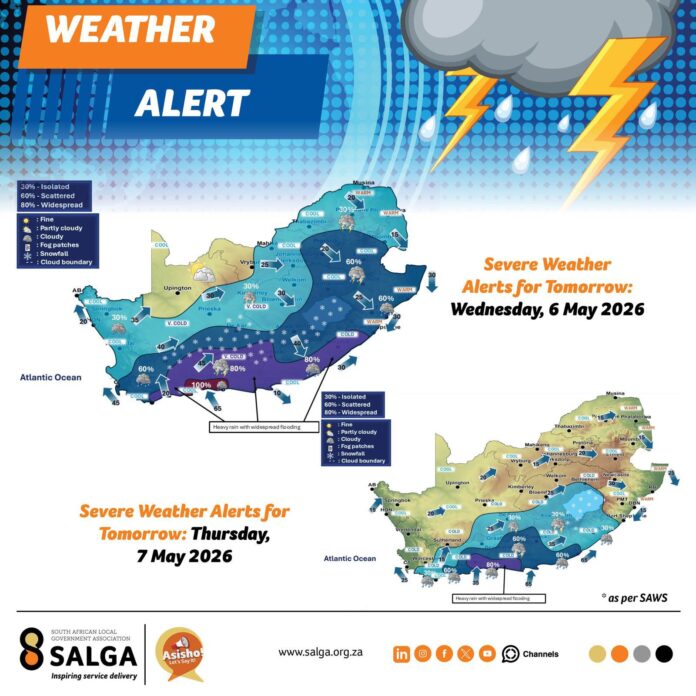
The South African Local Government Association (Salga) has activated emergency protocols across multiple departments as the South African Weather Service (SAWS) issues warnings of dangerous conditions. The public is called upon to exercise extreme caution between Tuesday and Thursday.
The warning covers the Western Cape, Eastern Cape, Free State, North West and parts of the Northern Cape, specifically coastal and adjacent interior regions, as well as flood-prone and low-lying areas already susceptible to storm damage.
Cold, wet and windy weather
SAWS forecasters have warned that the system will bring a dangerous confluence of conditions: cold, wet and persistently windy weather, with the potential for widespread flooding, damaging winds, severe thunderstorms, snowfall over high-lying terrain, and hazardous wave conditions along the coast.
In the worst-affected zones, rainfall accumulations of between 100mm and 200mm are considered possible over the three-day period.
A cascade of potential impacts
Authorities have outlined a sobering list of anticipated consequences should the system develop as projected. Roads, settlements and low-lying residential areas face flooding, while bridges, stormwater systems and other critical infrastructures may sustain significant damage. Power outages and disruptions to essential services are considered likely in the hardest-hit areas.
Motorists are advised to exercise extreme caution, with road closures expected in vulnerable corridors. Along the coast, rough seas and the possibility of a storm surge threaten to cause serious damage to shoreline infrastructure and property. Inland, farmers and rural communities in elevated regions have been warned of risks to livestock and disruptions to travel due to snowfall.
Provinces Under Warning
Western Cape – coastal & interior regions
Eastern Cape – coastal & adjacent areas
Free State – flood-prone & low-lying zones
North West – at-risk communities
Northern Cape (parts) – coastal strip & interior
Municipal preparedness measures
Salga’s directive outlines a coordinated set of preparedness actions that municipalities are expected to implement without delay. Disaster management centers have been instructed to activate monitoring and coordination mechanisms and to maintain close liaison with provincial disaster management authorities throughout the duration of the event.
Fire, rescue and emergency services have been placed on standby, with personnel and equipment required to be ready to respond to flooding incidents, storm damage and rescue operations at short notice. Infrastructure and technical services teams have been instructed to clear stormwater drains, inspect critical infrastructure and assemble rapid-response teams capable of addressing damage as it occurs.
Human Settlements and Community Services have been instructed to identify vulnerable communities in affected areas and to ensure that temporary shelter facilities are operational and ready for deployment should conditions deteriorate to a level requiring evacuation or emergency accommodation.
Traffic and law enforcement services have been assigned to monitor high-risk road routes, coordinate road closures where necessary, and maintain order to ensure the safety of commuters and residents moving through areas most likely to be impacted by flooding and reduced visibility.
Stay informed through official SAWS platforms:
- SAWS Website: https://www.weathersa.co.za
-
WeatherSMART App (Apple and Android)
- Salga has activated emergency protocols as SAWS warns of dangerous weather from Tuesday to Thursday across Western Cape, Eastern Cape, Free State, North West, and parts of Northern Cape, focusing on coastal, flood-prone, and low-lying areas.
- Forecasts predict cold, wet, windy conditions with potential for widespread flooding, severe thunderstorms, damaging winds, snowfall in high terrain, and hazardous coastal waves, with rainfall possibly reaching 100-200mm.
- Expected impacts include flooding of roads and settlements, damage to bridges and infrastructure, power outages, road closures, storm surge along coasts, and risks to livestock and travel in rural elevated areas.
- Municipalities must implement preparedness actions: disaster monitoring, emergency services on standby, clearing stormwater drains, inspecting infrastructure, and readying shelters for vulnerable groups.
- Traffic and law enforcement will monitor and manage high-risk routes to ensure safety; the public is advised to stay updated via SAWS official platforms and apps.


