


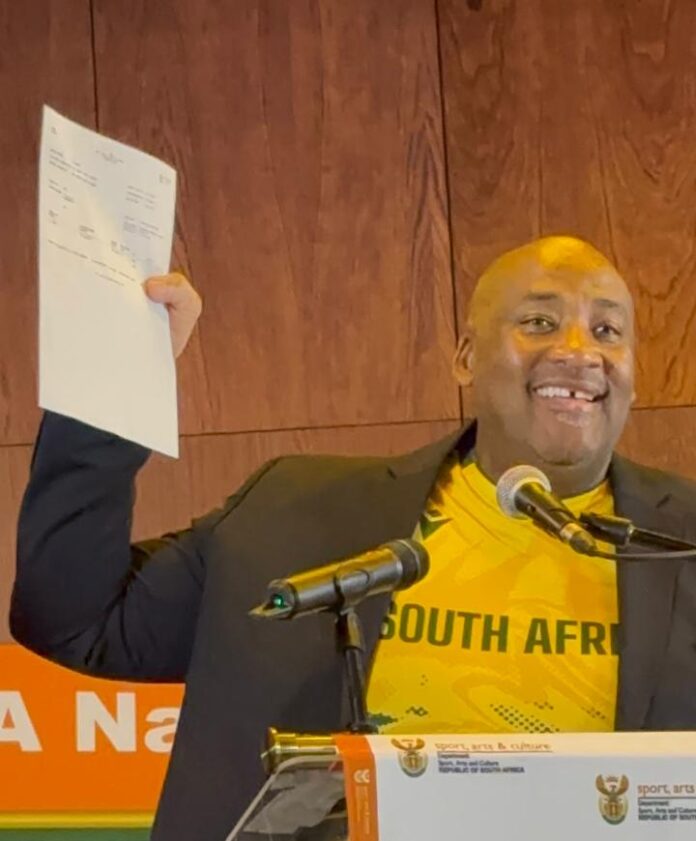
“The NAC respects and acknowledges the Honourable Minister’s decision and remains committed to ensuring operational stability and continuity in support of South Africa’s arts and culture sector during this transitional period.
“The acting chief executive officer, together with executive management, will continue to oversee the day-to-day operations of the organisation and work closely with the Department of Sport, Arts and Culture to ensure the uninterrupted implementation of the NAC’s programmes and services,” said the NAC in the statement.
Corruption and poor service
The NAC, which is the driving force behind funding the arts and cultural sector, was plagued by corruption and the failure to provide support to industry players with millions it had been receiving from the government every year.
The Public Dispatch, an online publication that focuses mainly on arts and culture had extensively reported on happenings at the entity.
The publication reported that the NAC had procured approximately 18 Apple iPhone 17 devices for its provincial council members, including part-time governance appointees, who are not its employees. This procurement cost about R1-million, while artists and the arts and cultural sector were deprived of funding.
Mabaso’s questionable role
Last year in November, Sunday World reported that concerns were raised as the former boss of the department of sports, arts, recreation and culture, Charles Mabaso, who was linked to the R100-million scandal, joined the NAC as one of the adjudicators in the multidisciplinary advisory panel.
Mabaso, who gained public attention in 2019 after being implicated in an R100-million funding controversy during his tenure at the department, was appointed for a three-year term starting in 2025.
According to a 2019 City Press article, millions of rand were allocated to several entities, including Ladysmith Black Mambazo; the National Empowerment Fund; the Indoni SA Cultural Organisation; the Usiba Cultural Awards; and the Living Legends Trust Fund.
The publication alleged that these funds were distributed without approval from the relevant committee, in violation of the criteria for the Mzansi Golden Economy, eligibility requirements, and procedures.
It was further reported that Mabaso and another senior department official were “privy to decisions to fund the projects”.
Mabaso dismisses misconduct allegations
In his response to Sunday World last year, Mabaso confirmed his appointment but rejected all the allegations of misconduct.
“There has never been a finding or a judgment by any court against me regarding the alleged R100-million funding scandal at DSAC [Department of Sport, Arts, and Culture].
“My appointment at the NAC was subjected to a formal process, and I was found fit and proper to be appointed,” he said.
Despite his denial, Mabaso’s appointment has sparked widespread criticism from members of the arts sector, who say the move reflects poorly on governance and accountability in public institutions.
- The National Arts Council of South Africa (NAC) announced the immediate dissolution of its council by minister Gayton McKenzie, citing governance issues.
- NAC commits to operational stability during the transition, with acting CEO and management ensuring continuity of programs and collaboration with the Department of Sport, Arts and Culture.
- The council faced allegations of corruption and mismanagement, including spending R1 million on iPhone 17s for provincial council members, neglecting the arts funding needs.
- Charles Mabaso, linked to a 2019 R100-million funding scandal, was controversially appointed as an adjudicator at NAC for 2025, drawing criticism despite denying misconduct.
- The scandal involves improper funding distribution without committee approval, raising concerns about governance, transparency, and accountability within the arts sector institutions.


