


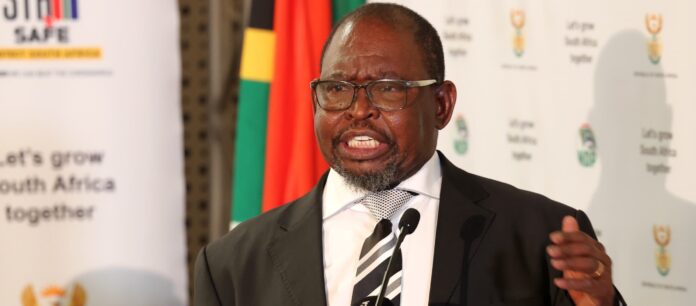
The National Treasury is proposing sweeping reforms that would give it greater oversight of the appointment of municipal chief financial officers (CFOs) as part of efforts to address weak financial management and improve accountability in local government.
The proposal forms part of planned amendments to the Municipal Finance Management Act (MFMA), outlined in the 2026 Medium Term Budget Policy Statement (MTBPS) tabled by Finance Minister Enoch Godongwana.
READ: MTBPS | Treasury keeps pressure on municipalities over unpaid bills
According to the MTBPS, many municipalities continue to struggle with weak financial and operational management, prompting government to strengthen its intervention powers and tighten oversight mechanisms.
The proposed amendments will broaden National Treasury’s powers over municipal financial systems and controls, including involvement in the appointment of CFOs.
CFO appointments targeted as part of wider reforms
The reforms form part of what government describes as a broader effort to strengthen the integrity of public finance management across all spheres of government.
In the MTBPS, Godongwana said amendments to the MFMA would address persistent weaknesses in local government financial administration and governance.
The proposed changes would allow for more robust early interventions under Section 139 of the Constitution and strengthen Treasury’s oversight of municipal financial management.
Government also wants to establish more credible budgeting processes and prevent councils from adopting unfunded budgets.
Treasury targets financial misconduct
The MTBPS proposes that officials, political office bearers and board directors be held personally liable for unauthorised, irregular, fruitless and wasteful expenditure. The reforms are designed to strengthen accountability and deter poor financial management practices that continue to affect many municipalities.
Treasury also wants stronger powers to oversee financial controls and intervene before municipalities reach a state of financial distress.
READ: Parliament rejects spending 100% of budget without real service delivery ahead of MTBPS
The changes complement broader amendments to the Public Finance Management Act aimed at improving governance and accountability across the public sector.
Municipal finances remain under pressure
The reforms come as local government finances continue to deteriorate. Consumer debt owed to municipalities increased from R427.7 billion in June 2025 to R484.5 billion in June 2026, while amounts owed to municipal creditors increased from R156.1 billion to R185.2 billion over the same period.
Municipalities collected only 63.9% of billed revenue, with R99.9 billion of municipal creditor debt linked to bulk electricity accounts.
Treasury warned that these financial pressures are constraining municipalities’ ability to provide basic services and meet their obligations to creditors.
The deterioration in municipal finances also creates broader fiscal risks by affecting institutions such as Eskom and water boards that rely on municipal payments.
Government moves from oversight to intervention
The budget marked a policy shift from oversight to active intervention in municipalities that repeatedly fail to meet their financial obligations.
READ: MTBPS | SA spends R1.2bn a day servicing debt as Treasury targets lower borrowing
In June 2026, the Minister of Finance suspended equitable share transfers to 69 municipalities because of continued failures to pay creditors, including bulk utility providers, the South African Revenue Service, the Auditor-General of South Africa and pension funds.
By the end of July, 38 municipalities had concluded formal repayment plans, resulting in R4.2 billion being paid towards outstanding debt.
The government said the intervention could be repeated if municipalities fail to honour their commitments.
- The National Treasury is proposing amendments to the Municipal Finance Management Act to enhance oversight of municipal CFO appointments and financial management.
- The 2026 Medium Term Budget Policy Statement highlights persistent financial weaknesses in municipalities and aims to enable earlier and stronger interventions under Section 139 of the Constitution.
- Proposed reforms will hold officials and political office bearers personally liable for unauthorised, irregular, fruitless, and wasteful expenditure to improve accountability.
- Municipal consumer debt rose from R427.7 billion in June 2025 to R484.5 billion in June 2026, with only 63.9% of billed revenue collected, impacting service delivery and creditors like Eskom.
- In June 2026, the Finance Minister suspended equitable share transfers to 69 municipalities due to non-payment of creditors, with 38 municipalities agreeing to repay R4.2 billion by July.


