


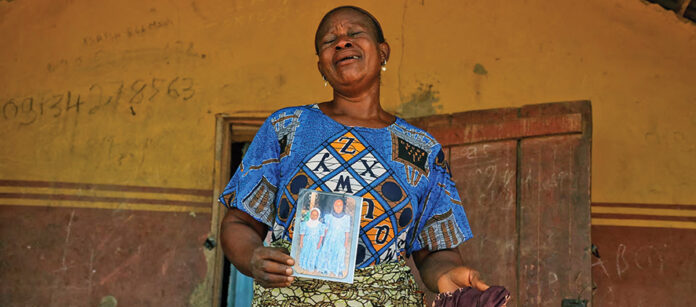
YAWOTA, Nigeria – It was mid-morning when Aduke Balogun noticed a masked man in military fatigues walking towards her children’s school. Minutes later, gunfire erupted, more gunmen appeared and residents fled.
In the chaos, her six-year-old daughter, Feranmi, managed to escape but another daughter, eight-year-old Kausarat, was not so lucky — one of more than
30 pupils and a teacher seized and spirited into the bush near Yawota, a town in south-west Nigeria’s Oyo state.
Videos of kidnapped children are circulating but Balogun cannot bear to watch and it is unclear if they are from her children’s Baptist Nursery and Primary School.
“Every day, I pray and hope for their safe return,” she said as she manned a stall selling soft drinks, bread and biscuits across the road from the school.
The May 15 raid — and simultaneous attacks on two other nearby schools — have jolted a region long seen as relatively safe compared to more unstable regions further north, fuelling fears that kidnapping-for-ransom gangs are expanding their operations far beyond traditional hotspots.
Widespread kidnappings and the ever-expanding presence of armed groups across Nigeria — Africa’s most populous country — will probably be key issues in the run-up to Nigeria’s national elections in January.
“The Oyo abductions mark a dangerous escalation from a crisis once largely confined to Nigeria’s north and Middle Belt into the south-west,” said Cheta Nwanze, a partner at security consultancy SBM Intelligence. “As the 2027 elections approach, Nigerians will judge politicians primarily on whether they can keep classrooms and communities safe.”
Nigeria’s government has struggled for years to tackle insecurity, ranging from herder-farmer conflicts across its centre to the mix of bandits, Islamist militants and community defence militia that operate across northern states.
Amid the violence, armed groups frequently kidnap motorists, clerics and schoolchildren, holding them until ransom payments are made. SBM Intelligence said kidnappers collected at least 2.57 billion naira ($1.89 million/R31m) in ransom payments in Nigeria in the year to June 2025.
Two weeks after the Yawota kidnappings, schoolbags, books, food flasks, water bottles and children’s footwear lay scattered across classroom floors at the Baptist Nursery and Primary School. A police patrol van was parked outside, with armed officers keeping watch.
At the LA Primary School, 5km from where Balogun’s child was seized, a teacher was shot dead as he tried to escape through a classroom window during another attack, said Lamidi Waheed, a teacher at the school.
In the third raid, another six teachers and seven pupils were kidnapped from the nearby Community High School in Ahoro-Esinele, Waheed added.
Days later, a video circulated online apparently showing gunmen beheading a teacher seized in this attack. Reuters was unable to verify the video.
Fearing the insecurity and lacking cellphone networks to call for help, many who live in farming communities in Oyo’s Oriire district, about 300km north-east of Lagos, Nigeria’s commercial capital, have fled, local chief Tajudeen Abioye said.
When he came to power three years ago, President Bola Tinubu pledged, like his predecessors, to tackle insecurity by recruiting more soldiers and policemen, as well as making sure they were better equipped and paid.
However, the Oyo attack, along with the kidnapping of 42 schoolchildren last month in insurgency-hit north-east Borno state, have intensified scrutiny of Tinubu’s security record before the 2027 elections. However, worsening security could weigh on his chances.
No group has claimed responsibility for the Oyo attacks but the military has blamed Boko Haram Islamist militants, which usually operate in the north-east.
Some security operatives had been injured in an initial attempt to rescue the children and their teachers from the Community High School, Abioye said.
Since then, authorities have made contact with the kidnappers and eight suspects had been detained and were helping the authorities, police spokesperson Olayinka Ayanlade said.
Grace Ojo, whose seven-year-old grandchild was among those taken from the Baptist school has only one request. “We don’t need money, foodstuffs or anything. We just want our children back,” she said. — Reuters
- On May 15, gunmen attacked three schools near Yawota in Nigeria’s Oyo state, kidnapping over 30 pupils and teachers, marking a dangerous expansion of kidnappings beyond Nigeria’s northern regions.
- The raids have caused widespread fear and displacement in the area, with families fleeing insecurity and demanding the safe return of their children.
- Nigeria faces increasing insecurity ahead of its 2027 elections, with kidnappings and armed group violence becoming key political and social issues.
- The government, led by President Bola Tinubu, faces criticism over its handling of insecurity, as attacks continue despite pledges to improve security forces.
- Authorities are engaging with kidnappers and have detained suspects; however, no group has claimed responsibility, with the military blaming Boko Haram militants.


