


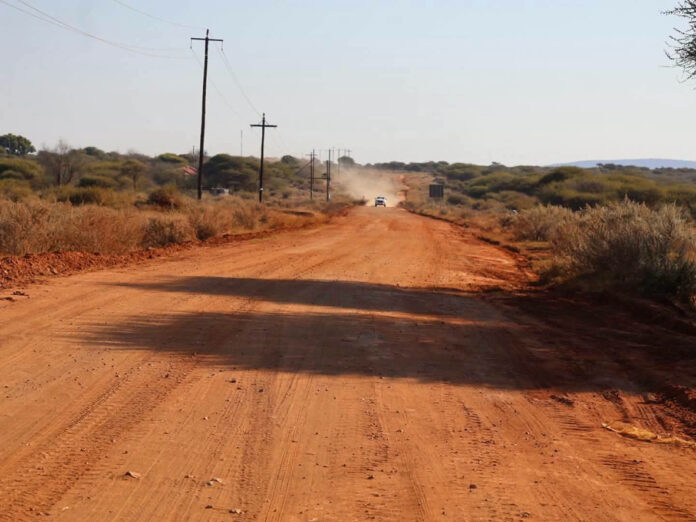
North West Premier Lazarus Mokgosi has launched a R600 million multiyear road construction project in Moses Kotane Local Municipality in Mogwase, Rustenburg.
He said the investment will improve transport links for rural communities, stimulate tourism and agriculture and create jobs through local procurement.
The project, unveiled on Wednesday at Pitsedisulejang village in the Bojanala Platinum District, will see the construction of a 33km tarred road, replacing gravel roads, and the building of five major bridges linking several villages in the area.
The project forms part of Mokgosi’s commitment, announced during his State of the Province Address, to address long-standing road infrastructure backlogs in rural and economically disadvantaged communities.
Speaking at the launch, Mokgosi said the road would improve connectivity between villages, including Debraak, Dwarsberg, Sesobe and Pitsedisulejang, many of which depend on farming for their livelihoods.
“This is a multiyear road infrastructure project that will link several villages of wards 1 and 2 in the Moses Kotane Local Municipality,” Mokgosi said. “These villages include Debraak, Dwarsberg, Sesobe and Pitsedisulejang. These are rural communities that rely on farming as an economic activity. This road will ease the transportation of their produce.”
The premier said the project aligned with the province’s growth and development strategy, which sought to revive economic activity across all four districts through strategic infrastructure investment.
He said the improved road network would also benefit the tourism sector.
“These communities are also in proximity to Madikwe Game Reserve, as well as Pilanesberg National Park.
“I have no doubt that the influx of people into these areas due to flexible mobility will have a multiplier effect in the local economy,” Mokgosi said.
According to the provincial government, the project will be implemented over several years and include the upgrading of gravel roads to tar standard, together with the construction of five bridges to improve year-round access.
The work has been divided into two construction phases.
The first phase covers approximately 17km from Dwarsberg to Mankaipaya and includes three bridges, while the second phase covers about 16.5km from Mankaipaya to Ramotlhajwe and features two additional bridges.
The contracts’ value exceeds R595 million, and construction is expected to commence in August, with each phase scheduled to run for 18 months.
Public Works and Roads MEC Sempe Elizabeth Mokua said the project had been structured to benefit the communities through employment and enterprise development.
More than R130m has been allocated for small, micro and medium enterprises through subcontracting opportunities and the supply of construction materials.
“We have made it clear that preference should be given to designated groups such as women, youth and people with disabilities,” Mokua said.
Project planning documents indicate that contractors will be required to subcontract at least 30% of the work to targeted local enterprises, while training opportunities will be provided to community members and civil engineering students.
The first phase is expected to create about 120 work opportunities, while the second phase is projected to generate another 100 jobs.
The project also includes drainage systems, culverts, guardrails, road signage, landscaping and a programme aimed at developing local small construction businesses.
The provincial government said improving road infrastructure remained one of its priorities as it sought to expand economic opportunities in rural areas where poor transport networks had historically constrained access to markets, services and tourism.
- North West Premier Lazarus Mokgosi launched a R600 million multiyear project to construct 33km of tarred roads and five bridges in Moses Kotane Local Municipality, replacing gravel roads to improve rural connectivity.
- The project aims to stimulate local economies by enhancing transport for farming communities, boosting tourism near Madikwe Game Reserve and Pilanesberg National Park, and creating jobs through local procurement.
- Construction is divided into two phases: 17km from Dwarsberg to Mankaipaya with three bridges, and 16.5km from Mankaipaya to Ramotlhajwe with two bridges; each phase will run for 18 months starting August.
- Over R130 million is allocated to support small, micro, and medium enterprises, with a focus on women, youth, and people with disabilities, including subcontracting 30% of work to local businesses and training opportunities.
- The project includes additional infrastructure like drainage, culverts, guardrails, signage, and landscaping, aligning with provincial development goals to improve rural infrastructure and economic access.



Good afternoon , I am Daniel tlhogi tledima from uitkyk village which is located between koffiekraal of skuinsdrift and masebudule mines.our decade horrible gravel road is strategic link of swartruggens, grootmarico, mogopa village and brakkuil thousand areas.Attention to that contributory link to that small economy will make a vast difference.My greatest plea from our late parents and our great great ones we learnt that, I am almost heading to 62 years of age since I grew here from age of five years.we always hopefully.thanks guys.
Change your VOTELA, Daniel …..
You have gotten EXACTLY what you voted for.
“The North West province is considered one of South Africa’s most severely impacted by public sector corruption, which has led to the near-total collapse of basic service delivery and local governance.”
My name is Rhoda Heck I would like to ask for a gravel road on rietfontein plotte where dozi is, the people’s cars are getting messed up and it’s difficult for people to drive there will all the rocks, please can someone help kind regards
Rhoda Heck
0710676509
My name is Kutlwisiso I would to ask of the gravel road between Mabeskraal and Seolong,this road is also used by community going for burial of their loved once. When is it going to be considered ? the bridges there are gone. We ask for atleast pavement .ouri parents are sick of asthma due to dust.when its raining is worse.
My name is Kgotso from Manamela village. If you may go and listen to the speeches of the then Premiers of the North West where they promised the tarred you will be amazed. The construction came only to find that they came to re gravel the road with a poor standard of re graveling. Please premier just assist those who are using Tha road between Makweleng, Manamela, Maskolane and Taaibochkuil.
The