


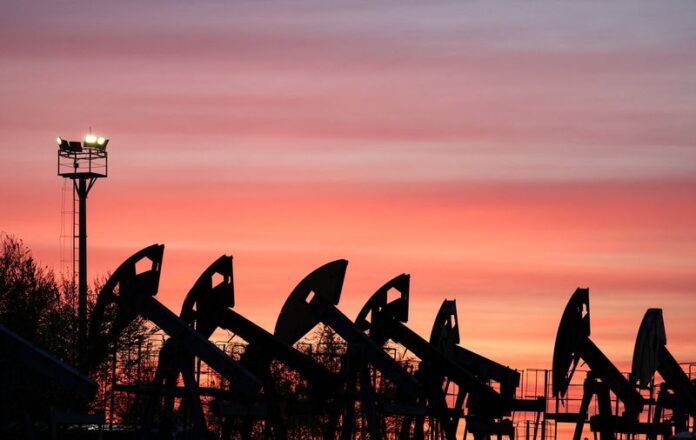
International and US crude futures rose on Friday after US President Donald Trump threatened economic sanctions on Iran’s trading partners, raising expectations of tighter supply in the coming weeks.
International benchmark Brent crude futures rose 0.09%, to $93.86 a barrel in morning trade. US West Texas Intermediate crude was up 0.18% at $86.99.
Oil futures rise on sanctions threat
The Brent benchmark has gained more than 6% while WTI has risen more than 5% this week, with both touching their highest since July 24 in the previous session.
“Sanctions have been the only thing to bring Iran to heel,” said John Kilduff, partner with Again Capital.
Iran said on Friday that its response to any new US threats would be “devastating” after Washington pledged to impose the toughest financial penalties in history with the aim of toppling the Iranian leadership.
Iran’s response and supply constraints
“The immediate impact on supply may be limited as Iranian exports are already heavily constrained by the U.S. naval blockade,” said Crispus Nyaga, research analyst at Empire FX.
“However, an increase in shipping incidents and retaliation against economic sanctions could exacerbate the current situation at a time when traffic through the Strait of Hormuz remains well below normal levels.”
Strait of Hormuz traffic reduced
Oil prices have climbed on concerns over the continued curtailment of supply from major oil producers such as Saudi Arabia, Iraq, the United Arab Emirates and Kuwait.
The earlier peace deal between the US and Iran expired this week with no effort by either side to restart talks.
Offers of Iranian crude to Chinese buyers have declined and prices have jumped this week as the US blockade cuts Iran’s shipments, trade sources said, with the threat of more sanctions from Washington looming.
Supply disruption continues
Seven commodity ships sailed along the Strait of Hormuz on Thursday, which was only half the previous day’s tally, data from ship-tracker Kpler showed.
Before the US-Israeli attacks on Iran began in late February, the Strait of Hormuz handled about a fifth of global oil and liquefied natural gas supplies. As the war approaches the six-month mark, disruptions to energy flows through the waterway remain in place.
Elsewhere, Ukraine’s military hit a Russian oil refinery in the city of Perm overnight, more than 1,600 km (1,000 miles) from the Ukrainian border, President Volodymyr Zelenskiy said on Friday.
- International benchmark Brent crude futures rose 0.09% to $93.86 a barrel, while US West Texas Intermediate crude increased 0.18% to $86.99 on Friday morning.
- Brent crude has gained more than 6% and WTI has risen over 5% this week, reaching their highest levels since July 24 in the previous session.
- Iran warned that its response to new US sanctions threats would be "devastating," with US aiming to impose the toughest financial penalties to topple Iran's leadership.
- Traffic through the Strait of Hormuz remains well below normal, with only seven commodity ships sailing on Thursday, half the previous day's tally, amidst continued supply disruptions.
- Ukraine's military struck a Russian oil refinery in Perm, more than 1,600 km from the Ukrainian border, as stated by President Volodymyr Zelenskiy.


