


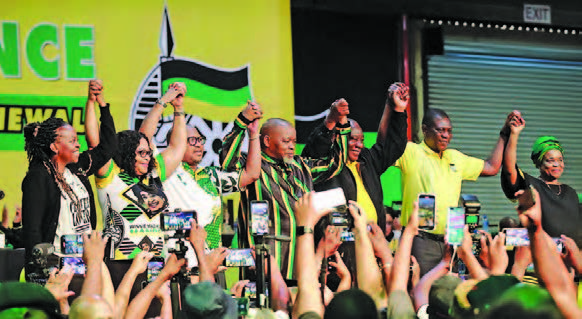
Power is a peculiar thing. It promises prestige but often delivers paranoia. The higher politicians rise, the further they seem to drift from the people who placed them there.
Somewhere between the ballot box and the blue lights, many leaders stop behaving like public servants and begin moving like endangered monarchs fleeing invisible enemies.
Last weekend, while covering the Kruger National Park centenary celebrations, I witnessed a scene that quietly disturbed my understanding of South African politics.
The event itself was magnificent. There were gala dinners, conservation showcases, tourism celebrations and the signing of a beneficiation agreement involving communities whose forebears were forcefully removed from the park during apartheid.
Politicians, SANParks officials, tourists, rangers and journalists converged at one of South Africa’s greatest symbols of natural heritage.
But amid the glamour and speeches, a small detail became impossible to ignore.
Minister of Forestry, Fisheries and the Environment Willie Aucamp, from the DA, moved around freely without a visible army of bodyguards shadowing his every breath.
No heavily armed men pacing nervously around tourists. No aggressive security choreography. No convoy of blue-light vehicles bullying the road like a military parade.
Aucamp walked among ordinary people. He shook hands freely. He laughed with tourists.
At times, he even drove his own vehicle.
It was strangely refreshing.
And perhaps that is the real tragedy: in modern South Africa, a politician behaving like a normal human being feels revolutionary.
Had this been one of the ANC’s senior ministers arriving at Mathekenyane Hill in the heart of the Kruger National Park, the atmosphere would probably have been entirely different.
There would have been men with earpieces scanning every movement. Rifles hanging from tense shoulders. Convoys screaming authority into the wilderness while citizens stand aside for the leaders they elected into office.
One question kept haunting me throughout the weekend: What exactly are ANC ministers so afraid of? Are they afraid of the voter?
If so, what does that say about the relationship between the governing party and the governed? Democracy was supposed to produce trust between leaders and citizens.
Yet many politicians move as though the public itself has become a hostile force.
Or are they afraid of fellow comrades? That reality changes everything.
Once politics becomes psychologically associated with danger, betrayal and internal warfare, leaders stop acting like servants of the people and start behaving like cartel bosses protecting territory.
Perhaps this is why the ANC’s renewal project often sounds poetic at conferences yet struggles to materialise in practice. Self-cleansing requires courage. It requires leaders unafraid of losing positions. It requires politicians who can discipline comrades without fearing retaliation from their own organisation.
But can genuine renewal happen inside a culture where comrades fear one another?
The bodyguard then becomes more than a bodyguard. He becomes a symbol of political anxiety. A walking confession that power in South Africa is no longer merely administrative. It is psychological warfare.
The irony, however, is devastating. Most of the politicians lose their security details the moment they leave office. The convoys disappear. The men with rifles vanish. Life suddenly continues without the dramatic theatre of protection.
Which raises another uncomfortable question: If a politician can safely walk among citizens after leaving office, why were they so terrified while in office?
Maybe the answer lies in guilt. Maybe it lies in the awareness that many communities remain poor, angry and abandoned while politicians accumulate comfort. A leader who governs well rarely fears the governed. Fear often grows where trust has died.
This is why Aucamp’s casual walkabouts in Kruger felt larger than politics itself. Whether one agrees with his party or not is irrelevant. What mattered was the symbolism. He looked like a man unafraid of the people around him.
South Africa desperately needs more of that energy.
- Mdakane is a senior journalist.
- At the Kruger National Park centenary celebrations, DA Minister Willie Aucamp moved freely among the public without heavy security, contrasting with typical ANC ministerial entourages laden with bodyguards and convoys.
- The article highlights a troubling pattern in South African politics where many politicians behave more like guarded monarchs than public servants, driven by paranoia and fear of the electorate or internal party rivals.
- The heavy security surrounding ANC ministers symbolizes political anxiety and a breakdown of trust between leaders and citizens, undermining democratic principles.
- Genuine political renewal is impeded by fear and distrust within the ANC, where leaders are more concerned about betrayal by comrades than serving the public effectively.
- Aucamp’s relaxed and accessible demeanor is portrayed as a hopeful symbol for South Africa, emphasizing the need for politicians who are unafraid of their people and focused on trust rather than fear.


