


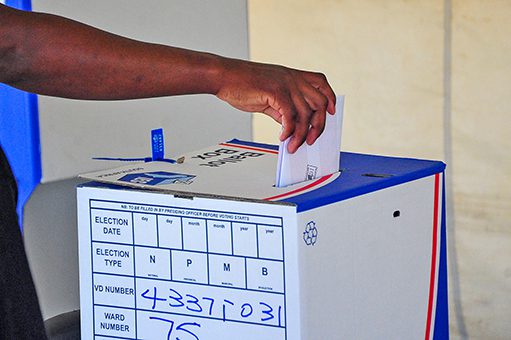
South African youth have registered to vote in record numbers this year.
In the Electoral Commission’s August registration weekend alone, 46% of new registrations came from voters under the age of 29. In total, the IEC added 754 000 new voters across the June and August registration weekends, most of them young. This is an encouraging number, and it reflects real interest among young people in South Africa’s democracy.
But based on previous local government elections, a registration surge alone does not guarantee that young people will vote on election day. In 2021, only 35% of registered voters aged 20 to 29 turned out, a decrease from 50% in 2016.
Analysts tracking this pattern describe something more specific than apathy. “Youth do come out to register to vote, but on the day of the election, they do not come out to vote,” said political analyst, Goodenough Mashego.
The reasons cited are familiar. Youth unemployment tops the list, compounded by distrust in government, the visible failure of municipalities to deliver services, and an absence of parties offering anything concrete at ward level. This distrust centres on local government, the sphere of the state a young voter watches fail in real time.
The number of hung municipalities jumped from 27 after the 2016 election to 66 after 2021, according to the Mapubungwe Institute for Strategic Reflection (Mistra)’s Coalitions Barometer. What followed was a visible collapse of continuity. Mayors were removed within months of taking office, projects were reset with each reshuffle, and water, sanitation, electricity and housing backlogs grew another year longer in the townships and informal settlements where South Africa’s youth are most concentrated.
A first-time voter entering the electorate after 2021 watched Johannesburg cycle through seven mayoral terms across five people, while the problems on their own street went unresolved.
READ: Baloyi’s chilling diagnosis of how Joburg collapsed since 2021
Mistra’s Coalitions Barometer II (2023-2025) found that coalition governance remains dogged by major problems in municipalities, including financial mismanagement and thin administrative capacity. According to the report, only 39 of South Africa’s 257 municipalities managed a clean audit in the 2024/25 cycle.
Barometer II also found that dominant parties use no-confidence motions as leverage to extract concessions from coalition partners without actually removing them. That uncertainty extends to who might govern after 4 November, too.
“One can’t be sure which party will link up with whom, or whether post-election coalition arrangements will align with parties’ election promises,” noted Wits University professor, Susan Booysen.
Nonetheless, the registration numbers themselves say something the turnout figures do not. South Africa’s youth haven’t given up on the voters’ roll, even if many are holding back from voting. That matters for whoever governs after November 4. These potential voters are concentrated in the same wards hit hardest by unstable coalitions.
READ: Poll points to another era of hung councils, limping coalitions
Turning that registration into an actual vote takes more than a binding coalition agreement, even though such a law is still needed to stop the collapse-and-reset cycle. What’s needed is a visible track record, such as a project finished on schedule or a reshuffle avoided. That’s what would convince a first-time voter that their ballot matters.
South Africa’s youth have already answered one question. They are willing to be counted. Whether they turn up on November 4 is the question the country’s parties and coalitions must answer back, in the only currency this story has shown matters, whether it’s a finished project, a mayor who serves a full term, a backlog that closes, or hiring young people in permanent and meaningful employment.
If they don’t deliver on that, this year’s record number of newly registered voters will become next year’s record number of young non-voters.
Ndletyana is a Research Associate at MISTRA, and a Masters Candidate in Development Studies at the Nelson Mandela University.
- In the August registration weekend, 46% of new voter registrations in South Africa were from individuals under 29 years old, contributing to a total of 754,000 new voters added during June and August registration weekends.
- Despite high registration numbers, only 35% of registered voters aged 20 to 29 voted in the 2021 local government elections, down from 50% in 2016.
- Factors deterring youth voter turnout include youth unemployment, distrust in government, municipal service failures, and a lack of concrete local political initiatives.
- The number of hung municipalities increased from 27 in 2016 to 66 in 2021, leading to instability with frequent mayoral changes and unresolved local issues impacting young voters.
- Only 39 out of 257 South African municipalities received clean audits in the 2024/25 cycle, with coalition governance facing challenges such as financial mismanagement and administrative weaknesses.


