


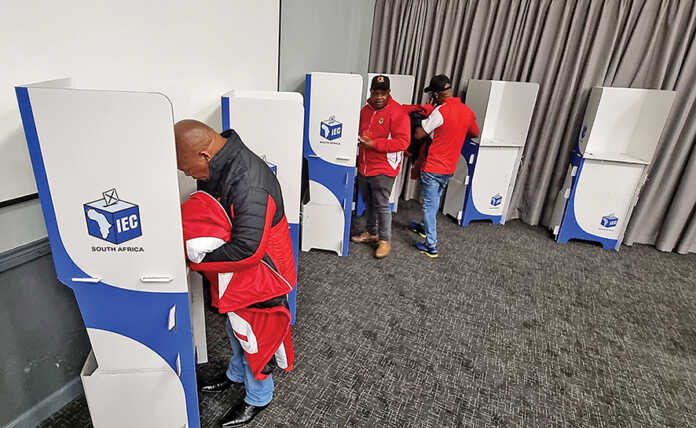
South Africa’s democracy is often discussed in the language of Parliament, elections, political parties and national leaders. Yet the part of government that most directly shapes daily life is much closer to home. It is the municipality that collects refuse, keeps streetlights on, maintains roads, sends the water bill and decides whether a community meeting becomes meaningful participation or another item on an agenda. Local government is where the Constitution stops being an abstract promise and becomes something people can see and judge.
During my time as an intern in the Constitutional Advancement Programme at the FW de Klerk Foundation, I came to understand the gap between knowing that we live in a constitutional democracy and knowing how to use it. We may know that we have the right to vote, but do we know who our ward councillor is? We may complain about municipal failure, but do we know where to report it, how to follow up, or what mechanisms exist to hold officials accountable? These questions tell us whether citizenship is active or merely assumed.
Mapping the reality of local governance
That is why the Independent Local Governance Survey 2026 deserves public attention. The project asks South Africans to put their experience of local democracy on record. It examines what people know about local government, how they experience service delivery, whether they trust municipal institutions, how they participate in civic life, whether they can access municipal information and what role community radio and digital platforms play in connecting residents with the institutions meant to serve them. Ahead of the 2026 local government elections, that evidence matters.
Empowering the next generation of voters
For young South Africans, it matters even more. We are frequently described as the future, yet too often we are invited into democratic conversations only after the questions have already been framed. The survey deliberately prioritises young people, particularly those between 18 and 35, while allowing adult participation. The next generation of voters should not simply inherit municipalities shaped by decisions made around them. Young people should help describe the municipalities they experience and the democracy they expect.
A collaborative, non-partisan initiative
The strength of this initiative is that it is not asking participants which party they support or which candidate they intend to vote for. It is independent, non-partisan, civic and research-based. The University of the Free State provides academic, methodological and ethical support; the FW de Klerk Foundation contributes constitutional education, civic framing and youth mobilisation; the Thabo Mbeki Foundation contributes civic leadership and public engagement; Sunday World provides national media amplification; and community media can help carry the conversation into the places where local democracy is lived.
Why ordinary citizens matter most
But the institutions behind the project are not the most important participants. The public is. A survey about local democracy without ordinary residents would reproduce the problem it is trying to understand. If we want better evidence about trust, participation, service delivery and accountability, people must tell us what is happening in their streets, wards and municipalities.
A broken tap, an unanswered complaint, a responsive councillor, a useful community meeting or a municipality that communicates well are all pieces of a democratic picture.
Moving from assumptions to hard evidence
There is also a deeper reason to participate. Election campaigns are filled with claims about what communities want, what young people think and what voters supposedly care about. Evidence allows citizens to enter that debate with something stronger than assumption. The purpose of this survey is not to manufacture a political message.
It is to make public experience harder to ignore and to help identify practical ways to strengthen civic education, accountability, communication, participation and responsive local government.
Make your voice count
So, before the next campaign poster asks for your vote, take a few minutes to put your own experience on record. Tell us what works. Tell us what does not. Tell us whether you feel informed, represented and heard. Local democracy should never be something done to communities; it should be something built with them. The Independent Local Governance Survey 2026 gives South Africans an opportunity to make that principle real. Your community, your voice, your future begins with being counted.
- Ezra Mendel is a former intern of the Constitutional Advancement Programme at the FW de Klerk Foundation and current Researcher, Political Science Department, MIT.
- The Independent Local Governance Survey 2026 invites South Africans to record their experiences with local democracy, focusing on knowledge, service delivery, trust, participation, and access to municipal information.
- The survey prioritizes young people aged 18 to 35, aiming to involve them in shaping the municipalities they experience rather than inheriting decisions made without their input.
- The initiative is independent, non-partisan, and collaboratively supported by the University of the Free State, FW de Klerk Foundation, Thabo Mbeki Foundation, Sunday World, and community media.
- The survey seeks to gather public input on local governance issues such as municipal responsiveness, communication, and civic participation to provide evidence beyond political assumptions.
- Ezra Mendel, a former FW de Klerk Foundation intern and current MIT researcher, endorses the survey as a way for South Africans to influence and improve local democracy ahead of the 2026 local government elections.
Advertisement


