


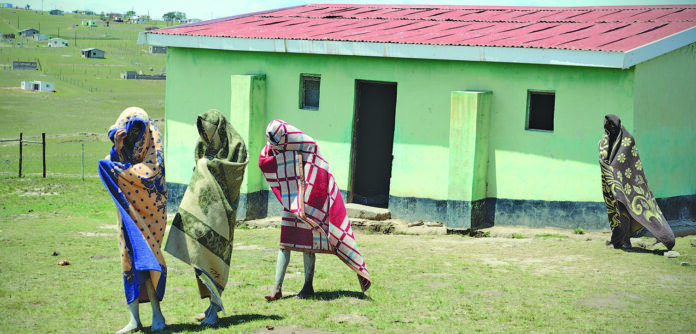
Every winter, South Africa performs a ritual that has become as predictable as it is heartbreaking.
Families accompany their sons to the mountains, believing they will return having completed one of Africa’s oldest rites of passage into manhood. Mothers ululate in celebration and fathers anticipate the quiet pride of welcoming home a son transformed into a man.
Yet, for far too many families, the songs become funeral hymns. The blanket that was meant to shield a boy from the cold mountain air is instead folded over a coffin.
The tragedy has become so familiar that the country almost measures winter by the number of initiates it buries.
Between 2021 and 2024, Parliament was told that 322 men died during customary initiation practices, despite the implementation of the Customary Initiation Act. Another 41 deaths followed during the 2025 summer initiation season.
This winter, the Commission for the Promotion and Protection of the Rights of Cultural, Religious and Linguistic Communities confirmed a further 43 deaths.
Mpumalanga buried 18 sons. The Eastern Cape buried 14. Statistics have become part of the annual winter vocabulary.
Government insists the deaths are preventable. Its own reports repeatedly identify the same causes: illegal initiation schools, botched circumcisions, severe dehydration, untreated infections, physical abuse and criminal negligence.
The recurrence of the tragedies raises a question: Should the black man entrust himself to the mountain, where generations before him learnt discipline, identity and responsibility, or should he place his faith in modern medicine, which has spent decades promoting voluntary medical male circumcision as a safer intervention in the fight against HIV?
In 2013, the World Health Organisation approved PrePex as the first adult male circumcision device to receive WHO prequalification. Developed by Circ MedTech, the non-surgical device generated enormous excitement because it promised to simplify circumcision.
Researchers described it as safe, effective and cost-efficient.
However, as the device was rolled out, reports of severe pain during removal, adverse events requiring surgery and concerns over tetanus infections began to emerge. Circ MedTech eventually entered liquidation.
The mountain, meanwhile, continues to produce the same annual cycle. Government announces the number of deaths. Illegal schools are identified. Suspects are arrested.
Traditional leaders, police and government departments promise that the next season will be different.
Then the country moves on.
Far less attention is given to how many of those arrested for initiation-related deaths have ultimately been convicted?
How many families have seen justice?
• Mogakane is Sunday World’s correspondent in Mpumalanga.
- Every winter, South Africa experiences numerous deaths of boys undergoing traditional initiation rites into manhood.
- Between 2021 and 2025, over 363 men died during these customary initiation practices despite laws aiming to regulate them.
- Key causes include illegal initiation schools, botched circumcisions, dehydration, infections, and negligence.
- Attempts to promote safer male circumcision, such as the WHO-approved PrePex device, faced issues like severe pain and infections, reducing trust in medical alternatives.
- Government and traditional leaders repeatedly pledge reforms, but convictions and justice for victims' families remain limited.


