


There’s an old adage in politics: campaigns are won on hope but elections are lost on arrogance. As the ANC gears up for local government elections on November 4, the party seems intent on testing the thesis to its limit.
A chaotic manifesto launch, infighting over candidate lists and the spectacle of Johannesburg Mayor Dada Morero swearing at a resident are not mere public-relations mishaps. They are symptoms of a deeper rot — one that suggests the ANC is heading for its worst electoral showing since 1994.
History offers a warning the party seems not to have heeded. In 2016, the ANC launched its local election campaign in Nelson Mandela Bay to a crowd that fell drastically short of expectations — barely 30 000 of the 110 000 supporters it had promised showed up.
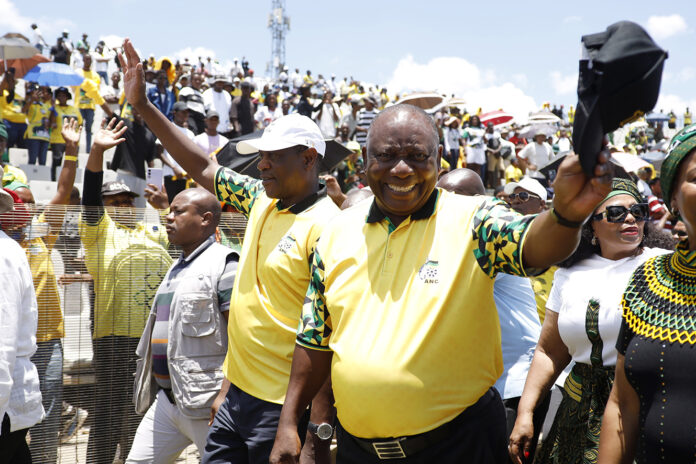
This year’s launch, at Riverside Park in Diepsloot, avoided that embarrassment but stumbled in its own way: logistics faltered, organisers struggled with crowd control and residents used the platform to vent about service-delivery failures rather than celebrate the party’s vision.
When a launch event becomes a stage for public grievance instead of unity, it signals that the organisational machinery is grinding down — and voters are no longer listening.
The disconnect is compounded by chaos inside the party’s selection processes. Wrangling over candidate lists and delayed mayoral nominations — the ANC has yet to name candidates for its metros, even as rivals such as the DA and EFF campaign with their slates set — has become a public spectacle of self-interest.
Voters are tired of being pawns in a factional chess game. They see leaders more concerned about securing positions and patronage than with fixing potholes, water supply or the electricity grid.
It is in this context of institutional strain that Morero’s conduct in Tshepisong last week must be read.
During a community meeting on electricity outages, an elderly resident accused him of being a criminal. Morero’s retort, “you are talking s***”, delivered repeatedly, was beneath the office of a metro mayor, whatever the provocation. He apologised within hours and the ANC’s Johannesburg region publicly distanced itself from the remarks, calling them “fundamentally un-ANC”.
But the apology does not erase the underlying signal: when residents confront their mayor over service failures, they are demanding accountability, not charity. Meeting the demand with insult, even briefly, feeds a narrative that the ANC no longer sees itself as the servant of the people but as their ruler.
The threads — a shaky launch, an unresolved candidate process and a mayor’s loss of composure under pressure — reinforce one another.
On November 4, the electorate will have its say. They will remember a party that spent August fighting itself as much as it did fighting poverty, a mayor who briefly lost his composure with a constituent and a manifesto launch that felt more chaotic than celebratory.
The ANC might not lose the election outright but the writing is on the wall: decline is no longer a risk; it is under way.
- The ANC's local government election campaign has been marked by a chaotic manifesto launch, infighting over candidate lists, and an incident where Johannesburg Mayor Dada Morero swore at a resident.
- The ANC’s 2024 manifesto launch in Diepsloot faced logistical issues, poor crowd control, and public grievances about service delivery rather than enthusiasm.
- Delays and disputes over mayoral candidate nominations have left the ANC behind rivals like the DA and EFF, who have already set their slates.
- Mayor Dada Morero apologized after calling an elderly resident "you are talking s***" during a community meeting on electricity outages, with the ANC’s Johannesburg region condemning the remarks.
- The combination of internal party chaos, public discontent, and leadership missteps signals a decline in ANC support ahead of the November 4 local government elections, potentially resulting in its worst showing since 1994.


