


Four years. That is how long it took for a magistrate to say, in a courtroom in Mdantsane, what every parent in Scenery Park knew in their bones: the deaths of 21 young people at Enyobeni Tavern in June 2022 were not simply a tragedy. They were preventable.
This week’s finding by the East London Regional Court – that there is prima facie evidence to prosecute the tavern’s owners, a police sergeant, a bouncer and a liquor board inspector – is significant not because it closes the book on Enyobeni but because it might finally force South Africa to open a different one: on how we license, inspect and police establishments that sell alcohol to our children.
The facts that emerged in the inquest should sit uncomfortably with every regulator in the country. A converted RDP house, licensed or otherwise, with room for perhaps 20 people, packed instead with hundreds of matriculants celebrating the end of their exams. Patrons so tightly crushed together that they could not reach a toilet and had to relieve themselves where they stood. A liquor board inspector who, the court heard, never once visited a tavern a mere 13 minutes from his office. A police officer accused of ignoring repeated complaints about the venue’s contraventions in the weeks before the disaster. And an owner captured on video selling alcohol to a 16-year-old in the early hours of the night the tragedy unfolded.
None of this happened in a vacuum. It happened inside a regulatory system that, on the evidence before the court, existed on paper far more convincingly than in practice.
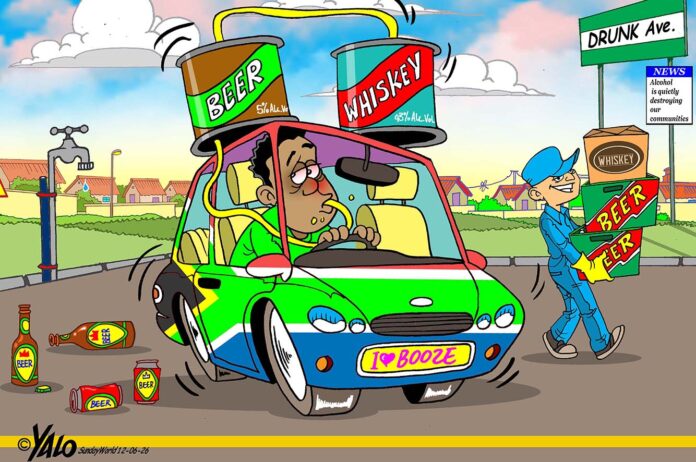
This is why the ruling matters. For the first time, an official finding has moved beyond the tavern’s owners alone to implicate the machinery meant to keep them in check. A liquor board that does not inspect. A police service that does not follow up. A licensing regime that permits a residential structure to function, unchecked, as a nightclub for minors.
If the National Prosecuting Authority acts on the findings, it will send an overdue message: regulatory failure carries consequences, not just for tavern owners chasing profit but for the officials paid to stop them.
But a court finding, however welcome, is not reform in itself. The families who buried their children deserve more than a referral to prosecutors; they deserve a liquor industry that is inspected as a matter of routine rather than complaint and a licensing system with teeth sharp enough to shut down non-compliant premises before tragedy strikes, not four years after.
Provincial liquor boards across South Africa should treat the ruling as a warning rather than an isolated Eastern Cape embarrassment. Under-resourced inspectorates, patchy enforcement of trading hours and a culture in which taverns operate for years without a compliance visit are not unique to Scenery Park.
Twenty-one young South Africans, some barely into their teens, went out to celebrate the end of their exams and never came home. Four years is too long to have waited for the truth about how the system failed them. It would be a far greater failure if, having finally heard it, we did nothing to fix it.
- A magistrate ruled four years after the Enyobeni Tavern tragedy that the deaths of 21 young people were preventable and there is prima facie evidence to prosecute tavern owners, a police sergeant, a bouncer, and a liquor board inspector.
- The inquest revealed severe regulatory failures: overcrowding in a small residential property, lack of liquor board inspections, ignored police complaints, and illegal alcohol sales to minors.
- The case exposes systemic issues in South Africa’s liquor licensing, inspection, and enforcement mechanisms, which often exist more on paper than in practice.
- The ruling implicates not only the tavern owners but also the regulatory bodies that failed to enforce compliance, calling for accountability beyond individual offenders.
- The tragedy highlights the urgent need for comprehensive reform of liquor regulation and enforcement nationwide, to prevent future loss of young lives and ensure effective oversight.


