


South Africa’s water crisis has become one of the most pressing challenges facing our municipalities today. Across the country, towns and cities are grappling with rising demand, climate volatility, aging infrastructure, and dwindling financial resources. These pressures have brought local governments to the frontline of a national emergency. Yet, while the challenges are immense, they also open a powerful opportunity for partnership and collective responsibility.
The crisis is not a municipal failure. It is a sign of a nation under pressure. And the solution lies in a renewed social compact between municipalities, communities, industry – a shared commitment embodied in the Water Research Commission’s A WaterWise Nation campaign.
A country under pressure
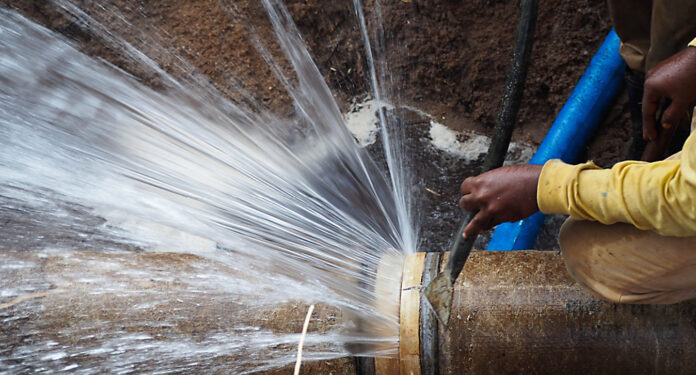
South Africa loses 37% of its treated water through leaks, burst pipes, vandalism and illegal connections; water that has been sourced, treated, and pumped at great cost, only to disappear before reaching homes or businesses. For municipalities already struggling with constrained budgets, this level of loss is devastating.
The Department of Water and Sanitation’s assessments show that 105 municipalities face a collective water infrastructure backlog of roughly R400-billion. Many treatment plants and pipelines have reached or exceeded their design life, while rapid urbanisation and climate impacts intensify pressure on already fragile systems.
Across the provinces, the strain is visible. In Gauteng, communities in Mogale City, Tsakane and Johannesburg South have endured extended outages as reservoirs ran dry in periods of extreme heat. KwaZulu-Natal’s eThekwini region continues to experience instability in more than 50 neighbourhoods due to infrastructure failures and electricity disruptions.
In the Eastern Cape, Nelson Mandela Bay remains trapped in long-term drought cycles, with dam levels often falling below 20%. The Free State continues to struggle with multi-day supply interruptions in towns such as QwaQwa, Welkom and parts of Mangaung. Limpopo and the North West face similar challenges.
These conditions paint a clear picture: the water crisis is national in scale, and municipalities, often under-resourced and overstretched, are carrying the heaviest burden.
A new social compact for water security
In this environment, municipalities must lead, but they cannot lead alone. South Africa needs a renewed municipal social compact where responsibility is shared rather than outsourced, and where communities, businesses and government act as partners in protecting our water future.
Local governments are the custodians of water distribution and treatment, the planners of infrastructure investment, and the first responders when systems fail. Their ability to communicate transparently, engage communities constructively, and collaborate across sectors builds the foundation for trust, and trust is essential for collective action.
Communities, in turn, have an increasingly vital role to play. When residents report leaks quickly, conserve water during peak periods, guard infrast ructure against vandalism, and understand the constraints municipalities face, water systems become more stable and easier to manage.
The private sector also forms a critical part of this partnership. Local industries have the capacity to adopt water-efficient processes, invest in on-site recycling systems, and collaborate with municipalities on smart metering and network monitoring. These actions reduce strain on municipal supply while supporting economic resilience.
A pathway for municipal impact
The WRC’s A WaterWise Nation campaign provides municipalities, communities, industry and educators with a unified framework for building a water-secure future. The campaign emphasises behaviour change as one of the most powerful tools in reducing demand and protecting supply. It supports communities with accessible knowledge about responsible water use. It offers municipalities communication materials, data insights, case studies, and engagement tools that can be used to mobilise households and businesses. It encourages industry to adopt efficient, sustainable practices.
More importantly, A WaterWise Nation reinforces a fundamental principle: water security is not the job of government alone. It is a collective responsibility shaped by the daily decisions of millions of South Africans.
If each household, business, school and community adopts even small water-wise habits, the combined national impact is enormous.
•Molwantwa is the CEO of the Water Research Commission
- South Africa faces a national water crisis caused by rising demand, climate change, aging infrastructure, and financial constraints, heavily impacting municipalities.
- The country loses 37% of treated water due to leaks, vandalism, and illegal connections, straining municipal budgets and infrastructure.
- Many municipalities struggle with long-term droughts, water outages, and infrastructure backlogs totaling around R400 billion.
- A renewed social compact among municipalities, communities, businesses, and government is essential for shared responsibility and sustainable water management.
- The Water Research Commission’s A WaterWise Nation campaign promotes behavior change, community engagement, and industry collaboration to secure South Africa’s water future.


