


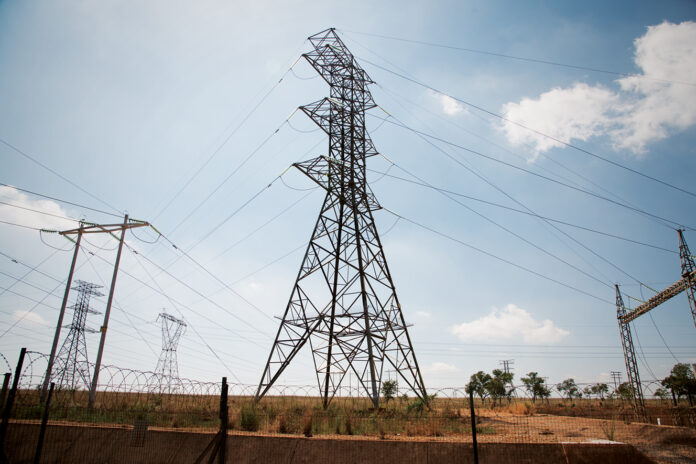
South Africa’s energy crisis is no longer only about building new generation. We have 72GW of renewable energy projects at advanced stages of development and a 220GW pipeline but the national transmission grid cannot connect the power to the businesses and homes that need it.
Unless the transmission roll-out accelerates, private investment is crowded in and technologies like battery energy storage systems (Bess) and wheeling are scaled, South Africa risks stalling its energy transition, deepening its electricity and economic challenges.
Our aging grid is a national threat. The grid was built for a centralised coal system, not a decentralised renewable energy market. Decades of underfunded maintenance and limited capital expenditure mean it is no longer fit for purpose, particularly in high-potential renewable regions where transmission capacity is constrained, such as the Northern Cape and Western Cape regions.
Limited transmission capacity in key renewable regions is preventing new, cheaper power projects from connecting, leaving businesses and consumers paying rising Eskom tariffs that fail to reflect the falling cost of renewables, while expensive diesel peaking plants are dispatched in place of cheaper projects that can’t connect.
In short, electricity reform hinges on transmission: without rapid grid expansion, new generation cannot improve system reliability.
Grid expansion moving too slowly —the state cannot do it alone
Realising the National Transmission Company of South Africa’s (NTCSA’s) Transmission Development Plan is critical to connecting private renewable projects and sustaining trust in sector reforms. The plan targets 14 450km of new transmission lines and 210 transformers to bring 56GW of new generation online but progress remains too slow. With an estimated R440 billion needed to modernise and expand the grid, public-private collaboration is no longer optional.
Unbundling is an enabler, not a substitute. Independence will unlock grid capacity only if matched with capital and execution, which is where the Independent Transmission Programme (ITP) becomes important. The ITP allows private players to finance, design, build and operate transmission infrastructure, before transferring assets to the NTCSA. Scaled with urgency, it can bring in the capital and skills the state cannot provide alone.
Transmission alone will not solve the problem. Renewables are variable. While South Africa’s legacy grid was built for stable coal-fired dispatch, Bess helps bridge the gap by storing excess generation, releasing it during peak demand.
A constrained grid constrains an open electricity market
Energy wheeling is central to a more open electricity market because it allows companies to buy renewable power from independent producers or traders without building generation assets on site. It gives corporates direct access to clean energy and creates a stronger route to market for generators.
The system benefits from having diverse generation connected to the grid, as geographic spread produces steadier aggregate output and eases the balancing burden.
However, successfully realising the benefits of energy wheeling is contingent on a grid that has the capacity to do so. With lines saturated or near to it additional transmission capacity and modernised grid technologies are crucial.
A further structural reform deserves serious consideration
Genuine independence for the NTCSA is paramount for energy reform as private investors in generation, storage and transmission need a neutral counterparty they can bank on. But an open, competitive electricity market can’t be achieved when the dominant generator also controls the gate to the grid.
The Grid Access Unit (GAU) sits inside Eskom Distribution, the business that collects retail revenue, so every wheeling connection it approves for a private project erodes the income of the entity it reports to. This creates a conflict of interest that, combined with its lack of authority over the NTCSA resources it relies on for connection designs, breeds delay and misaligned incentives.
Housing grid-access facilitation within an independent transmission structure would allow the decisions to be made objectively and efficiently, though it would require careful legislative alignment, since the GAU’s administrative role in guiding IPPs through connection is distinct from the NTCSA’s oversight role in granting access under Section 34B of the Electricity Regulation Amendment Act.
Expanding transmission and scaling battery storage are the practical enablers that turn abundant renewable resources into dependable power for households and industry. The task now is execution.
Cowie is CEO at Energy Exchange South Africa, a market-leading provider of grid-connected renewable energy to corporates and industrials.
- South Africa has 72GW of renewable projects ready and a 220GW pipeline, but its outdated transmission grid cannot connect this power to users, risking stalled energy transition and worsening economic challenges.
- The grid, designed for centralized coal power, suffers from decades of underfunding and limited capacity in high renewable potential areas, preventing cheaper renewable projects from connecting and forcing reliance on expensive fossil fuel plants.
- The National Transmission Company of South Africa’s plan for comprehensive grid expansion (14,450km lines and 210 transformers) faces slow progress and requires significant R440 billion investment and public-private collaboration.
- Private sector involvement through the Independent Transmission Programme (ITP) and technologies like battery energy storage systems (Bess) and energy wheeling are critical to improving grid capacity, enabling renewables integration, and fostering an open electricity market.
- Structural reforms are needed to remove conflicts of interest in grid access management by creating genuine independence for NTCSA and relocating the Grid Access Unit to ensure objective, efficient, and aligned decision-making in grid connections and energy market development.


