


Islamophobia in South Africa can no longer be dismissed as the work of a few misguided individuals or isolated extremists. The evidence points to something far more organised.
Anti-Muslim prejudice is being shaped by an ecosystem of media narratives, political opportunism, imported ideological networks and social media disinformation that increasingly defines Muslims as outsiders, regardless of their history, citizenship or contribution to the country.
The recent intervention by South Africa’s Film and Publication Board following the circulation of a grotesque Facebook post depicting the Prophet Muhammad in a vile and hateful manner illustrates both the seriousness of the problem and the urgency of confronting it. The board correctly recognised that the material amounted to advocacy of hatred based on religion and warned that it had the potential to incite harm.
The episode exposed more than one hateful individual. It exposed an environment in which anti-Muslim hatred has become normalised.
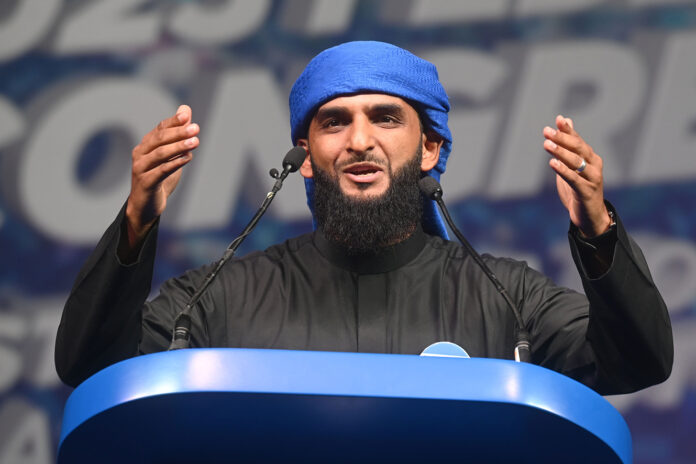
That environment was on full display following President Cyril Ramaphosa’s Cabinet reshuffle, when Yusuf Cassim was appointed deputy minister of higher education. Within hours, a South African citizen whose family has deep roots in the country was being labelled a foreigner, terrorist and associated with Boko Haram, Al Qaeda and Hamas simply because he is a young South African of Indian Muslim heritage.
The campaign against the DA’s Cassim demonstrated how quickly political appointments can become vehicles for racial, religious and ethnic scapegoating. What should have been a debate about governance became an attack on whether a Muslim belongs in South Africa at all.
Veteran journalist Max du Preez warned that the intensity of the hatred reflected levels of ethnic and religious bigotry not witnessed since the democratic transition in 1994.
Absent from much of the public discussion was the fact that Cassim is a South African citizen who has participated in the country’s democratic institutions for years. Yet the facts mattered little because the objective was never accuracy. It was narrative construction.
The architecture of Islamophobia depends precisely on this process. Muslims are first portrayed as perpetual outsiders. Once that perception takes hold, citizenship, history and constitutional rights become secondary to prejudice.
This process did not begin in South Africa. Following the attacks of September 11, entire communities were judged through the actions of fringe organisations.
During the recent surge in anti-immigrant protests, Muslim organisations appealed for calm, rejected vigilantism and warned against xenophobia, Afrophobia and Islamophobia. Muslim organisations were criticised for assisting vulnerable migrants while simultaneously being accused of divided loyalties, foreign influence and hostility towards black South Africans.
Support for refugees was deliberately conflated with support for illegal immigration.
This narrative serves a broader political purpose.
It redirects legitimate public frustration over unemployment, crime, corruption and ineffective immigration policies away from state failures and towards visible minority communities.
Once Muslims are portrayed as outsiders, the definition of who belongs continues to narrow. Today the target may be Muslims. Tomorrow it may be another minority community. The machinery of exclusion rarely confines itself to one group.
• Jassat is an executive member, Media Review Network
- Islamophobia in South Africa is increasingly organized, fueled by media narratives, political opportunism, imported ideologies, and social media disinformation portraying Muslims as outsiders regardless of their citizenship or contributions.
- The Film and Publication Board’s intervention against a hateful Facebook post about Prophet Muhammad highlights the seriousness and normalization of anti-Muslim hatred in the country.
- Yusuf Cassim’s appointment as deputy minister sparked a rapid campaign labeling him a foreign terrorist solely based on his Indian Muslim heritage, illustrating how political debates devolve into racial and religious scapegoating.
- Islamophobia’s architecture relies on portraying Muslims as perpetual outsiders, undermining citizenship, history, and constitutional rights, a narrative intensified post-9/11 and during anti-immigrant protests.
- This scapegoating distracts from state failures by redirecting public frustration toward minority communities, with the risk of expanding exclusionary tactics to other groups in the future.


