


Youth Month was a reminder that the struggle for equality in South Africa did not end in 1976. For many young South Africans, the barriers to opportunity today may look different, but they remain deeply consequential.
A young person cannot build a future if they cannot access healthcare when they are sick, afford treatment when they need it, or receive the preventative care that helps them stay healthy enough to study, work, and pursue economic opportunities. Yet for millions of young South Africans, affordable healthcare remains out of reach.
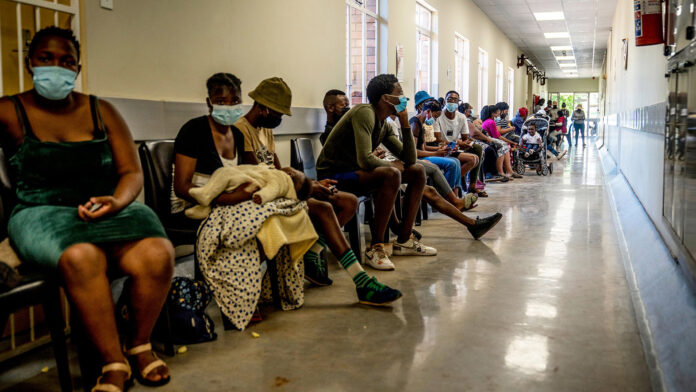
As unemployment rises and the cost-of-living increases, young people are increasingly locked out of private healthcare, forced to rely on an overstretched public system or pay out-of-pocket for even the most basic care.
South Africa’s private healthcare funding model was originally intended to operate on the principles of social solidarity, built on three critical pillars: community rating, mandatory membership, and risk equalisation. While community rating was implemented, the latter two reforms were never fully realised. The consequence has been significant. Young people entering the workforce are largely left to fund healthcare on their own, while the principle of younger, healthier members subsidising older and sicker beneficiaries has weakened, contributing to rising costs within medical schemes.
This creates a vicious cycle. Young people are priced out of medical schemes because cover is unaffordable.
The numbers are stark. Statistics South Africa’s Household Expenditure on Health 2022/23 report shows that young adults aged 20–24 have the lowest medical aid coverage of any age group at just 7.8%, while those aged 25–29 stand at only 9%. The rest rely on an under-resourced public system or pay out-of-pocket, often at catastrophic personal cost. With median monthly earnings between 2017 and 2022 at approximately R4 300 for people aged 15–24 and R5 000 for those aged 25–34, private healthcare remains far beyond the financial reach of most young South Africans.
The argument that affordable solutions must wait for the National Health Insurance (NHI) is equally flawed. As currently proposed, NHI funding would still place a heavy burden on the same taxpayers already financing private healthcare, except coverage would extend from 9 million scheme members to the entire population. Expanding access cannot depend solely on increasing pressure on an already overstretched tax base.
The current framework, both private and public, remains heavily skewed toward hospital-based care rather than prevention and early intervention. South Africa urgently needs to shift toward a preventative and promotive model, prioritising primary healthcare, early diagnosis, and health promotion. This would improve outcomes and significantly reduce long-term costs.
Low-cost benefit options (LCBOs) are ideally suited to support this approach. These are stripped-down, primary healthcare packages offering essential services – GP visits, basic medication, and diagnostic screenings – at a fraction of the cost of full medical aid cover. Crucially, they do not require the costly prescribed minimum benefits (PMBs) mandated for all medical schemes. But this also points to a broader reform needed. PMBs themselves require review so that they place greater emphasis on primary and preventative care rather than predominantly hospital-based treatment. Reforming PMBs and enabling LCBOs would signal a system reoriented around keeping people healthy, not just treating them when they are sick.
If implemented, LCBOs could open the doors of private healthcare to 10 million low-income South Africans. It would reduce pressure on the public health system and allow medical schemes to attract younger, healthier members, strengthening their long-term sustainability. Participation would be entirely voluntary, with monthly contributions as low as R350.
Medical schemes have been ready to roll out LCBOs for years, yet regulatory inaction from the Council for Medical Schemes has prevented this, despite a council resolution to approve them in 2015. The government’s own demarcation regulations of 2017 were also meant to allow a transition from insurance products to medical schemes for this very purpose. That transition has been stalled, to the detriment of millions.
The Board of Healthcare Funders (BHF) has argued in court, and continues to do so, that denying medical schemes the ability to offer LCBOs undermines the goal of universal health coverage. As part of our commitment to building a better healthcare system, the BHF is appealing the April 2025 court judgment that blocks LCBOs.
We believe now, as we did when we launched our application in 2022, that affordable, quality healthcare should not be the privilege of the few but the right of all.
- Dr Mothudi is managing director of the Board of Healthcare Funders
- Many young South Africans face significant barriers to accessing affordable healthcare, relying heavily on an overstretched public system or paying out-of-pocket, with only 7.8%–9% covered by medical aid.
- South Africa's original private healthcare funding model failed to implement mandatory membership and risk equalisation, causing young people to be priced out and leading to rising costs within medical schemes.
- The National Health Insurance (NHI) proposal is criticized for relying on the same taxpayers without adequately expanding affordable coverage or focusing on preventative care.
- Low-cost benefit options (LCBOs), offering essential primary healthcare at lower costs, could provide private healthcare access to millions and reduce public system pressure but remain blocked due to regulatory inaction.
- The Board of Healthcare Funders is actively appealing court decisions hindering LCBOs, advocating for reforms to make affordable, quality healthcare a right for all South Africans.


