


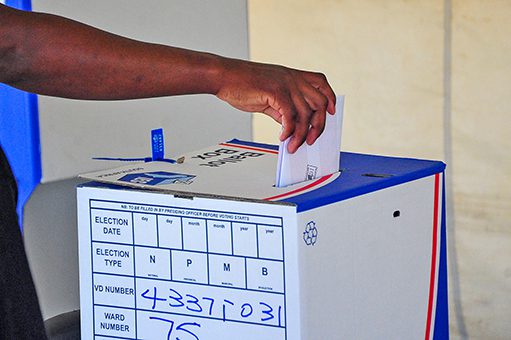
South Africa is approaching a local government election of unusual scale and complexity.
The certified voters’ roll stands at about 29.2 million people. A record 136,790 candidates have been certified by the IEC to contest 10,526 council seats, up from 95,427 candidates in 2021. In addition, 546 political parties nominated candidates to contest the elections.
The numbers point to a political landscape that is more crowded, competitive and fragmented than before. That fragmentation matters because coalition government is no longer a peripheral feature of local politics.
READ: IEC says ballots will be crowded due to high number of contestants
After the 2021 local government elections, about 70 councils had no single party with an outright majority. The question for November 4, 2026 is therefore not only who will govern, it is what kind of institution they will inherit and whether that institution is strong enough to continue functioning when political leadership changes again.
Because elections may change councils. They may change mayors. They may change coalitions. They may even change the political direction of a municipality. But they should never stop an institution from working. Water must still flow. Electricity must still be distributed. Refuse must still be collected. Employees and suppliers must still be paid. Revenue must still be collected, and every rand of public money must still be accounted for.
This continuity is not simply good management. It is embedded in law. The Constitution requires municipalities to provide democratic and accountable government and to ensure the sustainable provision of services. Section 195 requires public administration to uphold professional ethics, accountability and the efficient, economic and effective use of resources.
READ: Tessa Dooms | Local government elections a matter of life and death
The Municipal Finance Management Act reinforces that framework. Section 62 makes the accounting officer responsible for the financial administration of a municipality and requires effective, efficient and transparent systems of financial management, risk management and internal control. Section 55 of the Municipal Systems Act places the municipal manager at the head of the administration, subject to the policy directions of council, with responsibility for an economical, effective, efficient and accountable administration.
The distinction matters. Councils have a democratic mandate to govern, determine policy and exercise oversight. Administrations have a professional duty to implement lawful decisions and protect the integrity of the institution. When those roles become blurred, municipalities become more vulnerable to political transition. Appointments risk becoming political currency, procurement becomes exposed to interference, and officials may find themselves choosing between their statutory responsibilities and political pressure. For voters, institutional integrity should matter as much as campaign promises.
A leader who respects professional administration, lawful procurement and proper controls is more likely to leave behind a municipality that can continue functioning beyond a single term. For incoming councillors, political authority should not be confused with operational control. Oversight is essential, but oversight is not administration. Municipal officials carry an equally serious responsibility. Their duty is not to a political faction or an individual office-bearer, but to the law and the institution they serve. There will be moments when fulfilling that duty requires an uncomfortable answer. The strength of a municipality is often revealed by whether its professionals can give that answer without fear.
Technology can assist, but it cannot solve an institutional problem on its own. Artificial intelligence, automation and data analytics can identify financial distress earlier, flag procurement anomalies and strengthen audit trails. They cannot create ethical leadership, professional courage or respect for the law. Technology strengthens accountability only where there is already a willingness to be accountable.
That is the leadership test South Africa should apply after November 4. Those elected should ultimately be judged by whether they strengthened the institution they inherited. Did competent people remain? Were controls strengthened? Was institutional memory protected? Could officials continue to give honest professional advice? And could the next council inherit a municipality capable of functioning even if its politics were entirely different?
Public office is temporary. Institutions are not. Governments will change. Leaders will come and go. Coalitions will shift. Elections will be won and lost. But our institutions must endure. Leadership that outlives an election is measured by whether the institution is stronger, more professional and more capable when a leader leaves than when that leader arrived.
Nicholas Maweni is the CEO of Munsoft and the former Independent Chairperson of SAMRO and Amnesty International South Africa. He writes in his personal capacity.
- South Africa's upcoming local government election will involve about 29.2 million certified voters and a record 136,790 candidates competing for 10,526 council seats.
- The 2021 local government elections resulted in about 70 councils with no single party holding an outright majority, highlighting political fragmentation and coalition governance.
- The Constitution and laws such as the Municipal Finance Management Act and Municipal Systems Act require municipalities to provide accountable, sustainable government services and maintain professional administration.
- The separation of roles between councils, which govern and set policy, and administrations, which implement decisions, is crucial to maintaining institutional integrity and continuity during political transitions.
- Technology can aid in accountability and oversight but cannot replace ethical leadership, professional courage, or respect for the law essential for strong municipal institutions.


