


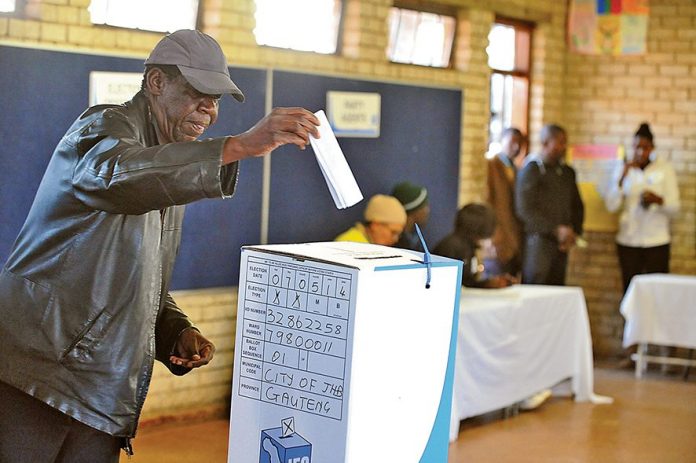
Local government elections are often referred to as “basic services” elections. While this is true, housing, sanitation, water and electricity are more than basic services, they are human rights. Encapsulated in the local impact of governance on the day to day lives of people are services that uphold the rights to life and dignity. Services and rights that can be the difference between life and death. On November 4 2026, politicians will not only be asking for a mandate to govern, but they will also be asking people to trust them with power to control life saving essentials for all. The power of life and death will be in the ballot.
Growing disillusionment with democracy
As the local government election approaches, many political parties are gearing towards campaigning and attempting to engage communities. While it may seem that this engagement is happening – often there is disconnect/disjuncture between what we see on the media and what the experience is on the ground.
The Rivonia Circle has continued to do community organising with multiple communities across Johannesburg and in all these communities there is a sense of disillusionment and frustration with politics and democracy in particular. This is unsurprising and is a sentiment that is usually backed up by examples from the people about their lives – issues such as unemployment, poverty, crime, food security, corruption among others are part of the ways in which people experience democracy. These issues of course are linked to governance and the lack of government involvement and political will.
Communities cannot leave politics to politicians alone
These are the most pressing issues. What people want is to be heard by the state, to have their issues addressed and to be active participants in the solutions. Weeks ahead of an election that is a matter of life and death, communities cannot afford to leave the politics to the politicians alone. If November 4 were a deadline for a possible natural disaster, surely communities would not simply sit and wait for politicians to decide what needs to be done. That is the posture we must take towards getting ready for this election. Communities remember that democracy is not only a passive vote but an active exercise of people’s power. If nothing else, communities have the power to make their voices heard individually and collectively, making firm demands in exchange for their votes in the lead up to this election.
The reality behind the statistics
Building the South Africa we want
People want safe and liveable, workable cities – the projects created have been focused on community development, food security and skills development. By the end of the workshop, people are keen on using their power to vote, but also to participate in democracy everyday – creating projects that not only mobilise but organise young people. This tells us that communities are not apathetic, as we are often described, they are in fact creating solutions that stand in the gap for government/ governance.
There is power in the collective; democracy needs more of us than less. We must continue to engage and organise. How are we going to use this collective power, particularly in this election year, to have our issues prioritised?
- Tessa Dooms is a sociologist, development practitioner and political analyst.
- Local government elections on November 4, 2026, involve politicians seeking a mandate to govern and control essential services like housing, sanitation, water, and electricity, which are considered human rights.
- There is widespread disillusionment and frustration with politics and democracy among Johannesburg communities due to issues like unemployment, poverty, crime, and corruption.
- The youth unemployment rate in South Africa is over 60.9% for ages 15–24 and 40.6% for ages 25–34, alongside shortages of healthcare personnel, despite qualified doctors remaining unemployed.
- Communities in places like Soweto are actively engaging with political structures, advocating for accountability and using democratic institutions to create local change.
- Community-led initiatives focusing on development, food security, and skills development show people’s desire to participate actively in democracy beyond just voting, organizing youth and building safer cities.


