


As South Africa commemorates Women’s Month, we are reminded that despite significant progress in advancing gender equality, many women continue to face socio-economic challenges that limit their full participation in the economy. Poverty, unemployment, food insecurity, and inequality remain a daily reality for thousands of women, particularly those from vulnerable households and communities.
Women often carry the responsibility of caring for families, raising children, supporting elderly relatives, and sustaining households, frequently with limited resources and opportunities. Yet, despite these challenges, women continue to demonstrate resilience and remain at the forefront of community development, food production, and local economic activity.
Deliberate investment crucial
Addressing these challenges requires deliberate investment in programmes that empower women economically, equip them with practical skills, and create sustainable opportunities for income generation. It is against this backdrop that the Gauteng Department of Social Development (GDSD) has intensified its efforts to promote sustainable livelihoods and economic inclusion through targeted interventions aimed at reducing poverty and restoring dignity.
Through its Sustainable Livelihoods Programme, the Department continues to implement initiatives that contribute towards poverty alleviation, food security, entrepreneurship development, cooperative support, and skills development. These interventions seek to empower vulnerable individuals and communities with the tools necessary to participate meaningfully in the economy and become self-reliant.
Over the years, the Department has invested in a range of programmes that support women and youth through agricultural development projects, food gardens, cooperative enterprises, skills transfer initiatives, and entrepreneurship development. These interventions complement departmental programmes such as the War on Poverty Campaign, Thiba Tlala food security initiatives, community nutrition programmes, and various livelihood projects that provide vulnerable households with opportunities to improve their socio-economic circumstances.
Government cannot tackle challenges alone
One of the Department’s most significant lessons has been that government cannot tackle poverty, unemployment, and inequality alone. Sustainable development requires collaboration between government, the private sector, civil society organisations, and communities themselves. Public-private partnerships have become increasingly important in leveraging resources, expertise, and opportunities that can accelerate social and economic transformation.
This is evident in the Department’s partnership with Rebafenyi Development Centre, a Non-Profit Organisation funded by Gauteng Department of Social Development and Harmony Gold Mining Company Limited, which has invested in agricultural skills development, enterprise support, cooperative development, and entrepreneurship training. Such partnerships create pathways for women and young people to acquire practical skills, establish sustainable enterprises, and contribute to local economic growth.
The graduation of beneficiaries on the 28th of August from these programmes is more than a celebration of academic achievement. It is a demonstration of what can be accomplished when government and the private sector work together to create opportunities for vulnerable communities. It represents a tangible investment in human potential and a commitment to building sustainable livelihoods.
The significance of this achievement is amplified by its commemoration during National Women’s Month. This year marks 70 years since the historic Women’s March of 9 August 1956, when more than 20,000 courageous women marched to the Union Buildings to protest against unjust pass laws. Their actions became a defining moment in South Africa’s struggle for equality and gave rise to the enduring rallying cry: “Wathint’ Abafazi, Wathint’ Imbokodo.”
Today, that spirit of resilience continues to inspire women who are breaking barriers in business, agriculture, government, and community development. Across Gauteng, women are leading cooperatives, managing food production projects, creating employment opportunities, and strengthening household food security. They are not merely beneficiaries of development programmes; they are active agents of change driving economic and social transformation.
The formal signing of the Memorandum of Understanding between the Gauteng Department of Social Development and Harmony Gold Mining Company Limited further demonstrates a shared commitment to advancing sustainable livelihoods, agricultural development, food security, and economic empowerment. The agreement creates a framework for expanding opportunities for women, youth, cooperatives, and vulnerable communities across Gauteng.
Empowering women an economic necessity
As we celebrate Women’s Month, we must recognise that empowering women economically is not only a social imperative but an economic necessity. When women have access to skills, resources, markets, and opportunities, families become more resilient, communities become stronger, and local economies grow.
The Gauteng Department of Social Development continues to work with strategic partners to create sustainable opportunities that improve lives and restore dignity. The success of these programmes demonstrates that change is possible when government, business, and communities unite around a common goal, building an inclusive economy where no one is left behind and where women are empowered to reach their full potential.
The future of Gauteng’s development depends on our collective ability to invest in women, support sustainable livelihoods, and strengthen partnerships that create lasting social and economic impact. There can be no sustainable development without women’s economic empowerment.
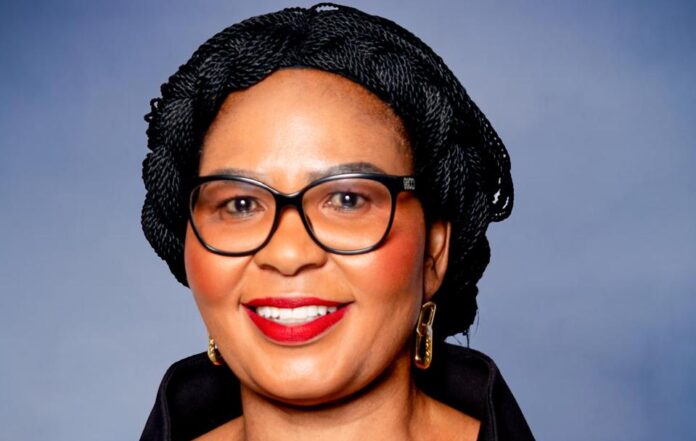
Nomantu Nkomo-Ralehoko is the MEC For Social Development in Gauteng
- South Africa continues to face socio-economic challenges for women, including poverty, unemployment, food insecurity, and inequality.
- The Gauteng Department of Social Development (GDSD) implements the Sustainable Livelihoods Programme focusing on poverty alleviation, food security, entrepreneurship, cooperative support, and skills development for women and youth.
- The GDSD partners with the private sector and NGOs, such as the Rebafenyi Development Centre and Harmony Gold Mining Company Limited, to provide agricultural skills training, enterprise support, and cooperative development.
- The formal Memorandum of Understanding between the Gauteng Department of Social Development and Harmony Gold Mining Company Limited aims to expand opportunities for women, youth, cooperatives, and vulnerable communities.
- August 2023 marks 70 years since the 1956 Women's March, highlighting the ongoing resilience and leadership of women in Gauteng in economic and community development.


