


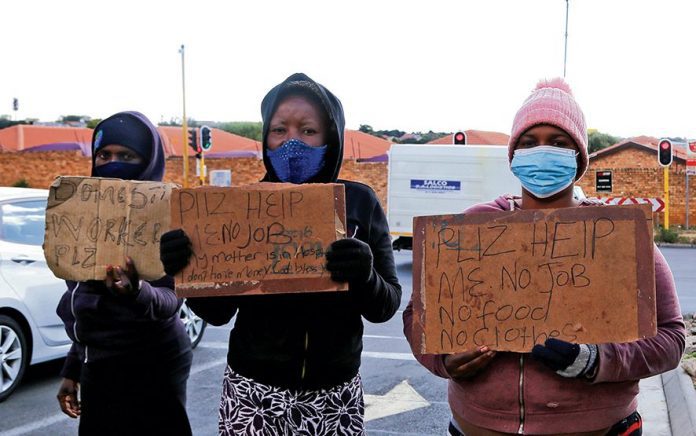
Structural unemployment has harmful psychosocial effects that erode individual identity, human dignity, mental well-being, social inclusion, and economic mobility – all foundations of healthy, productive societies. This article examines how these systemic effects manifest as social dysfunction and, ultimately, criminal behaviour. It is not a lament over past job losses in nor the resulting escalation of drug-related violence; that ship has long since sailed. Instead, it explores how South Africa might halt or reverse social decline by learning from countries that benefitted from meaningful economic inclusion for all citizens.
South Africa’s sliding socio-economic metrics
In August 2026, Stats SA reported that South Africa’s official unemployment rate had risen from 32.7% in the first quarter to 33.6% in the second, leaving 8.5-million people unemployed. Youth unemployment likewise reached 47.4%. The broader measure of labour underutilisation remained at 46.3%, indicating that many people were still inadequately connected to the labour market. Although tertiary education is regarded as an effective buffer against unemployment, it has proved increasingly unresponsive to structural labour-market pressures. Between 2008 and the first quarter of 2026, the graduate unemployment rate more than doubled from 5.8% to 12.2%, with the representing a quarter-on-quarter increase of 1.8 percentage points.
Unemployment is a major socioeconomic risk factor for crime, although the strength and direction of this relationship vary by crime type, location, age group, and wider socioeconomic and institutional conditions. Overwhelming evidence indicates that internationally connected, well-organised local gangs control the drug trade and enforce their power through violent turf wars. Drug-related offences form a substantial part of South Africa’s broader crime and organised-crime problem. Because SAPS statistics capture only offences detected by police, they do not reflect the full extent of drug use or related offending. In 2023/24, SAPS recorded 172 999 drug-related offences, 6.7% more than in 2022/23. The Western Cape accounted for 72 382 cases (41.8%), while Gauteng recorded 38,093 (22.0%). Similarly, gang-related killings are concentrated in the Western Cape, particularly on the Cape Flats. Crime has imprisoned us in our homes. Of the 47% of households that took proactive measures to protect themselves, 60% either ventured out only during safer hours or installed physical security, such as burglar gates (StatsSA).
Agency as a counterweight
At the risk of romanticising the past, gangsters knew their place, drug use was associated with society’s outcasts, and persistently recalcitrant children knew that the dreaded reform school was their next destination. Our mothers worked in clothing factories on the Cape Flats, while our fathers were artisans and fishermen. These were respectable occupations for people who left school earlier than their families would have wished. Despite living in a deeply discriminatory society, where humiliation was an everyday reality, they lived a life of dignity, embraced discipline and displayed agency. I vividly remember families gathering every Saturday to build their brick homes, taking turns so that each household benefited from the shared labour. Social conditions changed when jobs disappeared post democracy, leaving swathes of society heavily dependent on social grants, eroding the dignity obtained from economic self-sufficiency.
Impact of Unemployment on Individuals
Every unemployed person represents a human being whose relationship with society, family and self is at risk. Having a meaningful job provides identity, dignity, structure, social recognition, relationships and a sense of purpose. When that job is at risk or disappear an entire social framework and support structure for that person collapse. When someone says, “I am a teacher,” “I am an engineer,” “I am a business owner” or “I work for…” they are not only indicating that they are employed but they are also describing their purpose, identity and place in society. Persistent unemployment undoubtedly erodes the social fabric of society, providing fertile ground for the proliferation of dysfunctionality and criminality.
Persistent high youth unemployment, disproportionally affecting those previously subjected to systematic discrimination, breeds generational hopelessness and learned helplessness. Psychologists described learned helplessness: after repeated failure or rejection, people may come to believe that their actions cannot change their circumstances. For a young person who has never worked, unemployment is not merely a temporary career setback; it can come to define adulthood itself.
Repeated unsuccessful job applications erode self-confidence and make rejection personal. This harmful psychological cycle may make individuals more vulnerable to the temporary relief offered by alcohol and drugs. They may begin to ask themselves: What is wrong with me? Why does nobody want me? What am I worth? The consequences are paradoxical. The person most in need of opportunity may become progressively less able to pursue it.
Unemployment creates financial stress and anxiety, undermining confidence, motivation, and social engagement. Over time, people may withdraw from opportunities just when they most need to pursue them. Although this behaviour may be mistaken for laziness or a lack of ambition, it often results from persistent discouragement.
Impact of unemployment on society
The deleterious effects of unemployment extend beyond the impact of the individual.
Work gives families financial security, enables them to plan for the future, and offers hope for a better life, if not for themselves, then for their children. It also fosters independence and allows people to contribute to society. Years of exclusion from meaningful economic participation and hope profoundly erode dignity.
Society grows poorer when unemployment becomes a quagmire. In communities where joblessness remains persistently high, optimism give way to widespread despondency and hopelessness. Prolonged unemployment also weakens social cohesion, deepens dependency, and erodes people’s sense of purpose, social value, and economic agency.
Unemployed parents often struggle to meet their children’s basic needs or offer them hope for the future. Increasingly, young adults and their children remain financially dependent on older parents well into adulthood, adding pressure to household resources and social grants. Financial strain damage relationships and cause people to withdraw from social and community life because of shame or limited means. When young people repeatedly see adults without stable work, unemployment may become normalised, along with reliance on informal hustles, piece jobs, and short-term survival strategies.
Entrepreneurship as an alternative pathway
BRICS countries successfully developed entrepreneurship as a safeguard against economic exclusion. Comparative analysis could therefore offer useful guidance, especially regarding innovation ecosystems and the catalytic role of business incubators. In China, SMMEs contribute about 60% of national GDP, compared with 39% in South Africa. Across the rest of BRICS, incubation models have evolved beyond the first-generation approach still prevalent in South Africa, which remains largely focused on providing physical resources.
Of particular interest to South Africa, which has lost much of its clothing-manufacturing infrastructure, is Italy’s home-based fashion industry. Fashion is a major economic driver, contributing about 5.1% of GDP. Across the broader supply chain – including textiles, apparel, footwear, leather goods, and eyewear – the sector generates approximately €75-billion in high fashion value added. They have investing substantially in digitalisation, increasing spending on digital technologies including devices and systems, ICT software and services, digital content, and advertising. South Africa renowned skills in tailoring, handcraft and innovation are well poised, with increasing AI sophistication, to offer novel African fashion The recent adoption of Ndebele design in international fashion a case in time.
Entrepreneurship demands resilience and mental fortitude. Although potentially rewarding, it is an arduous path, particularly for unemployed people who may be vulnerable after retrenchment or disillusioned and disempowered by never having secured work. Successful emerging businesses that move beyond mere survival can provide income, purpose, skills, and greater agency if barriers to business growth can be surpassed. Business incubators, enterprise-development programmes, and entrepreneurship initiatives are intended to enable these pathways and to this end South Africa committed large resources. Yet the impact remains, unlike the rest of the world, very poor.
Policy imperatives
Addressing unemployment is ultimately about strengthening human capability. The imperative is therefore to build an ecosystem of attainable opportunities that reduces reliance on social grants as the first response to economic hardship.
People need more than income; they need opportunities to contribute, belong, and believe that their efforts can improve their circumstances. Treating the psychosocial costs of unemployment as an afterthought addresses only the symptoms while allowing deeper social harms to intensify, as the evidence shows. What is needed is thoughtfulness, empathy, and intentional action. South Africa must create more pathways to dignity, participation, and hope if it is to build the healthy society we all desire.
Employment policy should measure more than the number of jobs created. It should also assess whether people are becoming more independent, gaining skills, rebuilding confidence, participating in their communities, and improving their families’ prospects. The central policy question is therefore not simply, “How many jobs have we created?” but “How many people have we restored to meaningful economic and social participation?”
Employment programmes that focus solely on job placement are necessary but far from sufficient. Development economist Amartya Sen’s capability approach emphasises that well-being depends not only on access to resources, but also on people’s capabilities and ability to function. Those excluded from the labour market for long periods therefore need mentoring, skills development, psychological support, and opportunities to rebuild confidence and social networks alongside access to employment.
- Randall Carolissen (PhD) is an accomplished business leader with years of experience in developing and executing strategy, driving transformation programmes across multiple industries.
- Structural unemployment has harmful psychosocial effects that erode individual identity, human dignity, mental well-being, social inclusion, and economic mobility – all foundations of healthy, productive societies.
- This article examines how these systemic effects manifest as social dysfunction and, ultimately, criminal behaviour.
- It is not a lament over past job losses in nor the resulting escalation of drug-related violence; that ship has long since sailed.
- Instead, it explores how South Africa might halt or reverse social decline by learning from countries that benefitted from meaningful economic inclusion for all citizens.
- South Africa’s sliding socio-economic metrics In August 2026, Stats SA reported that South Africa’s official unemployment rate had risen from 32.7% in the first quarter to 33.6% in the second, leaving 8.5-million people unemployed.


