


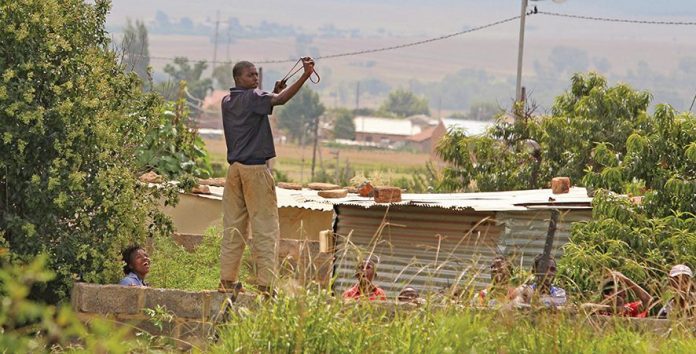
The sun, a relentless entity over Orange Farm, is just beginning to cast its golden, dusty light when Extension 8B stirs. This is not the slow, quiet awakening of the suburban north, where alarm clocks are polite suggestions and coffee is brewed in silent kitchens. This is a visceral, communal resurrection. The first sounds are the distant, rhythmic thumping of bass from a spaza shop’s early-morning playlist, the familiar ching-ching of a bicycle bell, and the chorus of stray dogs marking their territory in the shifting light.
Extension 8B is a geographical marker, a sequence of numbers and letters on a city planning document, but to the people who breathe its dusty air, it is a living, breathing thing. It’s a patchwork quilt of stories, a dense mesh of stands, shack dwellings, and hopes, built on a foundation of soil that remembers the old farms and the initial, desperate site-and-service allocations.
Maphumulo’s stand is a microcosm of 8B’s evolution. When he first arrived in the early ’90s, clutching a temporary permit, the ground was open veld, a promising expanse of nothing. He pitched his first corrugated iron shack with a handful of neighbours. It was a time of pure survival, of communal water tanks and bucket toilets, of the smell of paraffin and burning refuse hanging thick in the night air.
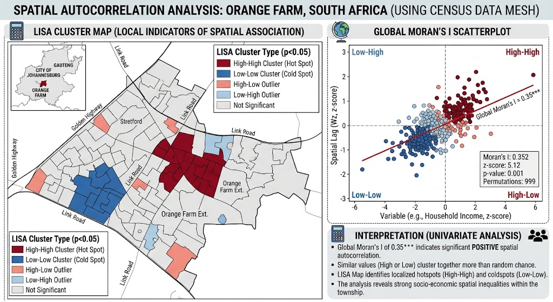
Today, Maphumulo stands on a weathered concrete porch, surveying a compound that has grown, cell by cell, over decades. The original shack has long been replaced by a formal, albeit modest, four-room RDP house, its walls painted a vibrant, determined turquoise. The title deed, framed in the lounge, is his most prized possession.
But the real transformation—the economic story of 8B—is happening in the backyard. Three sturdy, brick-and-mortar rental units now line the perimeter of the plot, their pre-paid electricity meters winking like a new constellation in the dawn. Two more informal, corrugated rooms are tucked into the remaining space. This is the new architecture of Extension 8B: densification.
For Maphumulo, these backrooms are not just a housing solution; they are his income smoothing mechanism. His Old Age Grant doesn’t cover the rising cost of food and the transport fare to the medical clinic, and his former construction wage is a memory. But the R4,200 he collects in monthly rent across the five units is his stability. It is the fuel that keeps the lights on, the bread on the table, and the grandchildren in school uniforms.
As 8B fully awakes, the spatial mismatch becomes tangible. This is the daily exodus, the core socio-economic tension of the peripheral township. Thousands of working-age adults stream from their crowded stands toward the main arteries. The sound of the Golden Highway (R553) is a low, persistent roar, the main artery connecting this massive reservoir of labour to the formal economy of central Johannesburg, 45 kilometres to the north.
Young Thulani, a child of the post-apartheid era with a shiny new matric certificate and no job in sight, is part of this surge. He spends R45 of his daily disposable income—a crippling amount for a household surviving on micro-rents and casual labor—just to get to the taxi rank in Soweto for a chance at a retail job that might not exist by next week. He navigates a system where geography is a tax. For the residents of Extension 8B, commuting is not a choice; it is the only viable link to economic opportunity, and the cost is measured in hours lost, and rands bled from already tight budgets.
But for those who stay within 8B, resilience manifests in a furious micro-economy. Informal enterprise isn’t just about survival; it’s the dominant mode of production. On the corner of Link Road and the unnamed street leading to Stretford Station, Mam’ Thandi’s chisa nyama is a hive of activity. She fires up the braai stands as the first shift workers start their journey home. The smoke from grilling boerewors blends with the aroma of amagwinya (fat cakes) frying in neighbouring stalls. Her spaza shop, a brightly painted shipping container, is stocked with essentials—single cigarettes, pre-paid vouchers, milk, and the ubiquitous orange and blue bags of maize meal.
This micro-enterprise sector is the engine of Extension 8B, fueled by local capital that never quite makes it to the distant shopping malls. When a neighbour needs a repair, they find the informal welder. When the children need a haircut, the barber on the corner is the only option. It is a world of face-to-face transactions, built on trust and necessity.
Infrastructure is the primary witness to this dual density of formal houses and informal extensions. The municipal mesh is strained. By midday, the water pressure on Maphumulo’s stand drops to a trickle, a symptom of the thousands of unmetered backyard connections feeding into the main sewer and water lines designed for a fraction of the current population. But the electricity, managed by pre-paid sub-meters, usually holds. A transformer a few streets away often fails during the peak winter demand, but the grid, unlike the water and sewer systems, has adjusted better to the ‘add-on’ nature of the township.
As the sun dips low, painting the sky in deep purples and oranges, Extension 8B doesn’t just stop. It shifts gears. The rhythm slows, but the thumping bass from the shebeens picks up. The streets are alive with families, children playing with makeshift footballs, and neighbours leaning over gates to share news.
Maphumulo sits back on his porch, listening to the hum of the community he helped build. He sees the challenge—the unemployment gripping Thulani’s generation, the spatial distance that isolates them, and the strained infrastructure—but he also feels the profound social strength of this place. This is where he has rooted his life. This is not just a settlement; it is a complex, resilient organism. It is a machine for extracting dignity and life from challenging ground. Extension 8B, with all its cracks and strains, is more than a sequence of numbers on a map; it is home, and it is a powerful, persistent force in the narrative of South Africa’s future.
The conversation around Maphumulo’s stand and the wider struggle of Thulani’s generation is amplified by the looming shadow of the 2026 Local Government Elections. In Extension 8B, this election is not merely a political contest; it is a critical referendum on the “add-on” model of township existence. The outcome will decide whether municipal planning will continue to lag behind the reality of densification—struggling to manage the water pressure bottlenecks and sewer surcharges created by unmetered backyard rooms—or whether a new administration will formalise the micro-rental economy. The election represents the tension between maintaining the fragile social fabric Maphumulo holds dear and the potential for volatile service delivery protests should the spatial tax on commuters like Thulani remain unaddressed by local council promises.
- Dr Pali Lehohla is a professor of practice at the University of Johannesburg, a research associate at Oxford University, and a distinguished alumnus of the University of Ghana. He is the former Statistician-General of South Africa.
- Extension 8B in Orange Farm evolved from open veld in the early 1990s to a densely populated township with a mix of formal houses and informal rental units.
- Maphumulo, an early resident, replaced his initial shack with a formal four-room RDP house and built five rental units, earning R4,200 monthly in rent to support his family.
- Many working-age adults, like Thulani, commute 45 kilometers daily to Johannesburg for work, spending significant portions of their income on transport.
- Informal enterprises such as Mam' Thandi's chisa nyama and spaza shop form the economic backbone of Extension 8B, providing essential services and employment.
- The 2026 Local Government Elections in Extension 8B will be pivotal in addressing issues of infrastructure strain, informal rental formalization, and commuter economic burdens.


