


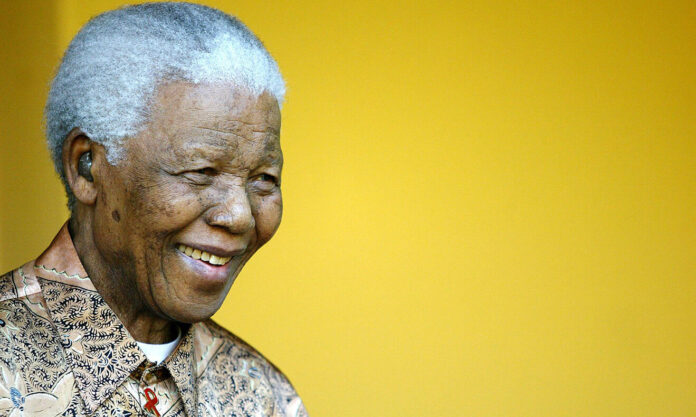
Each Mandela Month, the world remembers Nelson Mandela as a symbol of reconciliation, forgiveness, and human dignity. These tributes are deserved. Yet in celebrating Mandela, we often overlook one of his most important political qualities: pragmatism.
Mandela understood something that many developing states still struggle to accept. Sovereignty is not sustained by rhetoric, ideology, or moral posturing. It is sustained by the ability of a nation to create jobs, generate power, move goods, educate its people, and offer citizens a tangible stake in the future.
In this respect, Mandela shared an unexpected kinship with Chinese leader Deng Xiaoping.
Deng’s famous observation that it did not matter whether a cat was black or white, as long as it caught mice, was not a rejection of principle. Rather, it was a rejection of the notion that ideology should be valued above outcomes. Governments exist to improve the conditions of people’s lives. Prosperity, productive capacity, and national development mattered more than doctrinal purity.
Mandela arrived at a remarkably similar conclusion.
During his visits to Western capitals following his release from prison, Mandela was frequently criticised for maintaining relationships with Cuba, Libya, and the Palestine Liberation Organisation. His response was characteristically direct. South Africans would not disown those who had supported their liberation struggle merely to satisfy the ideological preferences of others.
Pragmatism in action
For Mandela, the question was not who passed a political purity test. The question was who had stood with South Africans when it mattered.
That was pragmatism in action.
Mandela understood that newly liberated nations do not have the luxury of selecting partners according to ideological convenience. They must build relationships that advance sovereignty, security, and development. In this sense, he and Deng were asking fundamentally the same question: What works?
This same logic was embedded in the creation of the Southern African Development Coordination Conference (SADCC) in 1980. Too often, SADCC is remembered as a precursor to today’s SADC. In reality, it represented a regional strategy for economic liberation.
This raises a question that remains deeply relevant to contemporary Africa: What comes first, security or development?
Development goes with youth employment
Development is not simply the reward for security. Development is one of the foundations of security. Perhaps nowhere is this relationship more evident than in the question of youth employment.
Across Southern Africa, millions of young people enter labour markets every year seeking opportunity, dignity, and inclusion. Where such opportunities exist, stability is reinforced.
For SADC, youth employment should therefore be viewed not merely as a labour-market issue but as a strategic imperative.
A railway creates jobs. A power station supports industry. An industrial zone expands opportunity. A transport corridor stimulates trade and investment.
The goal was never infrastructure for its own sake. The goal was productive livelihoods.
If SADC is serious about regional integration, then youth employment should become a central measure of success. This was the lesson that linked Nelson Mandela, Deng Xiaoping, and the founders of SADCC. Mandela Month should therefore remind us not only of Mandela the reconciler, but also of Mandela the strategist.
The most fitting tribute to his legacy may not be another speech about freedom. It may be the construction of the infrastructure, industries, energy systems, and employment opportunities that transform freedom into dignity.
Because in the end, sovereignty is not sustained by symbolism alone. It is sustained by the ability of a people to shape their own destiny.
Rosemary Mashaba is a former High Commissioner to Botswana, and she writes in her personal capacity.
- Nelson Mandela’s legacy often highlights reconciliation and forgiveness, but his pragmatism in political strategy is equally important, emphasizing results over ideology.
- Mandela, like Chinese leader Deng Xiaoping, prioritized effective outcomes—such as job creation and national development—over strict ideological adherence.
- Mandela maintained alliances with unconventional partners like Cuba and Libya, valuing support for South Africa’s liberation above political purity tests.
- The Southern African Development Coordination Conference (SADCC) exemplified a regional strategy focusing on economic liberation and infrastructure development as foundations for security and growth.
- Youth employment in Southern Africa is critical for regional stability and development, making it a strategic priority for SADC to measure success by creating sustainable livelihoods and opportunities.


