


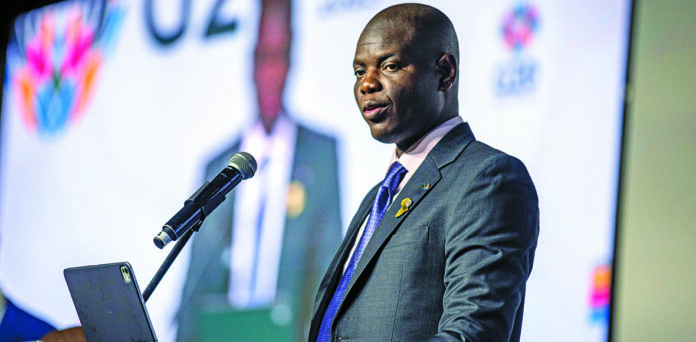
When International Relations Minister Ronald Lamola said this week that Pretoria had been taken by surprise, he was describing more than a diplomatic ambush.
On September 16, US Secretary of State Marco Rubio announced visa restrictions on unnamed South Africans deemed responsible for “race-based discrimination”, incitement of violence against minorities or the seizure of land without compensation. No list will be published. Those affected will find out only when they apply to travel.
Washington insists it is targeting individuals. But read the charge sheet and the real target comes into view: the laws and policies South Africa adopted to undo apartheid’s economic legacy, with BEE and land reform chief among them.
On this, South Africa must not retreat. To do so would be to concede that a foreign power may rule on whether a nation’s effort to heal its historical wounds is legitimate.
Redress is not the whim of a government department. It rests on the Constitution. Section 9 permits measures designed to advance people disadvantaged by unfair discrimination.
South Africa is not unusual on redress. Malaysia’s New Economic Policy, launched in 1971, grew from the same insight: at certain moments in history, targeted measures are needed to correct deliberate exclusion. That Washington has turned away from such policies at home does not give it the right to outlaw them abroad.
Lamola said the two governments had been discussing how to accommodate new American entrants into South Africa’s mining sector when the visa curbs landed.
Minerals are the backbone of our economy and empowerment requirements in mining exist so that historically excluded South Africans share in the wealth beneath their feet. If agreement was within reach, the problem was never poor communication. It was impatience with any conditions and a habit of treating a sovereign country’s laws as trade barriers to be bargained away.
US ambassador Brent Bozell III has declared that “the time for endless ‘dialogue’ has run its course” and warned that the visa curbs are “only the first step in a series of escalatory measures”.
Lamola’s reply was pointed: “If you can’t dialogue and you want to declare that dialogue has run its course, you are in the wrong profession – you are not a diplomat.”
He is right. Diplomacy means seeking compromise while recognising the other side’s legitimate interests. It does not mean issuing ultimatums that demand a country abandon its constitution.
South Africa’s restraint should not be mistaken for weakness. Lamola says the country remains open to talks. But dialogue needs a starting point: acceptance that how South Africa redresses its past is for South Africans to decide.
None of this places our policies beyond criticism. The debates are healthy and they belong here: in our Parliament, our courts and our media.
The message must be clear: No outside power, however mighty, has the right to sit in judgment on that process.
- US Secretary of State Marco Rubio announced visa restrictions on unnamed South Africans accused of race-based discrimination, incitement of violence against minorities, or land seizure without compensation, without publishing a list of affected individuals.
- The visa restrictions target South African laws and policies related to Black Economic Empowerment (BEE) and land reform meant to address apartheid’s economic legacy.
- South Africa defends these policies under its Constitution, particularly Section 9, which allows measures to advance people disadvantaged by unfair discrimination.
- US ambassador Brent Bozell III stated that visa curbs are only the first step in escalatory measures, while South African Minister Ronald Lamola emphasized the importance of diplomacy and dialogue.
- South Africa remains open to dialogue but insists that decisions on redress and policies to heal past injustices must be made by South Africans themselves, without foreign interference.
When International Relations Minister Ronald Lamola said this week that Pretoria had been taken by surprise, he was describing more than a diplomatic ambush.
On September 16, US Secretary of State Marco Rubio announced visa restrictions on unnamed South Africans deemed responsible for “race-based discrimination”, incitement of violence against minorities or the seizure of land without compensation. No list will be published. Those affected will find out only when they apply to travel.
Washington insists it is targeting individuals. But read the charge sheet and the real target comes into view: the laws and policies South Africa adopted to undo apartheid’s economic legacy, with BEE and land reform chief among them.
On this, South Africa must not retreat. To do so would be to concede that a foreign power may rule on whether a nation’s effort to heal its historical wounds is legitimate.
Redress is not the whim of a government department. It rests on the Constitution. Section 9 permits measures designed to advance people disadvantaged by unfair discrimination.
South Africa is not unusual on redress. Malaysia’s New Economic Policy, launched in 1971, grew from the same insight: at certain moments in history, targeted measures are needed to correct deliberate exclusion. That Washington has turned away from such policies at home does not give it the right to outlaw them abroad.
Lamola said the two governments had been discussing how to accommodate new American entrants into South Africa’s mining sector when the visa curbs landed.
Minerals are the backbone of our economy and empowerment requirements in mining exist so that historically excluded South Africans share in the wealth beneath their feet. If agreement was within reach, the problem was never poor communication. It was impatience with any conditions and a habit of treating a sovereign country’s laws as trade barriers to be bargained away.
US ambassador Brent Bozell III has declared that “the time for endless ‘dialogue’ has run its course” and warned that the visa curbs are “only the first step in a series of escalatory measures”.
Lamola’s reply was pointed: “If you can’t dialogue and you want to declare that dialogue has run its course, you are in the wrong profession – you are not a diplomat.”
He is right. Diplomacy means seeking compromise while recognising the other side’s legitimate interests. It does not mean issuing ultimatums that demand a country abandon its constitution.
South Africa’s restraint should not be mistaken for weakness. Lamola says the country remains open to talks. But dialogue needs a starting point: acceptance that how South Africa redresses its past is for South Africans to decide.
None of this places our policies beyond criticism. The debates are healthy and they belong here: in our Parliament, our courts and our media.
The message must be clear: No outside power, however mighty, has the right to sit in judgment on that process.


