


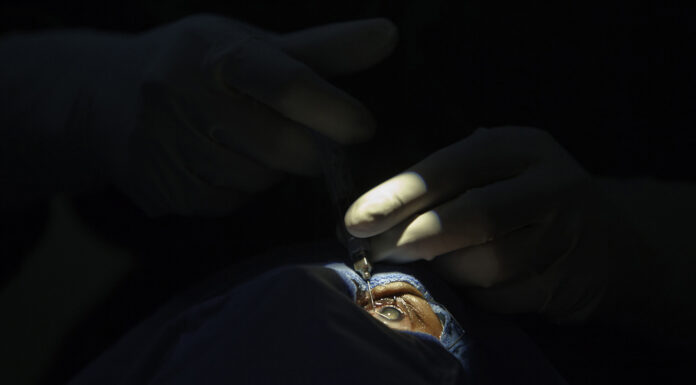
Int Majid ernational clinical partnerships will also support professional exchange
The Sunday World report of July 19 2026 (Limpopo eye surgery plan “unnecessary”) on Limpopo’s proposed eye-surgery training partnership with China has brought an important national health challenge into public view. Provinces face cataract backlogs, constrained specialist services, reduced specialist training posts and uneven access to structured ophthalmic surgical training for medical officers.
Limpopo’s willingness to explore alternative models for expanding cataract surgery services reflects the growing recognition that conventional training pathways alone are not able to meet current population needs. Dr Kgosi Letlape has raised valid concerns about sending medical officers abroad for 18 to 24 months while provincial services remain under pressure. Medical officers carry substantial responsibilities within the public health system, and their extended absence could place additional strain on the facilities and communities they serve. Any training plan must protect current services while building future surgical capacity.
The proposal also gives South Africa an opportunity to examine all available pathways for developing medical officers in ophthalmology. Local clinical expertise supporting training, wetlab or simulation-based pre-clinical learning followed by supervised patient-involving training, and support from external organisations and international partnerships can all contribute to a coordinated national model. Every province has a stake in this discussion because cataract backlogs, workforce shortages and limited training opportunities extend across the country.
International partnerships must build lasting capacity
International clinical partnerships can support professional exchange, shared learning, innovation and exposure to different approaches to cataract care. They can help South African clinicians understand how other countries organise high-volume surgery, structure training, use simulation and manage patient pathways. Well-designed partnerships can also create research, teaching and institutional relationships that continue beyond the initial programme. Any overseas training programme requires clear information about its curriculum, duration, clinical content and competency assessment standards. Decision-makers need to know whether the training entails wetlab and/or simulation-based learning with progression to supervised patient-involving learning; how skills will be assessed and how the training will be recognised within South Africa. Cataract surgery is not an isolated skill; therefore, training must ensure the development of broader ophthalmic clinical competencies. They also need a service-continuity plan for the facilities from which participating medical officers will be drawn.
Post-training implementation requires equal attention. Returning doctors will need specialist supervision, functioning theatres, suitable equipment, consumables, referral pathways and appropriate patient selection and outcomes monitoring. A training programme will reduce cataract backlogs only when the surrounding service can support safe and consistent surgery.
Local, regional and international options should therefore be assessed against the same criteria: clinical quality, patient safety, supervised patient exposure, total cost, time away from service, accreditation, specialist support and the capacity to produce sustained improvements. This kind of assessment would give provinces a sound basis for selecting models suited to their needs and available resources.
South Africa has local expertise that can be mobilised
South Africa already has ophthalmologists, universities, limited simulation and skills centres, clinical training platforms and organisations willing to support cataract services. Medical officers have historically received ophthalmic surgical training within local services. The scale, distribution and readiness of this capacity now need to be mapped so that provinces can see what is available and where further investment is required.
Locally based training options have previously been raised with health authorities. These proposals have not yet entered a coordinated process through which their feasibility, resource requirements and potential contribution could be assessed across provinces. Relevant expertise remains dispersed across institutions and services, with limited visibility outside the settings in which it has developed.
KwaZulu-Natal offers an important perspective here. Dr Nombuso Mathe leads ophthalmology services in a large province with substantial rural populations, high patient demand and serious resource constraints. Her proposal to train medical officers in cataract surgery and diploma readiness, demonstrates that locally driven training pathways can be developed within a pressured public health environment when clinical leadership, district relationships, wetlab/simulation and supervised patient experience are brought into a structured programme.
It also affirms that cataract surgery should not be viewed in isolation, but broader competencies are necessary, particularly for decentralised models of service delivery. This work also reveals the actual cost of local training. Curriculum development, specialist supervision, simulation, clinical governance, competency assessment and patient-safety oversight require time, infrastructure and skilled personnel. Too often, however, these essential functions depend on the commitment and discretionary effort of stretched specialists in academic units, whose primary mandate is to deliver complex clinical services and specialist training, rather than being recognised and resourced as core components of the health system.
South African civil society organisations have also provided financial, equipment and operational support for cataract camps and related eye-health services. These relationships create opportunities to support equipment, consumables, training and service delivery through properly governed partnerships. Public health priorities, clinical standards and provincial plans must guide how these resources are used and find ways to create formal and standardised approaches that can be replicated with ease nationally.
Funding must follow the full training pathway
Provincial interest in developing medical officers must be supported by a clear budget. Funding is required for candidate selection, protected training time, simulation, supervision, clinical exposure, equipment, consumables and post-training service delivery. District, provincial, national and partner responsibilities should be agreed before doctors enter a programme.
Training plans also need to account for the posts and services that medical officers temporarily leave behind. Facilities cannot absorb long absences without workforce planning and replacement arrangements. Provinces need a model that increases surgical capacity while maintaining the clinical services already delivered by participating doctors.
Specialist workforce investment must continue alongside medical-officer development. Medical officers can strengthen cataract services alongside the screening and monitoring of stable ocular NCDs such as diabetic retinopathy and glaucoma and managing primary ocular conditions and mild infections within a defined scope and with appropriate supervision, but they cannot carry the functions of vacant ophthalmology posts. Sustainable decentralisation requires medical officers, specialists, nurses, optometrists, theatre teams, managers and referral services to work within a connected system.
Provinces need a shared view of eye-health capacity
The current discussion highlights a wider information and coordination gap. Information about cataract backlogs, workforce capacity, training opportunities, simulation facilities, service innovations and available partnerships is held across separate institutions and reporting channels. Provinces have limited opportunities to see what others are developing, compare approaches or identify expertise that could support their own services.
South Africa would benefit from a visible national mechanism that consolidates eye-health information across provinces. This should include a current repository of programmes and resources, a stakeholder and partnership register, workforce and training information, and a dashboard showing cataract activity, service capacity and areas of need. These tools would support planning, resource allocation, collaboration and accountability.
• Mathe is the Head of Department- Discipline of Ophthalmology, UKZN
• Majid is a postdoctoral researcher at UKZN Discipline of Public Governance specialising in systems governance.
- Limpopo's proposal for eye-surgery training partnerships with China highlights national challenges of cataract backlogs, specialist shortages, and limited local training for medical officers in South Africa.
- International partnerships can enhance professional exchange and training quality but require clear curricula, competency assessments, and service-continuity plans to be effective.
- South Africa has local expertise and infrastructure that could be better mobilized and coordinated to develop sustainable, decentralized cataract surgery training programs.
- Adequate funding is critical for all training stages, including candidate selection, supervision, equipment, and post-training service delivery, while maintaining current clinical services.
- A national eye-health information platform is needed to consolidate data on workforce, training, resources, and service capacity to improve planning, collaboration, and accountability across provinces.


