


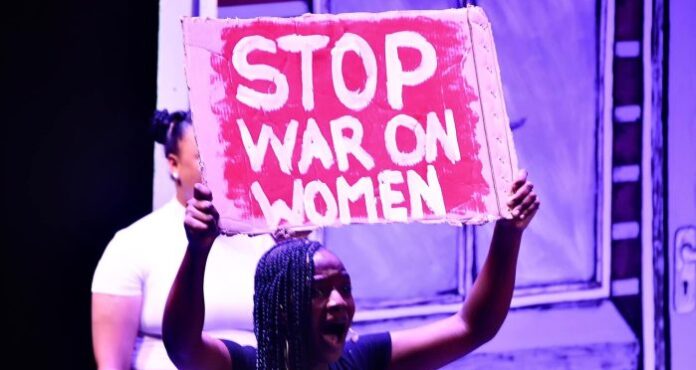
There comes a time in the life of a nation when it has to take a strong pause and reflect on itself. It cannot be business as usual when a country loses its women en masse without this becoming a revolutionary catalyst for fundamental change in the soul of a nation. Ten Black women in 60 days in Ekurhuleni alone, dumped like evidence to be hidden, not lives to be mourned.
It is worse when this crisis super-manifests itself in the aftermath of the so-called Women’s Month in August, when we should still be on our hangover with sensitivity about how we treat our women. It shows that these monthly themes are performative, neither genuine nor effective in the bigger scheme.
READ: Fear grips Kempton Park killing fields
As we celebrate African heritage this September, let us remember what African heritage really means. African heritage is not a dance in animal skin. It must be understood as the teachings of our true African ancestors, who said that a woman is sacred territory – if you touch her wrongly, you have invaded the soul of a nation.
In the days of Lowe, Africanism was never a mission of patriarchy. It is colonialism that taught us that nonsense.
Before the colonial wage system made a man a mine boy with no cattle, no land and no initiation, African kingdoms understood the radical truth that a nation that does not protect its women has no future to defend.
King Moshoeshoe (1786-1870), founder of the Basotho, lived through the Difaqane, when some chiefs killed and enslaved women as war booty. Moshoeshoe issued a command that still shames our current constitution. He forbade the killing and raping of women and children.
His law was: Mosadi ha a bolawe ho hang – a woman is not killed at all.
Even women from captured tribes were protected and returned to their people. This was not a perfect dispensation, but it was much better than what we do to them today.
Kgosi Khama III, the Great (1837-1923), King of Bangwato, confronted a Bechuanaland becoming a market for alcohol and women. Khama outlawed the buying and selling of women under corrupted bogadi abuse, banned the use of women as payment for debt, banned alcohol that made men beat their wives, and decreed that a widow could own cattle and land in her own name. He told missionaries and colonisers alike that a kingdom that sells its women will never buy its freedom. That is Tswana Africanism in progressive, protective form.
King Shaka (1787-1828), after the death of his mother, Queen Nandi, codified the protection of widows, unmarried mothers and the isigodlo. A man who beat a woman in Shaka’s kraal was not reprimanded – he was executed. Not because women were weak, but because the womb was highly venerated as a national key point, the very state itself.
Emperor Sunjata Keita (1217-1255) and Queen Nzinga Mbande (1583-1663) offer another. The 1222 Charter of Manden, recognised by UNESCO as part of the Intangible Cultural Heritage of Humanity, declared that no woman should be a slave or humiliated. Four centuries later, Queen Nzinga Mbande of Ndongo and Matamba trained an army of women, declared her territory free for escaped slave women and fought the Portuguese for decades.
That is Africanism in its progressive, pristine condition. It never hailed a woman as a mere flower; it declared her a national treasure to be protected by any means necessary.
On the other painful hand, narrow and popular liberal feminism tells a woman to be strong enough to survive patriarchy. A leftist-feminist African movement such as the Afrika Mayibuye Movement will fight for a society that makes patriarchy materially impossible. As Bell Hooks contends, patriarchy is interwoven with capitalism and colonialism, and therefore you cannot defeat it without defeating its material base.
In South Africa today, a woman does not stay in an abusive house because she loves the man. She stays because the man’s house is the only roof available at that point.
READ: High-level delegation to meet over deaths of seven women in Gauteng
Gender emancipation is therefore not just an awareness campaign. It must be understood as revolutionary material re-engineering. Rooted materialism must reinforce rooted African spirituality.
The role of the progressive man must therefore be located in the notion that this cannot be a moment we campaign on. It must be a moment we re-engineer society for the sake of posterity.
We, South African men, must fully comprehend that there is no true freedom in a constitution that cannot keep a girl alive to read it.
As we celebrate heritage this September, fighting for Africa to return to itself, let us remember the teachings of Kgosi Khama, Moshoeshoe and others who were equally woke. Our ancestors did not need a Women’s Month. They had a consistent and progressive women’s law. The law was simple: Wathinta abafazi, wathinta imbokodo – you touch a woman, you have struck the rock upon which the nation is built.
A nation is not a flag. A nation is a womb, and unfortunately we have let the womb bleed profusely under our watch without lifting a visible and caring hand.
In the end, we need to agree as a country that we cannot build any successful or stable nation on a foundation soaked in the blood of its own daughters and the tears of their offspring.
Enough is certainly enough.
To every South African man, we say:
‘Let us be our sisters’ life keepers!’
- Thato wa Magogodi (Deputy President of the Afrika Mayibuye Movement).
- In Ekurhuleni alone, ten Black women were killed within 60 days, highlighting a severe crisis of violence against women in South Africa.
- Historical African leaders like King Moshoeshoe, Kgosi Khama III, King Shaka, Emperor Sunjata Keita, and Queen Nzinga Mbande implemented laws and practices that protected women and recognized them as sacred and essential to the nation's future.
- The Afrika Mayibuye Movement advocates for dismantling the material foundations of patriarchy linked to capitalism and colonialism to achieve true gender emancipation in South Africa.
- Current observances like Women’s Month are criticized as performative and ineffective compared to the consistent and progressive women’s laws of African ancestral traditions.
- The article calls on South African men to become "life keepers" of their sisters, emphasizing that national stability cannot be built on the blood and suffering of its women.
There comes a time in the life of a nation when it has to take a strong pause and reflect on itself. It cannot be business as usual when a country loses its women en masse without this becoming a revolutionary catalyst for fundamental change in the soul of a nation. Ten Black women in 60 days in Ekurhuleni alone, dumped like evidence to be hidden, not lives to be mourned.
It is worse when this crisis super-manifests itself in the aftermath of the so-called Women’s Month in August, when we should still be on our hangover with sensitivity about how we treat our women. It shows that these monthly themes are performative, neither genuine nor effective in the bigger scheme.
READ: Fear grips Kempton Park killing fields
As we celebrate African heritage this September, let us remember what African heritage really means. African heritage is not a dance in animal skin. It must be understood as the teachings of our true African ancestors, who said that a woman is sacred territory – if you touch her wrongly, you have invaded the soul of a nation.
In the days of Lowe, Africanism was never a mission of patriarchy. It is colonialism that taught us that nonsense.
Before the colonial wage system made a man a mine boy with no cattle, no land and no initiation, African kingdoms understood the radical truth that a nation that does not protect its women has no future to defend.
King Moshoeshoe (1786-1870), founder of the Basotho, lived through the Difaqane, when some chiefs killed and enslaved women as war booty. Moshoeshoe issued a command that still shames our current constitution. He forbade the killing and raping of women and children.
His law was: Mosadi ha a bolawe ho hang – a woman is not killed at all.
Even women from captured tribes were protected and returned to their people. This was not a perfect dispensation, but it was much better than what we do to them today.
Kgosi Khama III, the Great (1837-1923), King of Bangwato, confronted a Bechuanaland becoming a market for alcohol and women. Khama outlawed the buying and selling of women under corrupted bogadi abuse, banned the use of women as payment for debt, banned alcohol that made men beat their wives, and decreed that a widow could own cattle and land in her own name. He told missionaries and colonisers alike that a kingdom that sells its women will never buy its freedom. That is Tswana Africanism in progressive, protective form.
King Shaka (1787-1828), after the death of his mother, Queen Nandi, codified the protection of widows, unmarried mothers and the isigodlo. A man who beat a woman in Shaka’s kraal was not reprimanded – he was executed. Not because women were weak, but because the womb was highly venerated as a national key point, the very state itself.
Emperor Sunjata Keita (1217-1255) and Queen Nzinga Mbande (1583-1663) offer another. The 1222 Charter of Manden, recognised by UNESCO as part of the Intangible Cultural Heritage of Humanity, declared that no woman should be a slave or humiliated. Four centuries later, Queen Nzinga Mbande of Ndongo and Matamba trained an army of women, declared her territory free for escaped slave women and fought the Portuguese for decades.
That is Africanism in its progressive, pristine condition. It never hailed a woman as a mere flower; it declared her a national treasure to be protected by any means necessary.
On the other painful hand, narrow and popular liberal feminism tells a woman to be strong enough to survive patriarchy. A leftist-feminist African movement such as the Afrika Mayibuye Movement will fight for a society that makes patriarchy materially impossible. As Bell Hooks contends, patriarchy is interwoven with capitalism and colonialism, and therefore you cannot defeat it without defeating its material base.
In South Africa today, a woman does not stay in an abusive house because she loves the man. She stays because the man’s house is the only roof available at that point.
READ: High-level delegation to meet over deaths of seven women in Gauteng
Gender emancipation is therefore not just an awareness campaign. It must be understood as revolutionary material re-engineering. Rooted materialism must reinforce rooted African spirituality.
The role of the progressive man must therefore be located in the notion that this cannot be a moment we campaign on. It must be a moment we re-engineer society for the sake of posterity.
We, South African men, must fully comprehend that there is no true freedom in a constitution that cannot keep a girl alive to read it.
As we celebrate heritage this September, fighting for Africa to return to itself, let us remember the teachings of Kgosi Khama, Moshoeshoe and others who were equally woke. Our ancestors did not need a Women’s Month. They had a consistent and progressive women’s law. The law was simple: Wathinta abafazi, wathinta imbokodo – you touch a woman, you have struck the rock upon which the nation is built.
A nation is not a flag. A nation is a womb, and unfortunately we have let the womb bleed profusely under our watch without lifting a visible and caring hand.
In the end, we need to agree as a country that we cannot build any successful or stable nation on a foundation soaked in the blood of its own daughters and the tears of their offspring.
Enough is certainly enough.
To every South African man, we say:
'Let us be our sisters’ life keepers!'
- Thato wa Magogodi (Deputy President of the Afrika Mayibuye Movement).


