


At one point in the life of South Africa, the number of close corporations and companies registered by the authorities spiked. Word on the street was that the government was dishing out tenders. Every hustler wanted a piece of the pie. No experience needed.
Those who could not secure public office and obtain a Persal number relied on these “vehicles” to extract rewards from the state through patronage networks.
Then we outsmarted the system.
Register three companies and you could compete against yourself under the three-quotation system. Others took it further. Why not install a man or woman on the bid evaluation or bid adjudication committee? Why not obtain the specifications and budget before everyone else?
Others became even more brazen.
A fellow in the management ranks of the North West government signed to award a deal as a public official and, on the same page, signed to receive the deal as a beneficiary.
This was capitalism translated into the language of the state. Public office provided privileged information. Political connections reduced competition. Government contracts converted influence into private wealth. The hustler understood what the system rewarded.
Liberalism provided the moral cover.
Years later, we were saddled with the Zondo commission. Today, we have the Madlanga commission. Did we really not see it coming?
A similar trend has again emerged in political circles.
The bar has been set so low that political education is optional to contest for public office. Community work is negotiable. Ideology can be borrowed for the launch and discarded after the election.
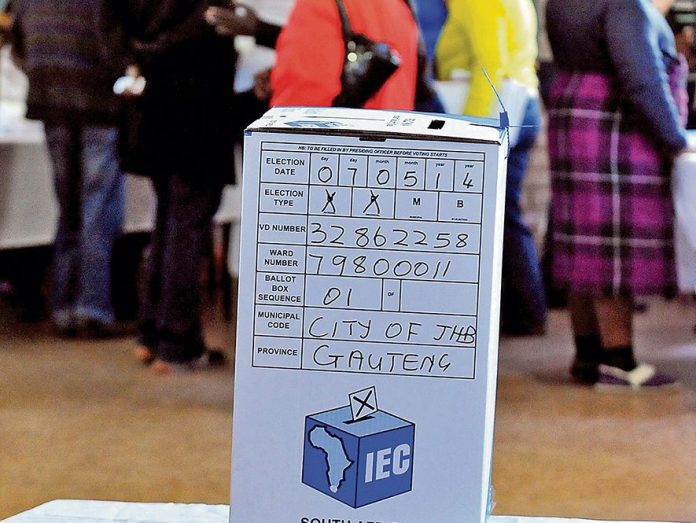
The logic has migrated from the tender box to the ballot box. Form a party. Accumulate followers. Build a personality cult. Secure enough votes to enter a legislature or council. Then bargain with the fragment of public power that the election has delivered.
Liberal democracy celebrates the proliferation of parties as evidence of choice. But an abundance of names is not necessarily an abundance of political ideas.
Our future lawmakers and policymakers include controversial figures, celebrities and social-media influencers who cut their teeth in the oksalayo school of political debate.
Serving the public is one thing but the problem begins when notoriety becomes a qualification, popularity substitutes for competence and a personal following is presented as a political programme. Soon, these people could control critical government decisions.
The liberation generation’s leading figures, among them Steve Biko and Robert Sobukwe, were shaped by political schools, mass organisations, trade unions, community struggles and sustained arguments about the society they intended to build.
Today, visibility comes first and political content is assembled afterwards. A social media following becomes a constituency. Notoriety becomes political capital. The eventuality is a crowded ballot and an empty politics. Democracy gives these candidates the right to stand.
But before we give them power over the country, we are entitled to ask: Who are these people on my ballot paper?
- In South Africa, a surge in registered close corporations and companies was linked to government tenders awarded without requiring experience.
- Some individuals exploited the system by registering multiple companies to compete against themselves in bids and by placing allies on bid evaluation committees.
- Corruption occurred at high levels, such as a North West government official signing contracts as both public official and beneficiary.
- Political participation has lowered standards, with some candidates lacking political education, community work experience, or consistent ideology, focusing instead on personality cults and notoriety.
- The article raises concerns about democracy enabling controversial figures, celebrities, and social media influencers to influence critical government decisions without proven competence or political substance.


