


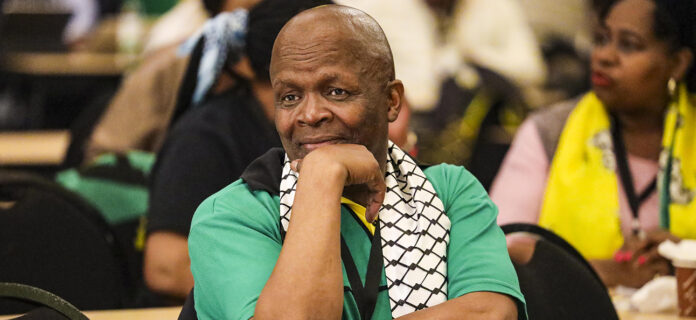
I know Comrade Mondli Gungubele, so I must speak honestly. Friendship cannot demand silence or require us to call a wrong by another name.
Comrade Mondli described the failure to submit municipalities and candidates to the Electoral Commission (IEC) as a “scandalous incident”. It requires investigation. But should a national executive committee (NEC) and national working committee (NWC) member prosecute that concern on social media in language appearing to target the secretary-general?
Democratic centralism, collective responsibility and organisational discipline are decisive.
The electoral deadline was not merely a target. Section 14 of the Local Government: The Municipal Electoral Act requires a contesting party to submit its notice, candidate lists, deposits and supporting documents.
The IEC fixed 5pm on August 28 as the deadline. Missing it carried consequences.
However, ANC candidate selection rules distribute responsibility across branches, regions, provincial list committees, provincial secretaries and the electoral committee. Rule 9.6.4 requires the committee to ensure lists are ready at least two weeks before registration. Rule 9.6.5 requires the secretary-general to upload names in the presence of officials who confirm them.
The secretary-general performs the submission but does not produce every municipal list. Uploading is the final act in an administrative chain. Turning it into a personalised indictment distorts the rules.
Rule 16.6 of the ANC constitution establishes the secretary-general as chief administrative officer. The office is the ANC’s engine room.
When its authority is weakened, provinces behave like autonomous centres, regions disregard national instructions and factions manufacture competing authority.
Mbalula inherited a damaged office and has restored urgency, discipline and administrative command.
Defending the office does not mean denying failure. An audit must establish when provinces submitted information, whether lists were complete, who authorised changes, what happened on the IEC portal, which officials were present and whether internal deadlines were observed.
No official should hide late lists, incomplete documents or unauthorised changes behind the secretary-general’s name.
Democratic centralism is not blind obedience. Rule 3.7 protects freedom of speech in the ANC, while Rules 5.1.3 and 5.1.5 permit constructive criticism through appropriate structures. Debate must be followed by collective decision and disciplined implementation.
As an NEC and NWC member, Comrade Mondli had access to structures empowered to demand reports and establish responsibility. Choosing social media before they determined the facts transformed an accountability matter into a public challenge from within the command structure.
His language became a media narrative about a “revolt at Mbalula’s door” and speculation about the 2027 national conference. Whatever his intention, a senior leader must foresee how public remarks will be weaponised.
Rules 25.17.5 and 25.17.17 recognise conduct that could bring the ANC into disrepute, create division or undermine organisational effectiveness. His intervention establishes a prima facie basis for consideration, not guilt. Rule 25.6 protects legitimate debate and procedural fairness requires that he be heard.
He should explain whether he raised the matter internally, why he chose a public platform and whether he considered the consequences.
The ANC enters the 2026 local elections weakened after losing its national majority in 2024. Key metros remain contested, while the SACP’s independent campaign further complicates the terrain.
The NWC must require Comrade Mondli to account and apply fair corrective action if misconduct is established. Seniority cannot become immunity. Accountability must also reach every official responsible for the administrative failure.
The secretary-general must lead. The collective must support him. The facts must be established through proper structures. The movement must speak with one voice. The centre must hold.
• Itshegetseng is an ANC member
- Comrade Mondli Gungubele publicly criticised the failure to submit municipalities and candidates to the Electoral Commission (IEC) on time, calling it a “scandalous incident” requiring investigation.
- Submission of candidate lists and related documents by the set deadline is required by law and ANC rules, with responsibility shared among branches, regions, provincial committees, and the secretary-general.
- The secretary-general’s role is primarily administrative, serving as the final official submitting lists, not producing them, and is considered the ANC’s chief administrative officer according to ANC Rule 16.6.
- The ANC’s rules protect internal debate but expect constructive criticism to go through proper structures rather than social media, which can cause division and damage organisational effectiveness.
- The ANC National Working Committee (NWC) is expected to hold Comrade Mondli accountable, ensure a thorough audit of the submission failure, and enforce discipline within the organisation ahead of the 2026 local elections.


