


Every board watching a cheaper copy erode its margins reaches for the same lever – they cut the price. The instinct misreads the threat. A dupe rarely succeeds because it is cheap.
It succeeds because the original gave the market no reason to pay the premium beyond the name on the bottle. Once the gap is exposed, price becomes the only lever left to pull.
Fragrance shows this most clearly. Boardrooms outside the beauty sector should be paying closer attention than they are.
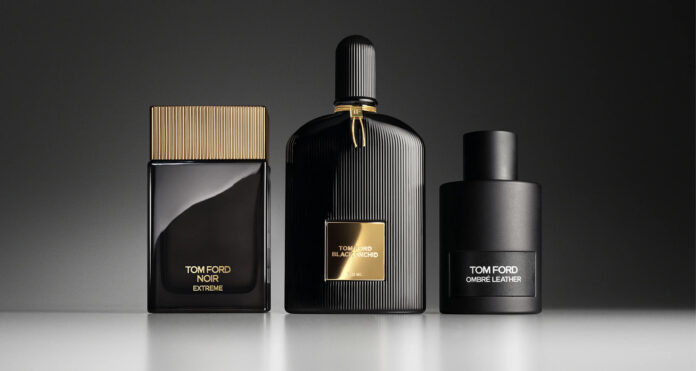
Retailer Scentimental has built a business of more than 850 “inspired-by” fragrances, including versions Jo Malone’s Peony and Tom Ford’s Black Orchid, using the same French fine fragrance oils many designer houses source from, at a fraction of designer pricing.
The brand claims more than 200 000 customers and 20 000 five-star reviews in a perfume market that Bonafide Research expects to keep growing at close to 6% a year through 2029.
TikTok’s in-app shop hasn’t launched in South Africa, but where it has, the pattern is even starker. US dupe fragrance house Oakcha, known for scents modelled on Chanel, Tom Ford and Creed, grew its TikTok Shop revenue from $5 050 to $6.2-million (roughly R81 000 to R100m) between the first halves of 2024 and 2025. That’s a year-on-year increase of more than 125 000%.
Fragrance brands generated more than $162m (about R2.6-billion) in TikTok Shop sales in 2025. The dupe fragrance category overall was worth an estimated $2.7-billion in 2024. Shoppers increasingly cannot, or will not, bother to tell the difference in a blind comparison. Once the trading infrastructure lands here, as TikTok has signalled it eventually will, there’s little reason to expect South African shoppers will behave differently.
This is a margin issue masquerading as a pricing problem. The distinction matters for how a board should respond.
Every premium price carries an implicit claim that it costs more because it delivers something a cheaper alternative cannot. When the claim is mostly narrative, built on packaging, advertising spend and brand mythology layered over a product, it isn’t meaningfully different from what a contract manufacturer can replicate in weeks.
The difference between Scentimental’s version and the designer original, it says, is the bottle, the advertising budget and give or take a few thousand rand. That is a challenge to what the premium was paying for.
The mechanism applies to any category where a brand’s margin has drifted further from its point of difference than its marketing suggests: skincare, fashion basics, and even packaged food. The wider the gap between what a brand charges and what it can prove it delivers, the more margin sits exposed on the table for a dupe to take.
The executive question isn’t, ‘How do we compete with cheaper copies?’ It is: Where in our portfolio is our margin outrunning our differentiation? That’s answerable only if brand health is audited with the same rigour applied to financial risk.
That means going beyond recall surveys and sentiment tracking to a direct test. Can the brand name a specific, provable reason a customer should pay more? Would the reason survive a side-by-side comparison with the cheapest credible copy on the market?
Most brands are built to confirm the brand is liked, not to establish whether it is irreplaceable. That means putting the differentiation-to-margin gap on the same reporting cycle as any other exposure, not just before a launch or after a scare, with an owner in the brand team, not only finance, accountable for closing it. Cut the price where the claim can’t be proved or invest to make the claim provable, whichever the audit calls for.
Boards that treat this as a discipline will be positioned to close the gap or price accordingly before a competitor exploits it.
Manufacturing has never been faster to replicate at scale, and social commerce platforms have never made it easier for a dupe to find its audience overnight. Consumers, armed with content and little brand loyalty for its own sake, have never been quicker to notice when a premium isn’t earning its keep.
•Lala is marketing lead at PR Powerhouse
- Scentimental offers over 850 “inspired-by” fragrances using the same fine fragrance oils as designer brands but at a fraction of the price, claiming over 200,000 customers and 20,000 five-star reviews.
- Oakcha, a US dupe fragrance house, increased its TikTok Shop revenue from $5,050 to $6.2 million between the first halves of 2024 and 2025, a 125,000% year-on-year increase.
- Fragrance brands generated over $162 million in TikTok Shop sales in 2025, while the dupe fragrance category was valued at approximately $2.7 billion in 2024.
- The key challenge for premium brands is that their price premium often lacks a provable differentiation beyond branding, packaging, and advertising.
- Boards should rigorously audit brand health to ensure that premium pricing is justified by clear, defendable differences rather than relying on narrative or marketing-driven perceptions.


