


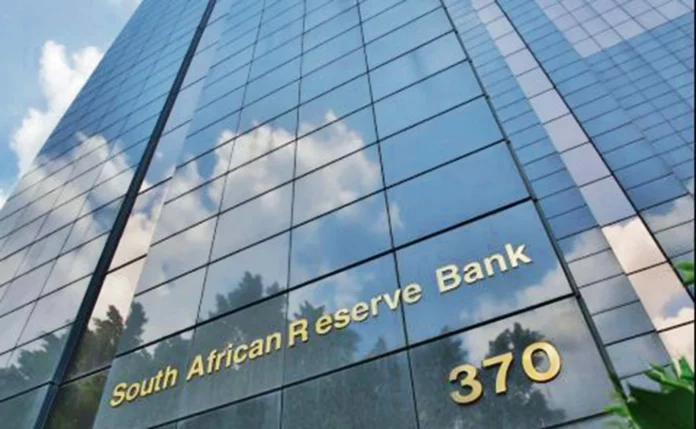
For millions of South Africans, the 23 July 2026 announcement by the Monetary Policy Committee (MPC) to hold the repo rate steady will provide a collective, much-needed sigh of relief.
Had the South African Reserve Bank (SARB) succumbed to market expectations and hiked the interest rate further, the consequences for households and small businesses would have been nothing short of devastating. Another increase would have immediately pushed the cost of servicing debt, from home loans and vehicle finance to the everyday credit facilities families rely on just to survive, to suffocating new highs.
This is a financial burden the South African consumer simply cannot absorb, particularly given the grim macroeconomic reality that real take-home pay has been in steady decline over the past two years. With inflation consistently outpacing nominal wage growth, workers have watched their purchasing power evaporate. To aggressively increase the cost of borrowing against this backdrop of shrinking disposable income would not just be an exercise in orthodox monetary policy; it would be an active assault on the survival of the working class and the small enterprise sector.
Defying market hawkishness: Pragmatism wins over Orthodoxy
After months of inflicting pre-emptive punishment on the South African consumer, the Monetary Authority has finally blinked. In a decision that spectacularly defied the hawkish consensus of financial markets, where most economists clamoured for yet another interest rate hike, the MPC opted on Thursday to hold the repo rate steady at 7%.
Despite June’s inflation spiking to 5%, the central bank has tacitly admitted what developmental economists have argued all along: you cannot cure a geopolitical oil shock in the Middle East by suffocating domestic households in South Africa.
While the 4-2 split vote reveals a dangerous, lingering orthodoxy within the committee, Thursday’s wait-and-see decision is a much-needed victory for economic pragmatism over ideological rigidity. The hope must be that the SARB has finally recognised that in an environment where domestic demand is collapsing and municipal dysfunction chokes our growth, deploying blunt monetary instruments against imported fuel prices is not inflation targeting; it is economic self-sabotage.
The unspoken retraction of a flawed May rate hike
In many ways, Thursday’s pause reads as an unspoken retraction of the MPC’s deeply flawed 28 May hike. Two months ago, the Reserve Bank chose to aggressively tighten policy despite explicitly acknowledging that South Africans were facing a painful combination of higher global uncertainty and reduced disposable income. The previous hike was entirely built on the phantom fear of second-round effects, a theoretical wage-price spiral that was always an academic fantasy in an economy reeling from mass unemployment.
Alarmingly, the SARB conceded back then that it had no clear confirmation of the effects in the data, yet it proceeded with what can only be described as pre-emptive punishment, bludgeoning struggling households on theoretical suspicion rather than empirical evidence.
The decision to hold, even as headline inflation sits at a heightened 5%, is the ultimate vindication of those who resisted that orthodoxy. It confirms the reality we argued in May: deploying a blunt monetary instrument against a geopolitical supply shock does nothing to lower the global price of oil but does everything to destroy whatever fragile domestic demand remains.
By stepping back today, the SARB has tacitly admitted that there was never any empirical justification for the May rate hike and that trying to hike our way out of a global crisis is a futile exercise that the real economy simply cannot survive.
Beyond Central Bank limits: Reforming the fuel price formula
In holding the repo rate steady, the MPC explicitly acknowledged a glaring reality: the recent inflation spike is driven by international oil prices and geopolitical shocks over which the Reserve Bank has no control.
While the central bank pauses, the burden of action shifts squarely to the state to urgently reform the domestic fuel price determination formula. For too long, South African motorists and supply chains have been suffocated by layered inefficiencies and exorbitant levies baked into the pump price.
Most notably, there is an urgent need to decouple the Road Accident Fund (RAF) levy from the basic fuel price, removing this structurally inefficient cost from the daily lives of consumers. While the Department of Mineral and Petroleum Resources has indicated that a review of the fuel pricing mechanism is under way, sluggish timelines are unacceptable. Parliament must step up and demand meaningful, expedited progress from the ministry to permanently reshape how fuel is priced in South Africa, shielding our domestic economy from unnecessary imported shocks.
Fixing local governance as a national macroeconomic imperative
Beyond imported fuel costs, the MPC’s statement featured a devastating admission that validates my deepest concerns: municipal dysfunction has now become a binding constraint on national economic growth. As we head toward the highly anticipated local government elections, this reality must dominate the political and economic discourse.
The collapse of basic service delivery is repelling investment, destroying small businesses and deepening inequality. Reforming local government, and fundamentally overhauling its governance and fiscal frameworks, has never been more important. We cannot sustain a macroeconomic environment where the national government attempts to stimulate growth while the local sphere actively sabotages it through chronic underspending, infrastructure decay and administrative paralysis. Fixing local governance is no longer just an administrative priority; it is a critical macroeconomic imperative.
From monetary pause to fiscal drive: Resolving the demand-side crisis
Finally, Thursday’s MPC decision reflects a sharp, albeit belated, recognition of a long-standing issue we have consistently raised: the demand-side crisis. By halting further rate hikes, the Reserve Bank has conceded to a certain extent that its blunt monetary tool has had, and will continue to have, severe consequences on the much-needed aggregate demand in the economy.
However, passive monetary restraint is merely a reprieve, not a recovery. Now, more than ever before, we need fiscal policy to step into the void and actively drive demand-side interventions to support this temporary monetary pause. The state must capitalise on this moment to put capital back into the hands of households and revitalise domestic demand, ensuring that our macroeconomic policies finally work to build the real economy rather than simply managing its decline.
Prof Dumisani Jantjies is a prominent South African developmental economist, a professor of practice at the University of Johannesburg, and the former director of the Parliamentary Budget Office. He also serves as the chairperson of the African Network of Parliamentary Budget Offices.
- The South African Reserve Bank (SARB) decided on 23 July 2026 to hold the repo rate steady at 7%, defying market expectations for a hike amid 5% inflation to avoid further financial strain on households and small businesses.
- The decision marks a pragmatic shift away from orthodox monetary policy, acknowledging that raising rates cannot combat inflation driven by international oil price shocks.
- The MPC’s pause implicitly retracts the controversial May rate hike, which had punished consumers based on theoretical inflation fears without empirical data.
- The SARB emphasizes that fuel price inflation stems from factors beyond its control, urging urgent state-led reforms to the fuel price formula, including removing the Road Accident Fund levy from fuel prices.
- The article highlights municipal dysfunction as a critical barrier to economic growth, calling for urgent local government reform and increased fiscal policy measures to stimulate domestic demand and economic recovery.


