


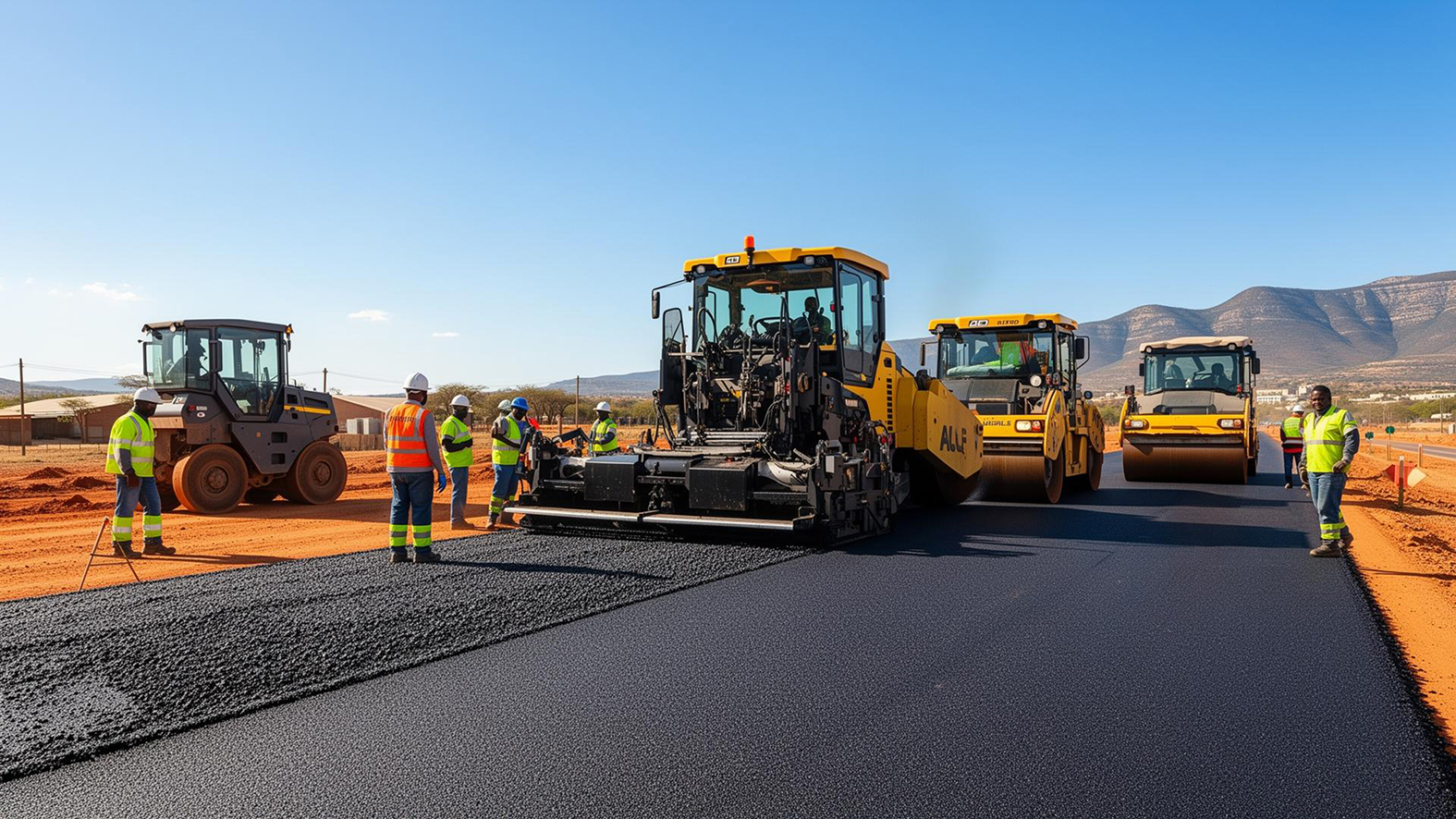
South Africa’s local government footprint did not emerge by accident. It was built on inherited spatial injustice: townships, informal settlements, traditional areas and homeland areas that sit far from jobs and services.
They also carry a disproportionately small share of municipal budgets and are frequently the least safe, least serviced parts of our cities.
Residents in these areas also tend to have the lowest level of access to their own local government and often experience the poorest governance from the councils meant to serve them.
Infrastructure is not a neutral backdrop to this picture. It is either the thing that closes these gaps or the thing that entrenches them.
The role of water, sanitation, roads, electricity and digital infrastructure in reducing inequality
Water, sanitation, roads, electricity and digital connectivity determine whether a household can create or reach a job, keep a child healthy or run a small business.
Yet the candid reality, as the National Planning Commission’s Advisory on Service Delivery set out when it was adopted in October last year, is that the scale and speed of investment are not yet there. Gross fixed capital formation sits at just 14.8% of GDP, against the National Development Plan’s target of 30%, a gap that tells us how far we still have to go.
Road infrastructure backlogs alone exceed R197 billion and many wastewater treatment plants are operating at roughly 50% above their design capacity.
These are not abstract statistics — they are crumbling systems that undermine everything else the country is trying to build. Energy and digital infrastructure have shown encouraging momentum in recent years but are increasingly unaffordable.
Eskom’s average tariffs have increased from 2008 by some 973% while the Consumer Price index has increased by only 241%. It is unacceptable that we praise surpluses in Eskom, for example, when their unaffordable increases to fund corruption and inefficiency have played a major role in the financial crises our municipalities are facing.
Municipal budgets, on the other hand, have increased by around only 160% in the past 12 years, nowhere near the Eskom increases.
At the same time, over the past 12 years we find capital expenditure declining from 15.7% of total municipal budgets to only 9.6%.
While we need to move far more decisively on freight logistics, ports and water systems, we must also significantly increase the funding of municipalities.
Reducing inequality requires investment that removes these binding constraints, not investment that merely looks good on a budget line and forces municipalities to post unrealistic and unsustainable budgets relying increasingly on their rates bases.
After all, if we exclude economic investments by government, municipalities spend more than national and provincial governments on public infrastructure.
Long-term infrastructure planning versus short-term political priorities
Getting this right means planning for where South Africa is going, not just where budgets have historically been allocated. Census 2022 migration data confirms that Gauteng and the Western Cape remain, by some distance, the country’s largest receiving provinces.
Infrastructure planning that does not anticipate the movement of people will keep building capacity in the wrong places while the areas absorbing the most new households fall further behind.
This is precisely why coordination between spheres of government has to go further than institutions simply talking to one another.
The District Development Model’s “One Plans” must become genuinely integrated, evidence-based strategies, not just compilations of separate departmental plans stapled together; and ministerial and director-general accountability should be formally assigned per district, so that a named person is accountable for non-delivery and not able to claim credit merely for attending coordination meetings or arranging summits.
Just as importantly, South Africa has to break its culture of reactive maintenance, fixing infrastructure only after it fails rather than managing it as an asset.
That habit is far more expensive over time. Maintenance backlogs in water, rail, roads and electricity are steadily eroding the return on infrastructure we have built. Municipalities need protected, dedicated budget lines for planned maintenance, not only capital grants for new, more politically visible projects.
Financing municipal infrastructure in a constrained fiscal environment
None of this can be financed without confronting municipal capability directly, because many infrastructure failures are, at root, local failures.
The financial distress at municipal level is severe but municipalities cannot themselves be the only ones to blame, as the case of Eskom shows.
Financial support to these municipalities must be tied to governance reform, technical capacity and credible financial recovery plans which must be produced through collective engagements between all three spheres of government and not through Treasury departments dictating what should be done.
Reliable electricity and efficient freight logistics remain the most binding constraints on both investment and job creation, which makes them growth multipliers worth prioritising even under fiscal pressure.
Equally, the brain drain of engineers and project managers out of the public sector is a specific, addressable problem that financial prioritisation must tackle directly, because turning the country into what President Cyril Ramaphosa has called “a construction site” means little without artisans, engineers and project managers to sustain the build.
Infrastructure spending, in other words, must deliberately build domestic human capability alongside the physical assets it funds. And the industrial buildings we create must be affordable to investors.
Inclusive development was never going to come from infrastructure spending alone. It requires that spending be planned for the long term, coordinated across spheres of government, protected from short-term political incentives and financed in a way that rebuilds rather than bypasses municipal capability.
Get that right and infrastructure becomes what it is meant to be: the foundation on which a more equal South Africa is actually built.
- Dr. Sutcliffe is co-director of City Insight, a firm that provides information and advice on development issues. He’s a former city manager of eThekwini Metro
*Bannister is co-director of City Insight and a development consultant with experience in urban planning and policy development
*McGahey has over 20 years’ experience in planning and development and project management.
- South Africa’s local government footprint did not emerge by accident.
- It was built on inherited spatial injustice: townships, informal settlements, traditional areas and homeland areas that sit far from jobs and services.
- They also carry a disproportionately small share of municipal budgets and are frequently the least safe, least serviced parts of our cities.
- Residents in these areas also tend to have the lowest level of access to their own local government and often experience the poorest governance from the councils meant to serve them.
- Infrastructure is not a neutral backdrop to this picture.


