


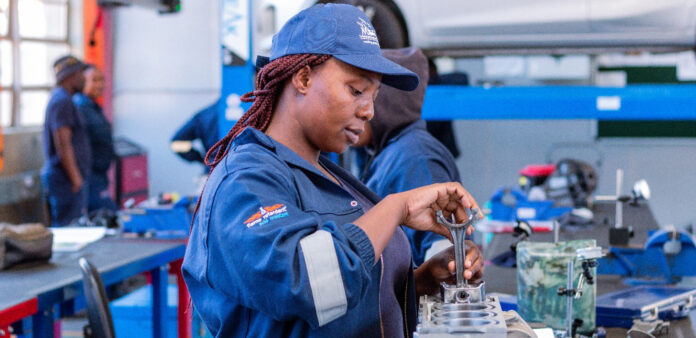
Technical and Vocational Education and Training (TVET) colleges have increasingly become a topic when debating South Africa’s post-school education and training system and youth (un)employment.
While concerns about student success rates and systemic challenges deserve serious attention, they should not overshadow the larger story unfolding within the sector in relation to increasing employment rates among the youth; and that is a story of transformation, adaptation and renewed purpose.
TVET colleges must be viewed as developmental platforms that equip young people with practical skills, workplace experience and entrepreneurial capabilities. At a time when South Africa faces persistently high youth unemployment, skills shortages and rapid technological change, strengthening vocational education remains absolutely essential.
Second, the value of TVET education should be seen as extending far beyond preparing students for formal employment. Across many communities, vocational skills create pathways to entrepreneurship and self-employment.
Qualified artisans, technicians, plumbers, bricklayers, etc contribute as service providers directly to local economic development by establishing businesses, creating jobs and addressing community needs in sectors such as construction, renewable energy, manufacturing, information technology and maintenance services.
For South Africa’s young people, TVET colleges, therefore, offer far more than a certificate; they offer skills, dignity, opportunity and a pathway to meaningful economic participation. Strengthening this sector is an investment in our nation’s long-term prosperity, resilience and competitiveness.
This is why the department is driving significant reforms within the TVET sector. Last week, the minister updated South Africans on the continued transition from legacy qualifications to modern occupational qualifications.
The occupational qualifications model prioritises a dual system, where students spend time in the classroom, the workshop and the workplace concurrently. This blended approach is designed to ensure that graduates leave our colleges with critical theoretical knowledge but, more importantly, with practical competence and industry experience. The decisive shift from legacy qualifications towards occupational programmes should, therefore, be given the opportunity to mature and demonstrate its impact. Their success should be measured by the extent to which they gain meaningful skills ready to support a dynamic economic growth plan.
As this transformation unfolds, it is important that we move away from narrow interpretations of performance that rely solely on national certificate (vocational) throughput rates. Throughput statistics based on minimum completion time often do not reflect the thousands of students who complete qualifications over longer periods, secure employment, start businesses or progress to further learning
opportunities.
Through partnerships with employers and expanded workplace-based learning opportunities, TVET colleges are increasingly producing graduates with hands-on experience and skills that industries require.
Digital technologies, artificial intelligence, automation and advanced manufacturing are fundamentally changing the nature of work and the skills required for future economic participation. The combination of modern qualifications, industry partnerships, digital transformation and lecturer development represents a comprehensive strategy for building a more responsive and future-orientated TVET system.
The minister’s budget vote speech last month announced the tabling of a comprehensive TVET digital transformation strategy.
This strategy will provide a framework for modernising teaching and learning, expanding digital infrastructure, strengthening digital literacy and ensuring that TVET lecturers can produce graduates who possess the technological competencies required by an increasingly digital economy.
As minister Buti Manamela has consistently stated, “Vocational education must not be considered a second choice; it must be accepted as a strategic investment in South Africa’s future. By equipping young people with practical, industry-relevant skills, we are preparing them to thrive in the Fourth Industrial Revolution and become innovators, entrepreneurs and skilled professionals who will drive inclusive economic growth.”
The expansion of access to vocational education is paramount in meeting the demands of a growing population and a modern economy. Countries that have successfully industrialised and reduced youth unemployment have done so by building strong vocational education systems at scale.
Our demographic realities demand a similar approach. Many young South Africans enter the labour market every year, yet many remain excluded from opportunities post-classroom learning. The future competitiveness of South Africa will depend on our ability to produce artisans, technicians, technologists and skilled workers in sufficient numbers to support economic growth. Scaling the TVET sector is, therefore, not simply an education imperative; it is an economic necessity.
- Seedat is the spokesperson to the higher education and training minister.
- Technical and Vocational Education and Training (TVET) colleges have increasingly become a topic when debating South Africa’s post-school education and training system and youth (un)employment.
- While concerns about student success rates and systemic challenges deserve serious attention, they should not overshadow the larger story unfolding within the sector in relation to increasing employment rates among the youth; and that is a story of transformation, adaptation and renewed purpose.
- TVET colleges must be viewed as developmental platforms that equip young people with practical skills, workplace experience and entrepreneurial capabilities.
- At a time when South Africa faces persistently high youth unemployment, skills shortages and rapid technological change, strengthening vocational education remains absolutely essential.
- Second, the value of TVET education should be seen as extending far beyond preparing students for formal employment.


