


Migration has become one of the most complex and emotive public issues facing countries around the world. While governments and societies recognise the importance of discussing migration, many remain cautious about the language they use for fear of inflaming tensions or provoking divisions.
In recent weeks, the world has witnessed several incidents that underscore the growing sensitivity surrounding migration. South Africa experienced anti-migrant protests, while in Northern Ireland, tensions in Belfast intensified following the circulation of a video showing a Sudanese man allegedly stabbing another person. Last month, the eastern Libyan government also announced a ban on the entry of nationals from four African countries: Sudan, Eritrea, Ethiopia and Somalia.
These incidents illustrate that migration is no longer a challenge confined to a handful of countries. It has become a global issue.
In South Africa, the migration debate is being shaped largely by the approaching and highly contested local government elections. Political parties have been cautious in how they articulate their positions on migration, mindful of the potential electoral consequences of alienating either supporters or opponents of stricter policies.
ActionSA appears to be the only party represented in Parliament that has openly endorsed and supported the recent anti-immigration marches.
By contrast, the Patriotic Alliance, which built much of its political identity on a hardline stance against illegal immigration, has moderated its rhetoric since becoming part of the governing coalition.
Migration is a critical issue that deserves serious attention and discussion at every level of political leadership across the African continent. It is the responsibility of governments to explain and address the underlying factors driving migration. To what extent are these challenges a consequence of governance failures, and what concrete measures are governments taking to resolve them?
By addressing the root causes that compel people to leave their home countries, governments can reduce unnecessary migration and provide the continent’s growing youth population with meaningful prospects at home.
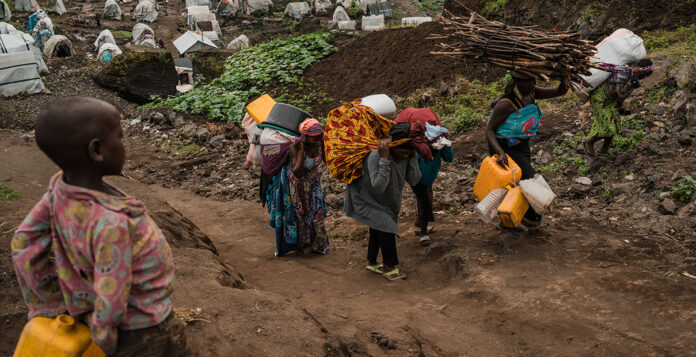
Migration is one of humanity’s oldest phenomena, practised throughout history in the pursuit of survival. Today, people continue to migrate for much the same reasons, whether to seek refuge from conflict and persecution, pursue economic opportunities, or escape other circumstances that threaten their wellbeing.
Although South Africa’s foreign-born population has steadily increased over the years as people seek stability, economic opportunities and safety, some activists and politicians have exaggerated the numbers in an attempt to inflame public sentiment and agitate the masses.
According to Statistics South Africa, the country was home to approximately 2.4 million immigrants in 2022. More than 60% originated from the Southern African Development Community, particularly Zimbabwe, Mozambique, Lesotho and Malawi. South Africa’s foreign policy under the ANC also plays an indirect role in shaping migration patterns within the SADC region. Pretoria has repeatedly endorsed disputed elections in countries such as Zimbabwe, Mozambique and, more recently, Tanzania, despite concerns about electoral irregularities.
South Africa should adopt a firmer stance against repressive governments and champion democratic governance, accountability and the rule of law. Other regional economic communities across Africa must also confront their governance failures as a means of reducing preventable migration.
• Kgwadi is a political scientist, journalist, and research fellow at the Middle East Africa Research Institute.
- Migration is a complex global issue, with recent incidents in South Africa, Northern Ireland, and Libya highlighting rising sensitivities and tensions.
- South Africa's migration debate is influenced by upcoming local elections, with most political parties cautious except ActionSA, which supports anti-immigration protests.
- Governments across Africa are urged to address root causes of migration, such as governance failures, to create meaningful opportunities and reduce forced migration.
- Migration persists historically as people seek safety, refuge, and economic stability, but some South African politicians exaggerate immigrant numbers to fuel public anger.
- South Africa's foreign policy indirectly affects regional migration patterns; the country is called to promote democracy and accountability to mitigate forced migration in the SADC region.


