


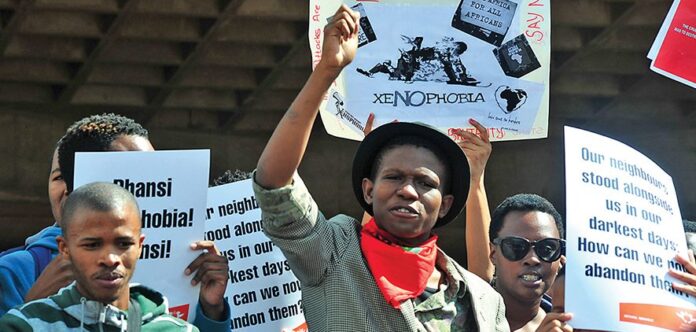
As South Africans, we are familiar with accounts of overcrowded clinics, strained schools, and intense competition for scarce jobs. All too often, these challenges are attributed to foreign nationals, and the term “xenophobia” is used to describe any outbreak of protest or violence. However, to address this crisis meaningfully, we must go beyond simplistic explanations and engage with the complex realities underlying migration in Africa, as well as the government’s response.
Migration across Africa is rarely a matter of choice. It is, more often, a consequence of hardship, conflict, and limited opportunities in home countries.
Many Africans are compelled to leave their families and communities in search of dignity, safety, and a better life. South Africa, with its relatively robust infrastructure and economy, has become a beacon of hope for many.
Despite this, our country faces its own significant challenges. Unemployment rates remain high, public services are overburdened, and the enduring legacy of apartheid-driven inequality continues to shape daily life.
These are persistent issues, not ones created by migrants alone. The pressures we experience are symptoms of deeper, systemic challenges.
It is essential to emphasise that South Africans are not xenophobic. For decades, South Africans have coexisted with people from across the continent. Our townships, cities, and workplaces have long benefited from a rich tapestry of cultures and languages. During the struggle for liberation, many South Africans found refuge in neighbouring countries, and in turn, we have welcomed individuals fleeing hardship, conflict, and persecution, often extending a hand of friendship and solidarity.
The tensions we see today are not rooted in hatred, but rather in social and economic pressures that strain communities.
Frustration stems from unemployment, inadequate healthcare, and overcrowded schools, not merely the presence of foreign nationals. The narrative of “xenophobia” oversimplifies the issue and disregards our longstanding history of coexistence and mutual support.
The South African government recognises the strain that unmanaged migration can place on communities. Several initiatives are being implemented to address these challenges:
Efforts are underway to strengthen border controls and manage migration lawfully and safely.
The Department of Home Affairs is modernising its systems to process immigration and asylum applications more efficiently, ensuring protection of rights and minimisation of abuses.
Recognising the vulnerability of township economic sectors, the government is introducing measures to better regulate and manage businesses such as spaza shops and informal traders. These interventions aim to ensure fair competition, improve business practices, and protect both local entrepreneurs and consumers.
There is renewed investment in infrastructure in townships and informal settlements, with the goal of ensuring access to basic services for all – South Africans and migrants alike.
The government is collaborating with other African nations to address the root causes of migration, including poverty, conflict, and underdevelopment, thus reducing the need for mass movement across borders.
There is a commitment to strengthening law enforcement to protect all residents from crime, exploitation, and discrimination.
Now more than ever, South Africans must resist allowing this crisis to fuel division or hatred. Violence and scapegoating only intensify shared challenges and damage our country’s reputation globally. The real solution lies in unity, understanding, and demanding accountability – from both our leaders and our neighbours.
Equally, migrants residing in South Africa are expected to respect and abide by the country’s laws and regulations. Those living in South Africa without proper documentation must take steps to regularise their status or face deportation, as illegality undermines the legal framework of the very country in which they seek to co-exist. Furthermore, engaging in criminal activity or any form of lawlessness not only jeopardises migrants’ own prospects and safety, but also erodes the trust and goodwill extended by South Africa.
African governments must also step up to create opportunities and foster development within their own countries. It is unsustainable for millions to be forced into migration for survival; every government on this continent has a duty to its people.
- Mnisi writes in his personal capacity
- South Africans commonly face challenges such as overcrowded clinics, strained schools, and high job competition.
- These issues are frequently blamed on foreign nationals, often labeled as xenophobia.
- The article argues that simplistic explanations do not address the root causes of these problems.
- It calls for a deeper understanding of migration complexities within Africa.
- It also emphasizes the need to critically evaluate the government's response to migration.


