


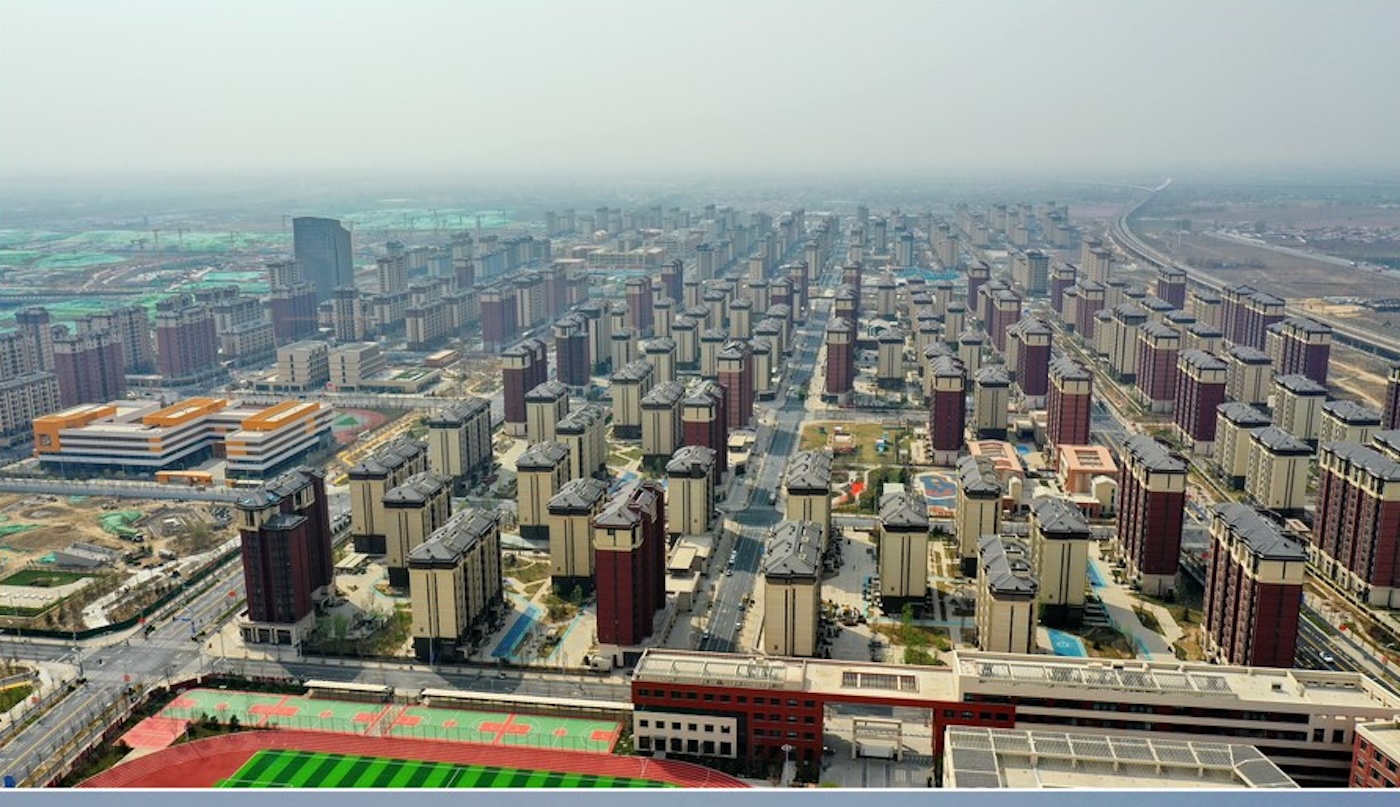
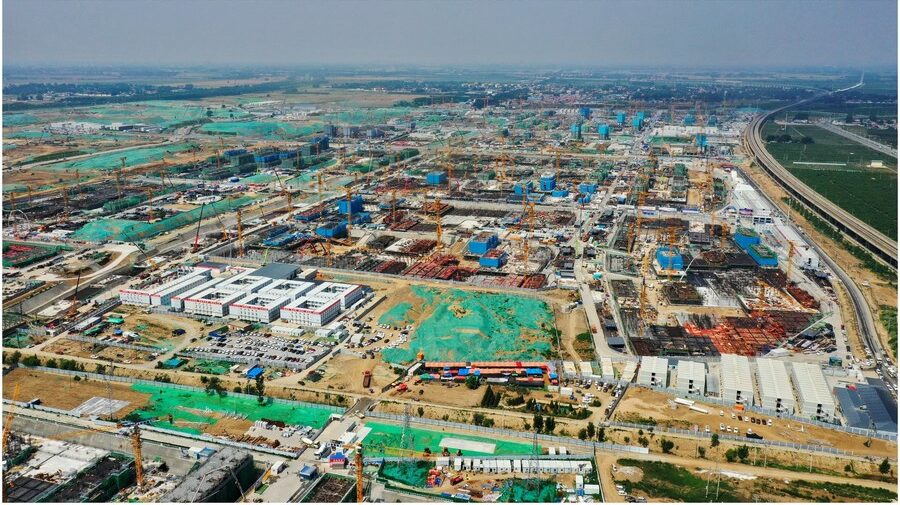
About 100 kilometres southwest of Beijing, a new city is rising around the waters of Baiyangdian Lake.
Launched in 2017, Xiong’an New Area has been planned from the outset as a “city of the future”: green, smart and built to a blueprint designed to last for generations.
Later this month, Xiong’an will host the inaugural Xiong’an Global Governance Forum, bringing together voices from around the world to discuss how to reform and improve global governance.
It is a fitting venue. Just as a new city needs a long-term blueprint, today’s world needs a shared vision for how it is governed. The forum also comes just over a year after President Xi Jinping put forward the Global Governance Initiative (GGI), a timely moment to take stock and chart the way ahead.
READ: IMF panel: Africa must boost regional trade and reforms to unlock economic growth
The need has never been more pressing. More than eight decades after the founding of the United Nations, the global governance system is struggling to keep pace with a changing world.
Three problems stand out:
the Global South is seriously under-represented, the authority of the UN and international law is being eroded, and the system too often fails to deliver.
Meanwhile, hegemonism, unilateralism and protectionism are on the rise, and the deficits in peace, development, security and governance keep widening.
Developing countries, not least in Africa, often pay the highest price.
The GGI answers a fundamental question of our time: what kind of global governance system should we build, and how should we reform and improve it? Its goal is to build a more just and equitable global governance system and advance towards a community with a shared future for humanity.
Together with the Global Development Initiative, the Global Security Initiative and the Global Civilization Initiative, it is a public good China offers to the world. The GGI does not seek to overturn the existing order or build parallel structures. It seeks to make the current system fairer, more representative and more effective.
At its heart are five core concepts.
Sovereign equality is the overriding premise. All countries, regardless of size, strength or wealth, are equal participants, decision-makers and beneficiaries in global governance. For Africa, this means redressing the historical injustice done to the continent and increasing the representation and voice of developing countries, African countries in particular, in the UN Security Council and the international financial institutions. China was among the first to support the African Union’s membership of the G20.
International rule of law is the fundamental guarantee. The purposes and principles of the UN Charter must be observed fully and faithfully. International law must be applied equally, without double standards, and the house rules of a few countries must not be imposed on others.
Putting this into practice, China has worked with other countries to establish the International Organization for Mediation in Hong Kong, the world’s first intergovernmental legal organisation dedicated to resolving international disputes through mediation.
READ: China calls for end to political deadlock in Libya
Multilateralism is the basic pathway. Global challenges, from climate change to artificial intelligence, can only be met through extensive consultation, joint contribution and shared benefits, with the UN at the core. South Africa’s G20 presidency last year, the first on the African continent, showed what inclusive multilateralism can achieve.
It put debt sustainability, a just energy transition and other African priorities firmly on the global agenda, with China’s full support.
A people-centred approach is the core value. Global governance should ensure that the people of all countries take part in it and share in its benefits. That means putting development at the heart of the international agenda, easing the debt burden of developing countries, scaling up climate finance, and narrowing the North-South gap as well as the digital and AI divide, so that no country is left behind.
A focus on real action is the guiding principle. Global governance must be judged by results that people can see and feel. China is turning words into deeds. Since May 1 this year, China has granted zero-tariff treatment to all 53 African countries with which it has diplomatic relations, opening its market of 1.4 billion people wider at a time when others are raising barriers.
The GGI now enjoys the support of nearly 160 countries and international organisations, and more than 60 countries have joined the Group of Friends of Global Governance.
READ: How BRICS creates new development opportunities for Global South
For the Global South, the GGI carries special significance. Developing countries are home to the vast majority of humanity and an ever larger share of the world economy, yet their voice in global governance lags far behind. The Global South is no longer a silent majority. The GGI gives expression to its shared aspirations for equality, fairness and development, and helps developing countries move from following the rules to writing them.
As a natural member of the Global South, China will always stand with its fellow developing countries. The Xiong’an forum will be an open platform, and China looks forward to hearing African voices there.
This year marks the 70th anniversary of diplomatic relations between China and Africa. As all-round strategic cooperative partners in the new era and fellow members of BRICS and the G20, China and South Africa share a responsibility to put the GGI into practice and to ensure that Africa is not merely talked about, but truly heard and able to play its full part, in Xiong’an and beyond.
South Africans speak of Ubuntu: I am because we are. An ancient Chinese ideal holds that when the great way prevails, the world belongs to all. Both speak to the same truth: in an interdependent world, the future must be shaped by all and shared by all. That is the spirit Xiong’an will share with the world.
- Mr. Wang Chuan is the Spokesperson of the Chinese Embassy in South Africa
- Xiong’an New Area, launched in 2017 near Beijing, is designed as a green, smart city built for future generations and will host the inaugural Xiong’an Global Governance Forum.
- The forum aims to discuss reforming global governance and follows President Xi Jinping's Global Governance Initiative (GGI) introduced over a year ago.
- The GGI focuses on five core concepts including sovereign equality, international rule of law, multilateralism, a people-centered approach, and action-oriented results.
- China has supported initiatives such as African Union membership in the G20 and established the International Organization for Mediation in Hong Kong to promote global governance based on equality and fairness.
- Nearly 160 countries support the GGI, with over 60 joining the Group of Friends of Global Governance, emphasizing the importance of the Global South's increased voice in the international system.


