


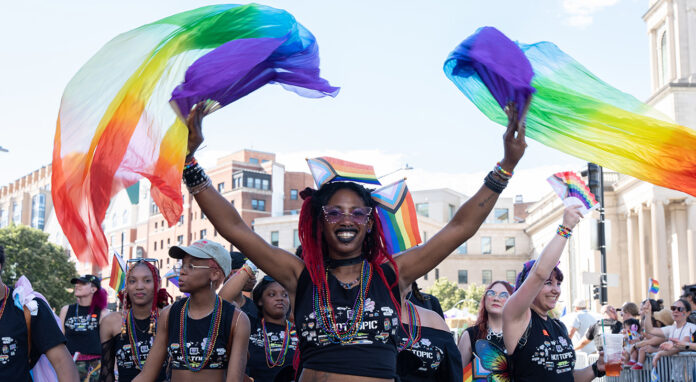
For years, we have been told we do not exist. That being gay is un-African. That we are a threat to families. That we are recruiting children. That our love is a sin. We have been told that we are not part of the village. The village has always known better.
This week, we have the evidence. Admission Reserved, the landmark survey released by the Human Sciences Research Council and The Other Foundation, finally puts numbers to what we have always known: we are here. We are part of South Africa. And we are not going anywhere.
For the first time, we have a reliable estimate of South Africa’s LGBTI population: 2.5% of us are gay, lesbian or bisexual; 1.1% are transgender or non-binary; and 2.7% are intersex. That is about 2.37 million people.
That is our families, our neighbours, our colleagues, our friends. That is us.
The data shows that progress is real. Moral disapproval of same-sex relations has dropped from 66% to 52% over the past decade. Support for marriage equality has risen to 45%. Most South Africans believe we deserve the same rights as everyone else. These are not just numbers. These are lives that are becoming safer, more visible and more possible.
But the data also shows family acceptance has stalled. About half of South Africans would not accept an LGBTI family member. Half do not believe we face violence. Half do not see us.
We know what the violence looks like. We remember Salome Masooa and Sizakele Sigasa. In 2007, they were raped, beaten and set alight in Soweto. Their killers were never brought to justice. Their deaths barely registered. It was a message: you can get away with it. Many more lives were lost. A wall of remembrance stands for LGBTI people who died because of a lack of tolerance. It should never have been necessary.
The violence has taken many forms. It has been the silence of a mother who cannot accept her child. It has been the church that preaches love but practises exclusion. It has been the state that looks away.
But we have fought back.
Recently, the South Gauteng High Court, Johannesburg, found Ngizwe Mchunu guilty of hate speech against LGBTI people. He lost. But his loss does not erase the danger he represents.
He has a following, and the following has access to vulnerable LGBTI people in their communities, homes and schools. It was not justice for all the pain, but it was a victory. It showed that we will not be silent. It showed that the law can protect us. It showed that even a man with a platform cannot trample on our humanity without consequence.
We cannot afford to be complacent. The same forces that target us also target immigrants. The ill-treatment of migrants and people who identify as LGBTI feeds on the same fear of the other. They share the same roots: a refusal to see humanity in people who are different. South Africans who are hostile to foreigners are also more likely to be hostile to LGBTI people. This is not a coincidence. It is a pattern. It is a sickness we must confront.
That is why this research matters. It gives us evidence. It gives us agency. It tells the story that we have been telling for years, but now with numbers that cannot be ignored. It reminds us that our struggle is not just about surviving. It is about thriving.
I am an openly gay black South African man. I know that not everyone embraces who I am. The research shows that. But I also know that the possibility of coexistence is real. I have seen it in families that choose love. I have seen it in communities that refuse to be divided. I have seen it in young people who are growing up with more freedom than we had.
That is the power of evidence. It does not just describe the world; it helps us change it. It gives us a roadmap. It shows us where we need to go and how to get there.
- Mahlatjie the media and communications officer of The Other Foundation, an African Trust advancing human rights, with a focus on sexual orientation and gender identity.
- The article addresses persistent harmful stereotypes and stigmas against the LGBTQ+ community in Africa.
- It highlights accusations that being gay is un-African and a threat to traditional family values.
- False claims that LGBTQ+ individuals are recruiting children are challenged.
- The piece rejects the labeling of LGBTQ+ love as sinful.
- It emphasizes that despite these negative messages, the community and its allies have always maintained awareness and acceptance.


