


A colleague of mine posted something on social media that stopped me in my tracks. She had just watched a video of a woman being kidnapped in broad daylight.
Her response was: “I have instructed my daughters to NEVER step outside for a walk again.”
This is one of the strongest women I know. She lives in a security estate and is a great believer in walking as one of the simplest and best forms of exercise.
But in one sentence, she had effectively revoked her daughters’ parole.
I am playing with metaphors but I am not being flippant. I am angry.
Because I have realised I have spent much of the past 30 years building a prison. I just did not recognise it as one at the time. It all seemed sensible.
Burglar bars and an alarm that you switched on when you went away. People could still walk up to the front door and knock.
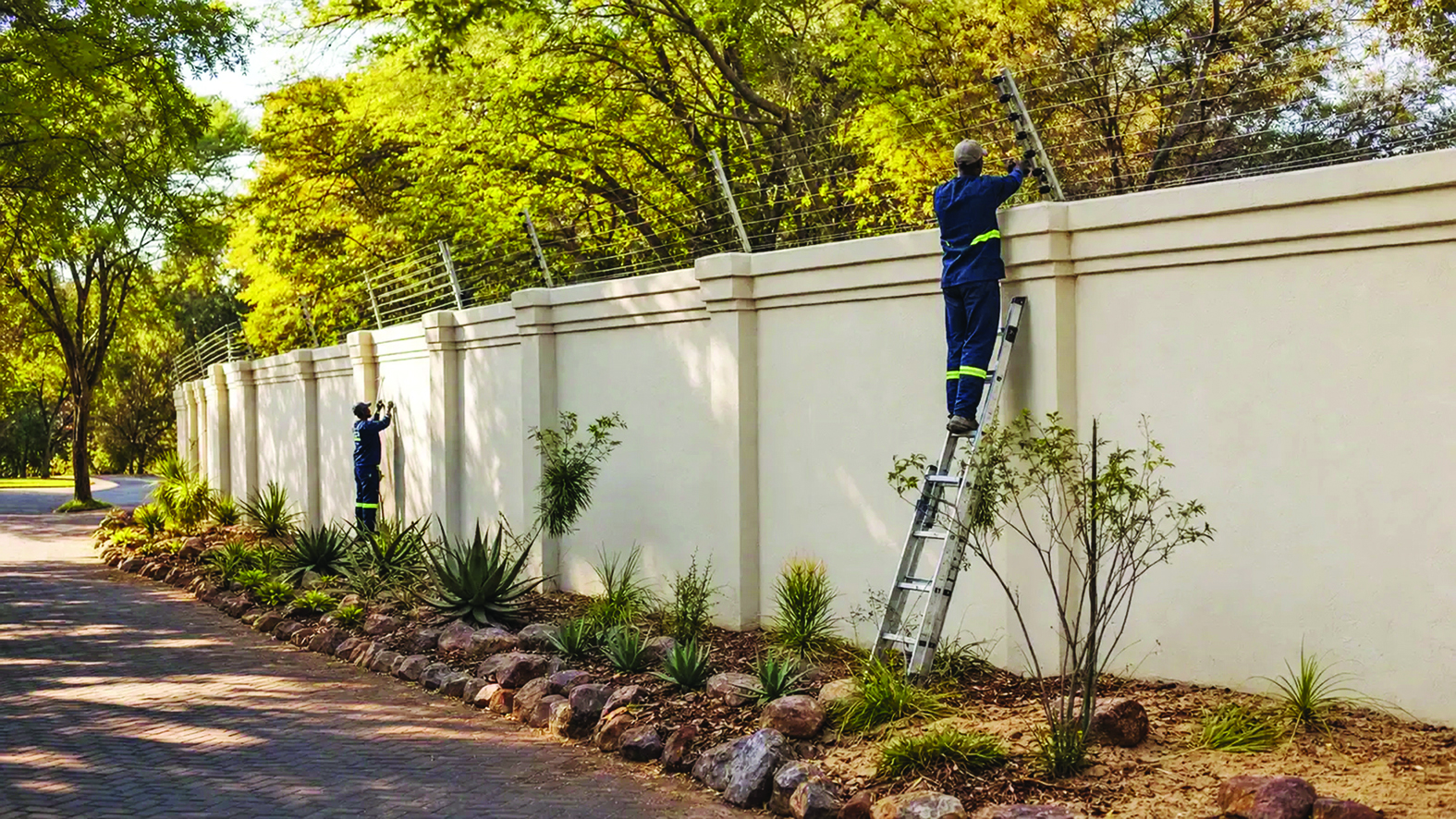
Then came the wall, the security gate and an intercom.
When the ants caused the demise of the intercom, it was never repaired.
Thereafter, in rapid succession, came the electric fence, the beams in the garden, the spotlights and armed response.
At every stage, the next addition seemed entirely rational. But every upgrade also served to isolate me from my community. A neighbour could no longer simply pop in, spontaneity was lost and visits increasingly had to be arranged.
As houses changed hands, I stopped knowing who some of my neighbours were.
Over three decades I gradually built myself a very effective prison.
The walls, alarms and electric fences are designed to make us feel safer while we are inside our properties. But something very disturbing happens when we no longer feel safe enough to leave them.
When “never go for a walk” becomes reasonable advice from a sensible parent to her daughters, something has gone profoundly wrong with the environment in which we live.
Statistics South Africa reports that fewer than 40% of South Africans feel safe walking alone in their neighbourhood after dark.
Gallup’s international survey paints an even starker picture. Only 33% of South Africans say they feel safe walking alone at night, compared with a 73% global average.
I had gradually confused security with safety and they are not the same thing. Security is the wall around my house. Safety is being able to leave it.
I can protect my property but I cannot privately manufacture a safe community. That requires functioning public systems.
We have spent billions creating islands of private security. We move from gated homes to secure office parks, shopping centres and schools and then drive home again.
The public space between them increasingly becomes something to pass through quickly, in a state of hypervigilance, rather than somewhere we feel free to inhabit.
Earlier in this series I argued that the right to feel safe is a public health matter. I still believe that. But the outcomes of the 16th World Conference on Injury Prevention and Safety Promotion, held in Cape Town earlier this month, sharpened that view.
Yes, safety is a public health issue but it is not one that the health sector can solve on its own. Creating a safe society requires a whole-of-government, whole-of-society approach.
The National Action Consensus Plan developed around the conference reached a striking conclusion across eight very different areas of violence and injury prevention.
South Africa’s dominant problem is not that we do not know what to do. It is that we struggle to coordinate action and fail to implement consistently. Our systems also remain heavily weighted towards reacting after somebody has been assaulted, killed, injured or traumatised instead of preventing the harm in the first place.
The Consensus Plan makes another important point: Safety is ultimately produced locally.
Where we work, play and live. This is why municipalities matter. The Constitution makes the promotion of a safe and healthy environment one of the objects of local government. Municipalities directly shape many of the environments in which injury and violence either become more likely or less likely. They influence roads, street lighting, public spaces, parks and recreation, traffic management, municipal planning, transport interfaces, firefighting and many of the everyday places where we experience safety.
Municipalities do not control every cause of violence or injury. But they control enough of the local environment that they cannot treat safety as somebody else’s responsibility.
With municipal elections scheduled for 4 November, politicians are out looking for our votes.
This is an opportunity to start reclaiming some of our freedom.
At municipal level, I am less interested in national slogans than in measurable local delivery. I have questions and I want realistic plans that can be monitored.
Can children walk safely to school? Where are the crime and injury hotspots in this municipality? Which streets, pedestrian routes and public spaces are unsafe?
Which streetlights do not work? Where are people repeatedly being killed on our roads?
What are you going to do about these things? By when? With what budget?
And who will I hold accountable if nothing changes?
Then, once the election is over, the questions should not stop. Once elected, I want to see that responsibility exercised.
Show me the implementation plan. Show me the budget. Show me the person responsible. Show me the numbers next year.
The Safety 2026 Consensus Plan argues that accountability should ultimately be measured by reductions in death, injury and harm, not by the number of meetings held, policies written or programmes launched.
That seems an entirely reasonable standard.
Because there is something deeply wrong with a society in which success means having enough money to retreat behind a higher wall.
• Dr Wolvaardt is the founder of the Foundation for Professional Development and has recently stepped down as managing director.
- A woman instructed her daughters never to walk outside again after seeing a daylight kidnapping video, highlighting heightened safety fears.
- South Africa has low public safety perception, with fewer than 40% feeling safe walking alone after dark, compared to a 73% global average.
- Security measures like walls, alarms, and electric fences increase physical protection but isolate residents and reduce community interaction.
- The 16th World Conference on Injury Prevention concluded that safety requires coordinated whole-of-government and society action, focusing on prevention over reaction.
- Municipal governments play a crucial role in local safety by managing environments, infrastructure, and services that influence violence and injury risks.
A colleague of mine posted something on social media that stopped me in my tracks. She had just watched a video of a woman being kidnapped in broad daylight.
Her response was: “I have instructed my daughters to NEVER step outside for a walk again.”
This is one of the strongest women I know. She lives in a security estate and is a great believer in walking as one of the simplest and best forms of exercise.
But in one sentence, she had effectively revoked her daughters’ parole.
I am playing with metaphors but I am not being flippant. I am angry.
Because I have realised I have spent much of the past 30 years building a prison. I just did not recognise it as one at the time. It all seemed sensible.
Burglar bars and an alarm that you switched on when you went away. People could still walk up to the front door and knock.
Then came the wall, the security gate and an intercom.
When the ants caused the demise of the intercom, it was never repaired.
Thereafter, in rapid succession, came the electric fence, the beams in the garden, the spotlights and armed response.
At every stage, the next addition seemed entirely rational. But every upgrade also served to isolate me from my community. A neighbour could no longer simply pop in, spontaneity was lost and visits increasingly had to be arranged.
As houses changed hands, I stopped knowing who some of my neighbours were.
Over three decades I gradually built myself a very effective prison.
The walls, alarms and electric fences are designed to make us feel safer while we are inside our properties. But something very disturbing happens when we no longer feel safe enough to leave them.
When “never go for a walk” becomes reasonable advice from a sensible parent to her daughters, something has gone profoundly wrong with the environment in which we live.
Statistics South Africa reports that fewer than 40% of South Africans feel safe walking alone in their neighbourhood after dark.
Gallup’s international survey paints an even starker picture. Only 33% of South Africans say they feel safe walking alone at night, compared with a 73% global average.
I had gradually confused security with safety and they are not the same thing. Security is the wall around my house. Safety is being able to leave it.
I can protect my property but I cannot privately manufacture a safe community. That requires functioning public systems.
We have spent billions creating islands of private security. We move from gated homes to secure office parks, shopping centres and schools and then drive home again.
The public space between them increasingly becomes something to pass through quickly, in a state of hypervigilance, rather than somewhere we feel free to inhabit.
Earlier in this series I argued that the right to feel safe is a public health matter. I still believe that. But the outcomes of the 16th World Conference on Injury Prevention and Safety Promotion, held in Cape Town earlier this month, sharpened that view.
Yes, safety is a public health issue but it is not one that the health sector can solve on its own. Creating a safe society requires a whole-of-government, whole-of-society approach.
The National Action Consensus Plan developed around the conference reached a striking conclusion across eight very different areas of violence and injury prevention.
South Africa’s dominant problem is not that we do not know what to do. It is that we struggle to coordinate action and fail to implement consistently. Our systems also remain heavily weighted towards reacting after somebody has been assaulted, killed, injured or traumatised instead of preventing the harm in the first place.
The Consensus Plan makes another important point: Safety is ultimately produced locally.
Where we work, play and live. This is why municipalities matter. The Constitution makes the promotion of a safe and healthy environment one of the objects of local government. Municipalities directly shape many of the environments in which injury and violence either become more likely or less likely. They influence roads, street lighting, public spaces, parks and recreation, traffic management, municipal planning, transport interfaces, firefighting and many of the everyday places where we experience safety.
Municipalities do not control every cause of violence or injury. But they control enough of the local environment that they cannot treat safety as somebody else’s responsibility.
With municipal elections scheduled for 4 November, politicians are out looking for our votes.
This is an opportunity to start reclaiming some of our freedom.
At municipal level, I am less interested in national slogans than in measurable local delivery. I have questions and I want realistic plans that can be monitored.
Can children walk safely to school? Where are the crime and injury hotspots in this municipality? Which streets, pedestrian routes and public spaces are unsafe?
Which streetlights do not work? Where are people repeatedly being killed on our roads?
What are you going to do about these things? By when? With what budget?
And who will I hold accountable if nothing changes?
Then, once the election is over, the questions should not stop. Once elected, I want to see that responsibility exercised.
Show me the implementation plan. Show me the budget. Show me the person responsible. Show me the numbers next year.
The Safety 2026 Consensus Plan argues that accountability should ultimately be measured by reductions in death, injury and harm, not by the number of meetings held, policies written or programmes launched.
That seems an entirely reasonable standard.
Because there is something deeply wrong with a society in which success means having enough money to retreat behind a higher wall.
• Dr Wolvaardt is the founder of the Foundation for Professional Development and has recently stepped down as managing director.


