


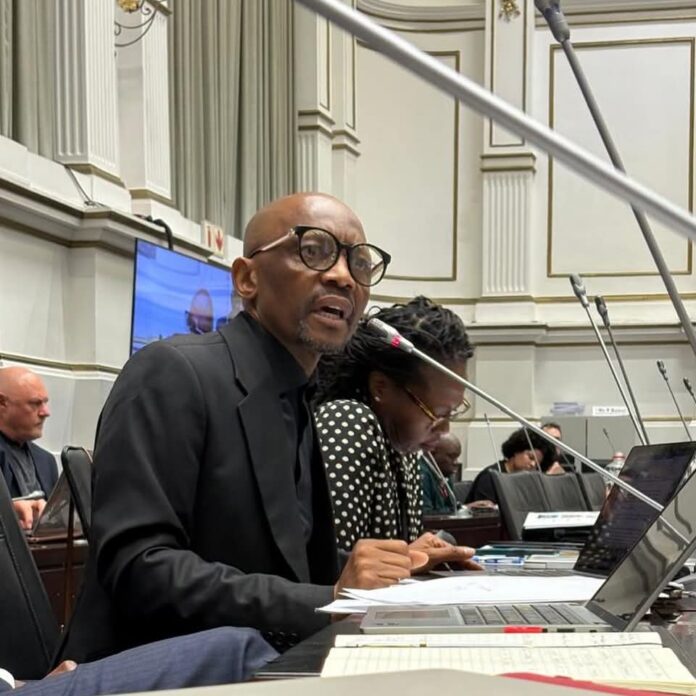
A prominent Mpumalanga tourism executive has challenged African governments to publicly confront the causes of illegal immigration, arguing that the continent cannot continue expecting South Africa to shoulder the consequences of governance failures beyond its borders.
Writing in his personal capacity, Oupa Pilane, co-founder, director and developer of the internationally recognised Graskop Gorge Lift Company, said the debate on migration had become lopsided, with many African leaders quick to condemn South Africa when immigration laws are enforced but largely silent on the conditions driving thousands of their citizens to leave home.
Pilane questioned whether some governments had become comfortable with the economic benefits of migration, particularly the billions of rands in remittances sent home each year by citizens working in South Africa.
“What exactly are these leaders doing – or failing to do – that compels their citizens to risk dangerous, illegal journeys to South Africa?” he asked.
‘Scale of the challenge facing South Africa’
Pilane said recent immigration enforcement operations highlighted the scale of the challenge facing South Africa, with tens of thousands of undocumented foreign nationals processed for deportation or voluntary repatriation in recent weeks.
He argued that neighbouring countries should respond by addressing the economic and political conditions pushing people to migrate illegally rather than criticising South Africa’s enforcement measures.
He maintained that illegal immigration should not be separated from broader governance failures across parts of the continent, pointing to corruption, unemployment, economic instability, political uncertainty and poor service delivery as major drivers of migration.
According to Pilane, South Africa continues to attract migrants because it offers comparatively stronger institutions, employment opportunities and greater economic stability than many neighbouring states.
‘Illegal entry a violation’
He argued that while crimes committed against foreign nationals must always be investigated and prosecuted, discussions about xenophobia should not overshadow the legality of entering another country without authorisation.
“Illegal entry is, by definition, a violation, yet this basic point frequently gets lost in diplomatic rhetoric,” he wrote.
Pilane also contended that unmanaged migration places additional pressure on South Africa’s already strained public services, criminal justice system and labour market, particularly in poorer communities where competition for jobs and housing is most acute.
He suggested that some governments may have little incentive to stem the outflow of their citizens because migration eases domestic unemployment pressures while generating valuable foreign currency through remittances.
“One is tempted to ask whether some leaders view illegal emigration as convenient – reducing the domestic load, generating remittances and exporting potential critics or unrest,” Pilane wrote.
Call for greater regional cooperation
Instead of focusing criticism on South Africa’s immigration enforcement, he called for greater regional cooperation aimed at tackling the root causes of migration. These include improving governance, strengthening economies, combating corruption, securing borders jointly and expanding lawful migration pathways.
Pilane welcomed South Africa’s recent measures to strengthen border security, tighten immigration enforcement, combat corruption within the immigration system and pursue regional cooperation, saying these should be matched by meaningful reforms in countries of origin.
He concluded that South Africans deserved greater support from their continental partners, while migrants themselves deserved opportunities to build prosperous lives in their own countries rather than being forced to seek livelihoods elsewhere.
The debate over illegal immigration has intensified in South Africa in recent months, with the government stepping up border enforcement and civic groups calling for stricter action against undocumented migration.
At the same time, several African governments and regional organisations have urged South Africa to ensure that immigration enforcement respects the rights and dignity of all migrants.
- Mpumalanga tourism executive Oupa Pilane urges African governments to address the root causes of illegal immigration rather than blaming South Africa for enforcing immigration laws.
- Pilane highlights that many African leaders benefit economically from migrants' remittances and questions their efforts to improve domestic conditions that drive migration.
- He emphasizes that illegal immigration is linked to governance failures such as corruption, unemployment, economic instability, and political uncertainty in migrants' home countries.
- Pilane calls for greater regional cooperation to improve governance, strengthen economies, combat corruption, secure borders, and create legal migration pathways.
- While supporting South Africa's border enforcement measures, Pilane stresses the need for reforms in migrants' home countries to reduce the need for illegal migration.


