


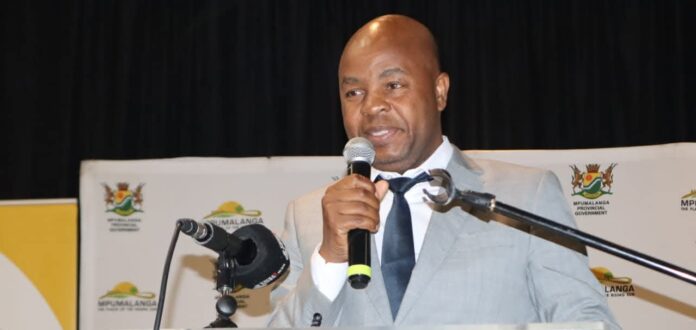
Heavy rains in Mpumalanga have prompted Premier Mandla Ndlovu to make an unusual appeal to religious leaders, urging them to pause prayers for rain as persistent storms continue to damage school infrastructure across the province.
Mpumalanga has been drenched by weeks of heavy rain and hail, leaving a trail of broken roofs, damaged classrooms and disrupted school facilities.
Ndlovu made the call on Tuesday during the announcement of the 2025 matric results in Secunda. He said recent hailstorms had disrupted government efforts to stabilise and improve learning environments ahead of the 2026 academic year.
Hard-won progress being hampered
Ndlovu warned that infrastructure setbacks caused by extreme weather were undermining hard-won progress in the education sector.
“We are determined to repair all damaged schools to ensure a safe and conducive environment for learning. We remain resolute in our commitment to eradicate all mud schools and unsafe ablution facilities in the province,” Ndlovu said.
“However, our efforts have been disrupted by recent hailstorms that have destroyed some of our school infrastructure. In this light, I appeal to our religious leaders to pause their prayers for rain. It has lately come accompanied by destruction.”
Several schools across the province have suffered damage to roofs, classrooms and other facilities. And this raised concerns about the smooth resumption of teaching when learners return to school on Wednesday.
Motorists cautioned
The provincial Public works, Roads and Transport department has also cautioned motorists about road use. They have been urged to use alternative routes after storm damage forced the closure of some major roads.
Despite these challenges, Ndlovu said the province was ready to hit the 2026 academic ground running. He said technology is set to form a central pillar of its education strategy.
“While today we are celebrating our results, we are equally ready to resume with classes for the 2026 academic programme,” he said.
“Learning materials have already been delivered to schools. These are designed to inspire, engage and support interactive and effective learning for learners across every grade.”
Ndlovu said Mpumalanga had distributed tablets meant to be handed to all matriculants of the class of 2026. He described the roll-out as a key intervention to improve learning outcomes.
“We have [availed] tablets to all our matric class of 2026. And in advancing digital education, this year marks a milestone for our Grade 10 learners. They will also receive tablets, opening new doors for learning and innovation,” he said.
Adaptation to digital learning
Ndlovu added that school infrastructure was being modernised to support digital learning. “We are also modernising our school infrastructure where our children will have access to free Wi-Fi. And this will enable them to utilise their smart devices and digital learning tools,” he said.
By embracing technology, he said, the province was positioning its learners to compete nationally and globally. “By embracing technology, we are preparing our children to compete confidently with their peers from other provinces and on the global stage.”
Ndlovu was addressing the class of 2025, who achieved an 86.5% pass rate in the National Senior Certificate examinations. This placed Mpumalanga among the better-performing provinces nationally.
Beyond infrastructure and technology, he also touched on learner retention. He revealed that Mpumalanga’s retention rate stands at 67.1%, ranking the province third nationally.
He acknowledged the challenge of tracking the 32.9% of young people not in education. And he flagged graduate youth unemployment, which stood at 14.2% in the third quarter of 2025.
- Heavy rains in Mpumalanga have prompted Premier Mandla Ndlovu to make an unusual appeal to religious leaders, urging them to pause prayers for rain as persistent storms continue to damage school infrastructure across the province.
- Mpumalanga has been drenched by weeks of heavy rain and hail, leaving a trail of broken roofs, damaged classrooms and disrupted school facilities.
- Ndlovu made the call on Tuesday during the announcement of the 2025 matric results in Secunda.
- He said recent hailstorms had disrupted government efforts to stabilise and improve learning environments ahead of the 2026 academic year.
- Hard-won progress being hampered Ndlovu warned that infrastructure setbacks caused by extreme weather were undermining hard-won progress in the education sector.


