


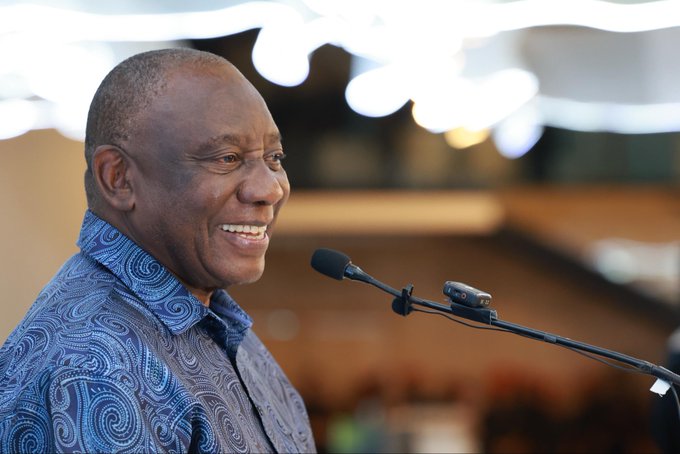
President Cyril Ramaphosa allegedly ignored repeated objections from the Balobedu royal family before recognising Masalanabo Modjadji VII as Rain Queen, the Pretoria High Court heard on Friday.
Lawyers representing Prince Lekukela Modjadji and members of the royal family also took aim at ANC veteran Dr Mathole Motshekga, accusing him of meddling in royal affairs and playing an unlawful role in Masalanabo’s rise.
Lekukela is Masalanabo’s elder brother. Their mother, Queen Makobo Modjadji VI, died in 2005 while Masalanabo was still a baby.
The court heard that the royal family repeatedly sought Ramaphosa’s intervention as the succession dispute deepened.
Ramaphosa never responded to letters of objection
“Several letters were written to the president for a meeting in order to discuss the matter and resolve it, but there was no response,” counsel argued.
READ: Masalanabo coronation to go ahead despite legal battle
“The president never responded to those letters asking him to intervene because of his close relationship with the Motshekga family.”
Ramaphosa formally recognised Masalanabo as Queen of Balobedu in December 2024 under the Traditional and Khoi-San Leadership Act.
The royal family and Lekukela subsequently launched proceedings challenging that decision and want it reviewed and set aside.
Motshekga accused of meddling in succession
Their lawyers argued that Motshekga, who became Masalanabo’s guardian after her mother’s death, had portrayed himself as representing Balobedu royal structures despite his authority being disputed.
Motshekga’s alleged involvement featured prominently in Friday’s argument, including claims that he knew about Ramaphosa’s decision before the royal family was informed.
The court also heard that the succession fight was not about replacing a woman with a man.
“Gender is not the issue at all,” counsel said, arguing that Balobedu customary structures historically recognise male and female leadership positions.
At the heart of the case is instead who satisfied Balobedu customary law and whether Ramaphosa could recognise Masalanabo despite objections from royal structures.
Counsel said the royal council comprised representatives from four hereditary families and played a pivotal role in succession.
The court heard that Balobedu custom traditionally required a successor to be identified before the incumbent monarch died.
Where competing candidates emerged, counsel described a traditional ritual involving the opening of a secret door in a royal hut.
But the applicants argued the ritual was not “magical” and could potentially be manipulated by council members supporting a preferred candidate.
Masalanabo’s royal credentials challenged
Their most forceful attack centred on Masalanabo’s upbringing outside the royal household.
“The customary law, in this case, is quite clear,” counsel argued.
“The reasons why the third respondent does not comply with the customary laws and customs, and therefore does not qualify to assume the position have been stated to the president quite clearly in the application.”
Counsel said Masalanabo had not grown up within the royal household, undergone the required initiation or received training from the royal family in its closely guarded customs.
READ: Royal council to stop march against Queen Masalanabo
“She received no training by the Royal family in the secret, including the rainmaking ritual. The most important one is that she does not live there,” counsel argued.
That argument also has a statutory dimension.
Section 9 of the Traditional and Khoi-San Leadership Act provides that recognition of a king or queen must be withdrawn if the monarch no longer permanently resides within the area of the relevant kingship or queenship council.
The applicants contend Ramaphosa therefore recognised Masalanabo despite being warned that she allegedly failed both customary and statutory requirements for the throne.
The respondents have yet to present their arguments before the court.
- President Cyril Ramaphosa ignored repeated objections from the Balobedu royal family before recognising Masalanabo Modjadji VII as Rain Queen.
- Lawyers accused ANC veteran Dr Mathole Motshekga of meddling in royal affairs and playing an unlawful role in Masalanabo's rise.
- Masalanabo's elder brother, Prince Lekukela Modjadji, and the royal family challenged Ramaphosa's decision in court, seeking to have it reviewed and set aside.
- Counsel argued that Masalanabo did not comply with Balobedu customary laws, as she was raised outside the royal household and did not undergo required initiation or training.
- The Traditional and Khoi-San Leadership Act mandates that recognition of a king or queen should be withdrawn if the monarch no longer resides permanently within the area of the relevant kingship or queenship council.


